












More than 30 laws, two constitutional amendments and a series of measures aimed at reforming Hungary were among the achievements of the new Tisza-majority parliament’s first 100 days, the governing party’s parliamentary group said on Wednesday.

Swietelsky will rebuild the 13.6-kilometre railway section between Almásfüzitő and Komárom for 36.3 billion forints. The project aims to enable trains to travel at up to 160 km/h while improving safety, accessibility and passenger facilities.

Finnish MP Päivi Räsänen, convicted over citing a Bible passage on homosexuality, has been blocked from entering the United Kingdom, leaving her unable to attend a Northern Ireland conference where she was due to speak about freedom of speech. ADF CEO Kristen Waggoner urged Home Secretary Shabana Mahmood to intervene, arguing that Britain should not uphold another country’s ‘heavy-handed censorship’.

Hungarians used almost twice as much mobile data per day while abroad in 2025 as they did three years earlier, according to the latest report by the National Media and Infocommunications Authority (NMHH). At the same time, the amount of roaming voice calls began to decline last year.

Viktor Orbán himself is under review in a confidential Fidesz survey asking members to rate his competence, judge the party’s loss of moral credibility and even consider dissolving Fidesz altogether. The move suggests the former governing party is finally reconsidering assumptions that remained untouchable throughout its years in power, paving the way for the possibility of a genuine self-reflection.

The Dallas-Fort Worth International Airport was reportedly planning to add so-called ‘wudu’ Muslim foot wash stations to accommodate the religious minority’s practice. However, Governor Greg Abbott of Texas has threatened to revoke the airport’s state grants for religious discrimination and referred it for investigation to the US Department of Transportation, thus the plans were scrapped.

A Berlin emergency nurse has described how treating members of Arab criminal clans can turn hospital wards into security operations, with police alerts, relatives flooding facilities and staff taking precautions against intimidation. His account comes as official figures show clan-related crime rising in Berlin, with 952 offences recorded across the city in 2025.

Hungarian telecommunications and technology group 4iG said it will cooperate with government investigations into its contracts involving the state. The company said its operations and transactions have complied with Hungarian and EU law.

Hungary’s government has ordered a full audit of the Hungary Helps Agency, with every contract and completed payment set to be reviewed as part of a wider reset of the country’s flagship humanitarian programme launched under Viktor Orbán. Deputy Foreign Minister György László Velkey said the agency would continue operating and that a public competition had been opened for the position of chief executive.

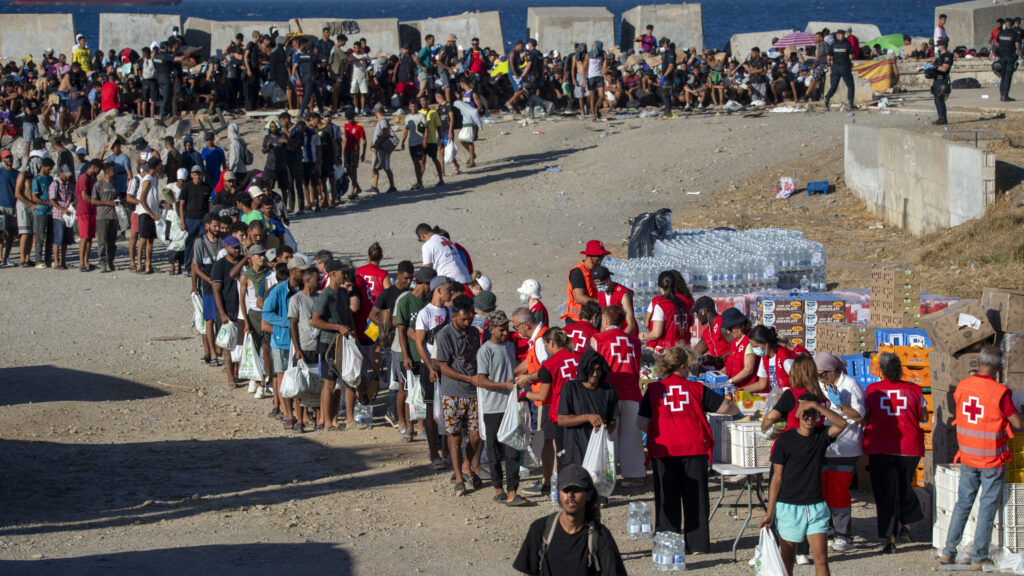
Between 100 and 200 mainly Moroccan illegal migrants have begun a hunger strike in Ceuta, demanding asylum, transfer to mainland Spain and ‘equal treatment’. The protest comes as hundreds of Moroccan applicants receive negative decisions, while the Spanish enclave’s mayor-president declares there will be ‘no regularization, no asylum and no transfer to the Peninsula’.

ELTE and the University of Szeged have been named Hungary’s top universities in the 2026 Academic Ranking of World Universities, both placing in the 501–600 range. Four Hungarian institutions made the world’s top 1,000, led globally by Harvard, Stanford, and MIT.

‘Meet your new neighbor, America,’ Alberta separatists declared as they promoted an October referendum that could set the province on a path towards a later independence vote. The oil-rich conservative stronghold is being branded the ‘Texas of the North’, while separatist groups increasingly cultivate links with the United States under Donald Trump.

Former Prime Minister Viktor Orbán’s father has offered a ‘large quantity of stone’ for emergency works at the Paks nuclear plant, joining a growing wave of corporate contributions from businessmen linked to the former Fidesz era. His offer follows pledges from Garancsi-, Szíjj- and Tiborcz-linked firms and others as Hungary races to stabilize Danube water levels and avoid the shutdown of the plant.

A Spanish F-18 fighter operating under NATO’s air policing mission shot down a drone after it had entered Romanian airspace, Romania’s Defence Ministry said. NATO officials said the drone appeared to be Russian, although its origin remains under investigation.

Greece’s hard-line ‘prison or return’ migration policy is beginning to show measurable results, with 599 migrants choosing voluntary return rather than risk imprisonment under the new illegal-stay regime. Total returns rose 20 per cent in the first half of 2026 and forced returns by 41 per cent, making Greece an early test case for the toughest version of the EU’s new Return Regulation.

Companies belonging to the Coca-Cola group have agreed to launch a nationwide campaign to improve consumer awareness of PET bottle recycling following a review by Hungary’s Economic Competition Office (GVH).

Twelve people were killed and dozens injured when a bus carrying Polish pilgrims crashed on Hungary’s M3 motorway early Sunday. Police suspect the driver may have fallen asleep at the wheel.

Hubert Kós closed the European Aquatics Championships with a third gold on Sunday, winning the 200m individual medley in a national-record 1:54.24. The 23-year-old had already taken gold in the 200m backstroke and 4x100m freestyle relay, helping Hungary finish fifth in the medal table with 17 medals, ahead of host nation France, despite being the smallest nation in the top five.

Right-wing journalist Nick Sherley and Kentucky Congressman Thomas Massie have clashed on X over government spending and alleged daycare fraud. While Massie criticized Sherley for not targeting Republican leaders on the issue, the 24-year-old journalist fired back, highlighting the success of his investigations as opposed to Massie’s actions.

Europe’s tallest statue of the Virgin Mary was consecrated on Saturday in Konotopie, Poland, where around 2,000 worshippers gathered for the Feast of the Assumption. Privately funded by billionaire Roman Karkosik as a votive offering, the project arrives as Poland, a fundamentally deeply Christian country, wrestles with secularization and declining Catholic practice.

The Spanish Guardia Civil has confirmed that 15 rapes have been registered in Ceuta since the mass invasion from Morocco at the end of July, deepening concerns over security in the enclave. Two suspects who entered during the influx have already been detained in connection with the cases, while at least one has now been ordered expelled to Morocco.

Russia’s growing blockade of Ukrainian shipping in the Black Sea is threatening both Ukraine’s economy and global food security. With more than 90 per cent of Ukrainian agricultural exports passing through Black Sea ports, prolonged disruptions could cause farmers to struggle to find storage for their backed-up goods, break foreign contracts, and put pressure on global food markets.

Former Cambridge professor Jason Arday has been found dead at 41, days after resigning amid a major plagiarism scandal and widening scrutiny of his academic record. Police are treating the death as unexpected but not suspicious, while people close to Arday said his mental health had deteriorated sharply under intense public criticism in the final days of his life.

Hungary has awarded three new hydrocarbon exploration concessions to state-owned MVM and energy giant MOL as Budapest seeks to strengthen domestic energy production and reduce reliance on foreign supplies. The winning companies will be able to explore for and produce oil and natural gas for at least 20 years.

A Moroccan migrant who entered Ceuta during the mass invasion was reportedly arrested over the alleged street rape of a ‘young Moroccan woman’. While local media reports contradict one another over the case, a pattern of sexual violence is already clear in the Spanish enclave, with courts proceeding in at least six rape cases involving three Moroccan suspects and minor victims.

Kristóf Milák led Hungary’s best night of the European Aquatics Championships on Thursday, first breaking the European record to win the 100m butterfly and then delivering a 46.29 anchor split in a historic 4x100m freestyle relay triumph. Hungary took its first European title in the event, already securing three gold medals during the tournament so far.

Famous American investigative journalist James O’Keefe dressed up in traditional Muslim attire to test Minnesota’s ‘voter vouching scheme’. Assuming fake identities at polling stations, he received confirmation from poll workers that he was allowed to vouch for up to eight other people, who would then be able to complete same-day registration and vote, all without anyone having to show any ID.

Foreign online marketplaces are accounting for an increasing share of Hungary’s e-commerce turnover, prompting the Hungarian Competition Authority (GVH) to increase its scrutiny of the sector. The authority said it has recovered tens of billions of forints for Hungarian consumers since April 2020.

Budapest is heading towards a future with significantly more heatwave days and tropical nights, according to climate simulations cited by Mayor Gergely Karácsony. By mid-century, most of the city could see temperatures rise by 3–5 degrees Celsius, with some outer districts facing increases of more than 6 degrees.

After winning 1–0 at home, Ferencváros travelled to Zabrze, Poland and got a hard-fought 1–1 tie against Górnik Zabrze. This means that they have advanced 2–1 on aggregate in the UEFA Europa League qualifying; and no matter what happens in the next round against the Turkish club Trabzonspor, they are guaranteed a spot at least in the UEFA Conference League in the fall.

At a time when public debate is increasingly polarized and superficial, Hungarian Conservative remains committed to depth and independent thought.
Donate Now
Please consider supporting our mission.