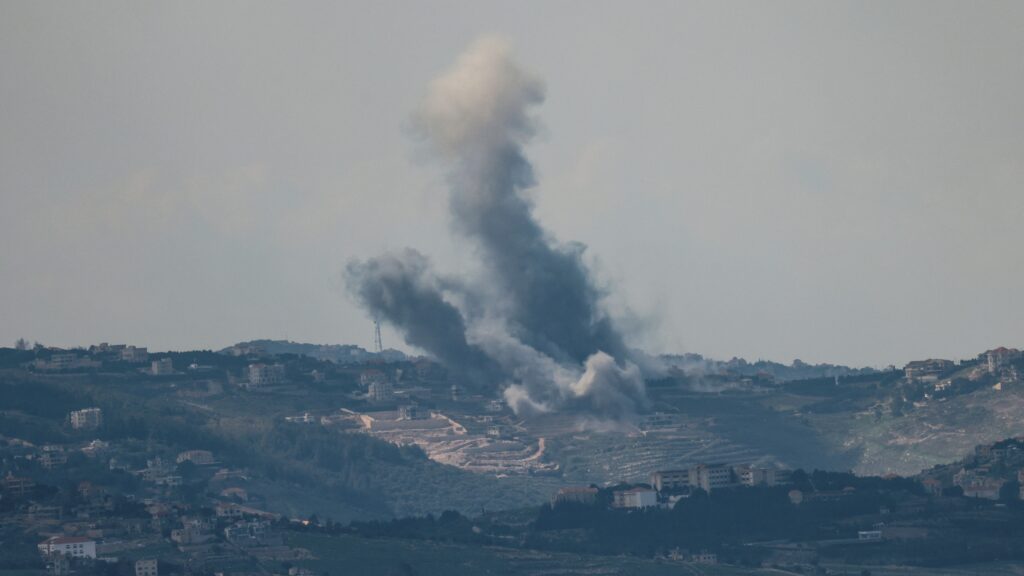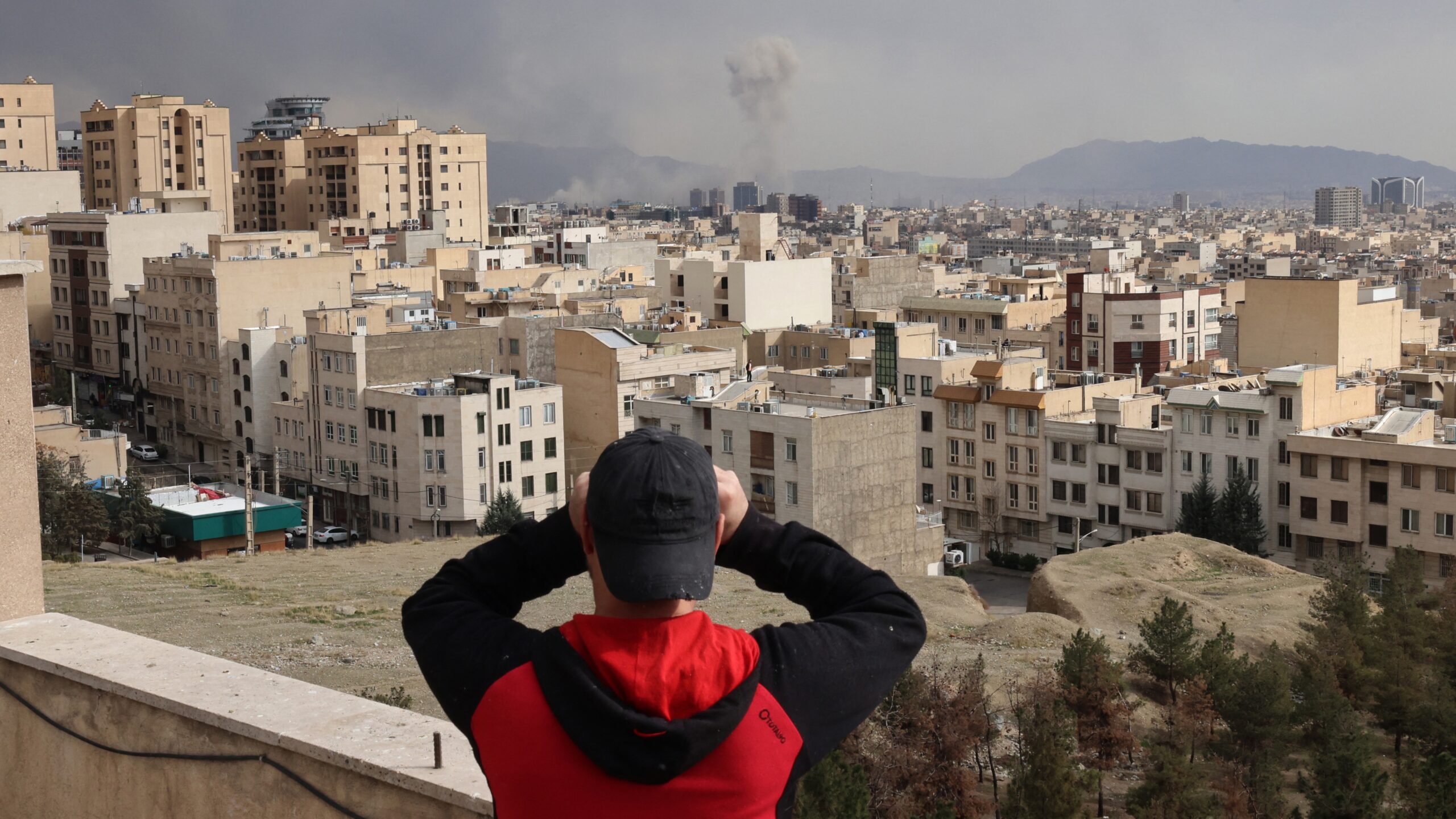
The military operation conducted by the U.S. and Israel against the Islamic Republic of Iran, which began on Saturday morning and resulted in the deaths of Supreme Leader Ayatollah Ali Khamenei, Islamic Revolutionary Guard Corps (IRGC) commander General Mohammed Pakpour, and Defense Minister Aziz Nasirzadeh, was another showcase of American military dominance. While it may conceal a profound yearning for glory and territorial control, it nevertheless served as a crucial deterrent against a harsh regime recognized as the foremost global proponent of terrorism—its affiliates include paramilitary organizations such as Hezbollah in Lebanon and the Hashd al-Shaabi (also known as the Popular Mobilization Units) in Iraq.
For numerous years, Iran has effectively misled American presidents by preventing attacks while creating the illusion that its ambitions to develop nuclear energy were benign, despite its actions against its own citizens indicating the contrary. Aside the Jewish lobby, the military operations are a direct result of the Iranian leadership’s tactics of procrastination, obfuscation, and delay, underestimating the likelihood of action from the American president—which they miscalculated once again.
Indeed, in 2020 President Trump opted to take out then head of the IRGC, General Qassim Suleimani—Pakpour’s predecessor—who was responsible for orchestrating attacks against U.S. citizens and installations in the Middle East. Following his assassination, Iran has struggled to regain the coherence and direction of General Suleimani’s proxy initiatives. Equally significant, the strike affirmed Trump’s reputation as a leader who would not be subservient to Iran.
‘The strike affirmed Trump’s reputation as a leader who would not be subservient to Iran’
U.S. lawmakers promptly criticized Trump for exceeding his authority as Commander in Chief, and even Russian President Vladimir Putin denounced the assault as ‘a cynical breach of all standards of human morality and international law’—as if he is in a position to judge. Nevertheless, President Trump is operating well within the bounds of U.S. law, for the War Powers Resolution allows a president to utilize military force for a maximum of 48 hours; he is required to notify Congress within this two-day period of engaging armed forces in military action and has an additional 60 days of unrestrained authority to conduct military operations. In terms of international law, unlike his predecessors, he has no regard for it. ‘I don’t need international law,’ Trump said in January, and that his power is limited only by his ‘own morality’.
Trump, who presents himself as a peacemaker, has also faced criticism for undermining his position by utilizing military force against adversaries on four occasions during the 13 months of his second term in office, and this should not be overlooked.
In a balanced assessment, the president has taken office amidst a global environment where a coalition of U.S. adversaries is forming and gaining momentum. By applying pressure on these factions at its most vulnerable locations—in Iran, Venezuela, and to a certain extent, Cuba—he sends a clear message to China and Russia that the consequences of confronting him militarily are substantial. Ultimately, this encapsulates the essence of geopolitics—a contentious equilibrium of power.
On the American home front, the primary concern is that President Trump might conclude his military operations prematurely—or conversely, that they may extend indefinitely. This apprehension becomes especially pertinent to the number of American casualties—thus far three U.S. military personnel have been killed. While it is undeniable that the campaign carries risks, as is true for all conflicts, it also offers the potential for a positive transformation in the Middle East and a contribution to a more secure world—one can only hope, at least.
These military objectives suggest that Trump is maintaining the limits he set when the regime violently quelled its citizens during their protests in January. The pressing question is: ‘What will happen next?’ In other words, who will ultimately take over the long-term governance? Another ayatollah? The son of the shah, Reza Pahlavi, who has been somewhat ‘prepared’ over the last decade in the western media to assume control? Although it is impossible to predict future developments, like Venezuela after the capture of Maduro, the U.S. will continue to demonstrate that it is challenging to imagine a degree of instability that exceeds what the IRGC has caused for 47 years.
‘It will become increasingly challenging for Iran to maintain this level of pressure’
Iran has vowed to deliver a painful retribution, and thus far its initial barrage on U.S. installations and urban areas in the region were undoubtedly coordinated in advance, as they continue to target Israel, Bahrain, and the United Arab Emirates. At the same time, it will become increasingly challenging for Iran to maintain this level of pressure, especially as criticism of Iran continues to emerge from Arab nations.
It seems disingenuous when the U.S. condemns Russia for funding non-state actors in Ukraine, or Pakistan for doing so in Afghanistan, or Iran in Lebanon, while expanding its own support of insurgents in Syria.
In the longer term, an Iran that is preoccupied with its own severe domestic problems—trying to avoid elite fragmentation and consolidate new leadership, or even move toward a more consultative system with less clerical influence and more power sharing—will lack the energy and resources to meddle in the region. This could open new opportunities for Lebanon and the Palestinians, as it already has for the Syrians, or it could instead produce an even more theocratic form of government.
Time will tell; and let us hope it benefits both Iranian and U.S. interests.
The views expressed by our guest authors are theirs and do not necessarily represent the views of Hungarian Conservative.
Related articles: