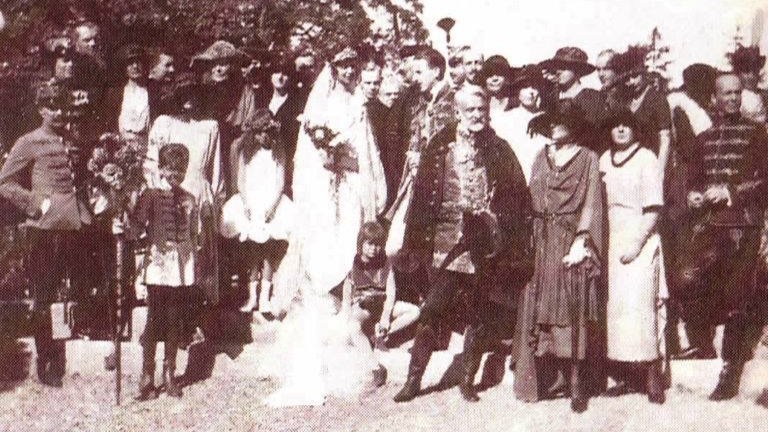
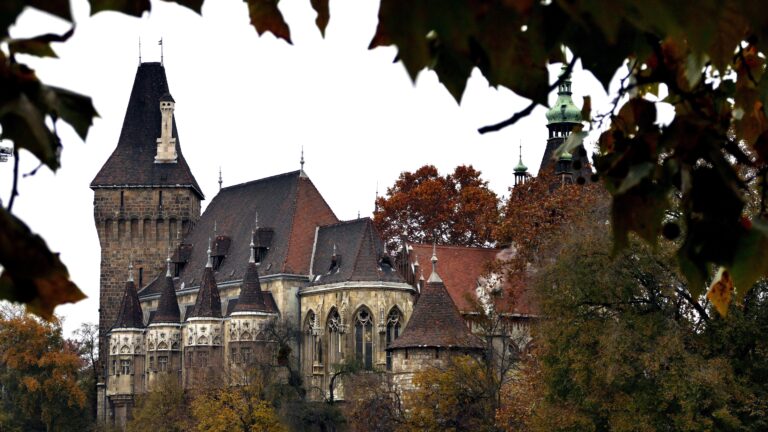
The lights burned into the early hours of the morning at the Andrássy Palace all through the winter of 1940. The grand landmark building, still standing on the Buda side of the Danube by the Chain Bridge, was home to Princess Caja Odescalchi, born Countess Klára Andrássy.
The family was one of Hungary’s most renowned aristocratic dynasties. Caja’s grandfather, Gyula Andrássy, had served as Hungarian prime minister and foreign minister of Austria–Hungary. Her father Tivadar had also been a politician. The Andrássys had shaped Hungary’s destiny.
Now Caja, working with Owen O’Malley, the British minister to Budapest, was trying to alter the course of the war.
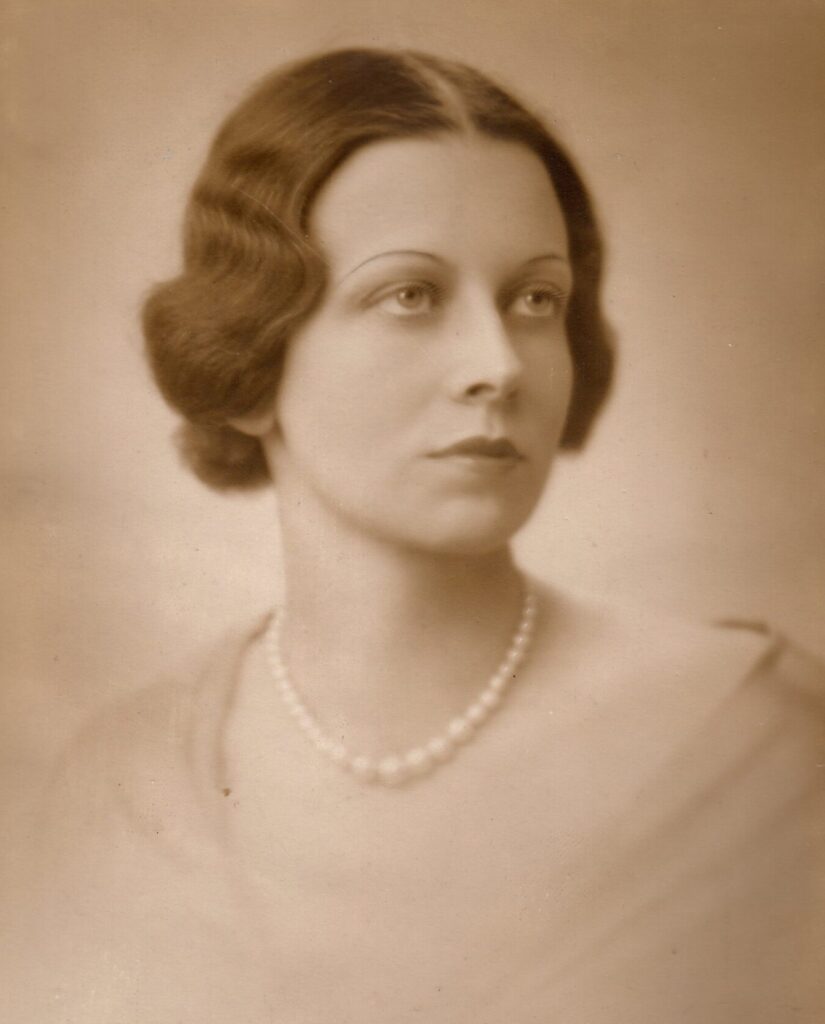
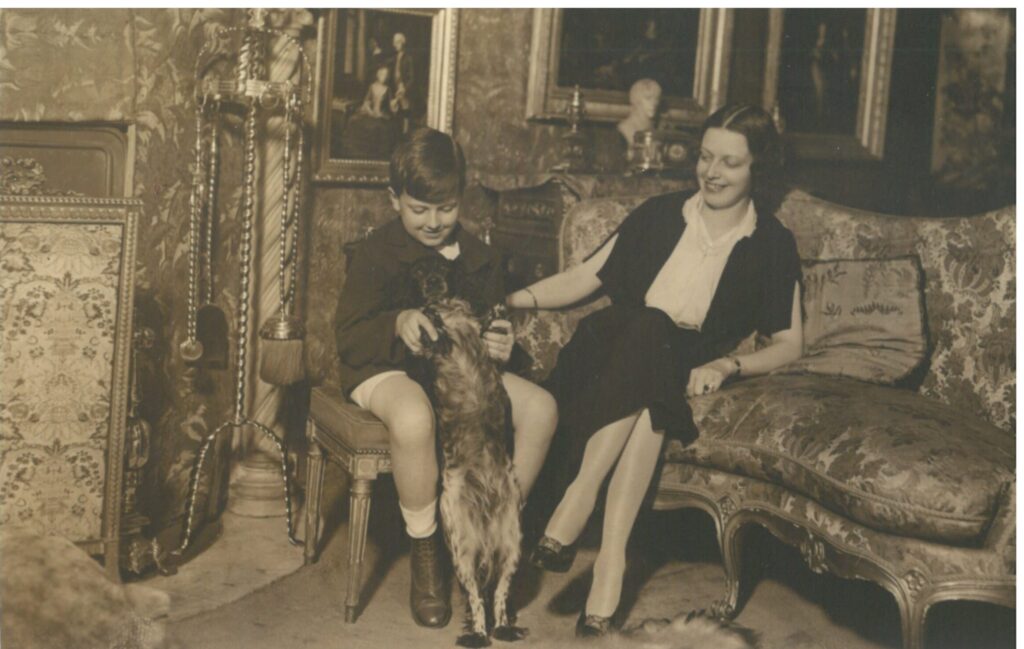
Beautiful, intelligent, independent-minded, Caja was an unusual aristocrat. A divorced single mother, with a teenage son Pál, she lived a life of great privilege but had a powerful social conscience. Caja had even reported from the Spanish Civil War, where she met Ernest Hemingway.
PHOTO: courtesy of the Odescalchi family
On her return, she opened a salon for writers and diplomats in the Andrássy Palace. As a popular figure in Budapest’s social elite, she could call on a wide circle of contacts. Caja’s aim was ambitious: to steer the Hungarian government away from Berlin and towards London, or at least keep the channels open between Budapest and London.
After the outbreak of war in September 1939 she turned the Andrássy Palace into the epicentre of a vital but perilous wartime rescue operation, an important episode of the early years of the war, but one almost unknown in the West. Numerous Polish resistance organizations and Hungarian relief workers were headquartered there, working with a cohort of high-ranking Hungarian officials and other aristocrats.
Tens of thousands of Polish soldiers, including many from elite units, together with civilian and Jewish refugees, were welcomed into Hungary—which at the time shared a border with Poland. The Palace’s long dark corridors and heavy old-fashioned furnishings, tapestries and paintings made it an unlikely centre of resistance. But Caja, with her ‘electric vivacity and modern outlook’ lit up the gloomy rooms, wrote Francesca Wilson, a British aid worker then based in Budapest. Her striking looks also helped. Wilson noted her ‘fair hair piled up high, expressive blue eyes, a mouth that was rather large – a face that was not beautiful but was a real face, that one could not forget’.
Together with several fellow aristocrats, including Countess Erzsébet Szapary, Caja often drove the Polish soldiers to the Yugoslav frontier herself. Other Poles stayed in Hungary, and a network of camps was soon set up across the country, with the support of József Antall, a senior official in the interior ministry. The Polish resistance ran a courier service to London and a clandestine radio network.
The Polish rescue operation, much of which operated with the knowledge and support of the Hungarian authorities, was part of Admiral Horthy’s balancing act, allying with Nazi Germany but keeping channels open to the West. Hungary had joined the Tripartite Pact with Germany, Italy and Japan in November 1940, but had not yet entered the war and maintained friendly diplomatic relations with Britain.
‘Budapest had become the Casablanca of central Europe’
This left O’Malley and the British Legation in a strange, anomalous position. Britain was at war with Germany and Italy, but not with Japan or Hungary. The Irish-born O’Malley was on cordial terms with both Admiral Horthy and Pál Teleki, the prime minister. The spacious British Legation in the historic Castle district housed substantial stations for Britain’s Special Operations Executive and Secret Intelligence Service, both of which operated with a degree of tolerance from the government. Diplomatic and Hungarian government receptions were crowded with British and Nazi officials, watching, listening and intriguing.
Budapest had become the Casablanca of central Europe. Its riverside cafes and glamorous nightclubs were crowded with a myriad of competing and enemy intelligence services, including Britain’s SOE and SIS, the Abwehr, German military intelligence, the SD (SS intelligence service) and Zionist organizations which kept courier lines open to Istanbul and Palestine. As late as February 1941 the British military attache met his American counterpart at a reception hosted by the Hungarian army, to exchange gossip and intelligence, a Foreign Office report reveals.
PHOTO: courtesy of the Odescalchi family
By spring of that year, Horthy’s balancing act was becoming increasingly untenable. The war was casting a much darker shadow. Caja and the Andrássy Palace were under ever more hostile surveillance from German agents in Budapest.
‘The Gestapo is after us yet for the moment they cannot harm us,’ she wrote to her sister Katinka. As long as Admiral Horthy remained in power she believed herself safe.
All that changed in early April 1941. Horthy allowed the German Wehrmacht to pass south through Hungary as it attacked Yugoslavia—even though the two countries had just signed a Treaty of Eternal Friendship. Sometime in the early hours of 3 April Pál Teleki blew his brains out in protest. The following morning a furious O’Malley went to see Horthy to inform him that Britain was now breaking off diplomatic relations. Hungary, he said, had acted as a ‘jackal’ for the ‘German lion’ and the Hungarian leader would be ‘covered in a well deserved contempt and dishonour’ for his behaviour.
More urgently, the arrival of the Germans put Caja and Countess Szapáry in extreme danger. O’Malley informed London that the two women were leaving for England immediately and that the Embassy would cover the cost of their journey. In the end Countess Szapáry stayed in Budapest. Caja departed with Captain Larking, the Naval Attache. After a long and dangerous journey through the Balkans, they arrived in Dubrovnik, on the Croatian coast, around a week later. The plan was to take Caja and many others from there to Athens by submarine.
By 16 April, O’Malley was in Moscow. He asked the Foreign Office what they knew about Caja. There was no news. The Foreign Office asked the British Legation in Athens if she had arrived safely. Athens said there was no word yet.
There was news, terrible news, but it had not yet reached London or O’Malley. On Easter Sunday, 12 April, the Italian air force bombed Dubrovnik. Caja, who was walking on the main street when the bombs landed, was taken to hospital with severe wounds to her head and leg. She did not survive.
I wrote about Caja and her comrades in my book, The Last Days of Budapest, a history of the Hungarian capital in the Second World War. More than 80 years after the end of the war, the Hungarian–Polish rescue operation is still almost unknown in Britain. Several Hungarian historians, including Éva Bittera, Tibor Hajdu and Eva Tóth Vásárhelyi have written about Caja’s life in depth and I was glad to acknowledge their work.
But generally in Hungary there is little awareness of Caja’s life and courage. Hungary’s wartime history is complex, and in its later years, extremely dark. Yet there are spots of light as well, and the story of the wartime Andrássy palace should be far more widely known.
In her memoir, Caja’s sister Katinka claimed that Caja did much more than bring soldiers from Poland to Hungary. After Caja’s death, she wrote, Captain Larkin destroyed letters of introduction from O’Malley to important figures in London, that ‘referred to her important work for the Allies, organizing the sabotaging of trains and other transport in Poland’.
Britain did run sabotage operations in Poland from Budapest. The Special Operations network in Budapest was run by Basil Davidson, a former journalist. But Caja was not an SOE operative.
After the war, Davidson listed his surviving Hungarian contacts and Britain’s obligations to them. Any moral debt to Caja or her family was for the Foreign Office, not the SOE.
‘For her part in the scheme of things was to help the Poles escape through Hungary into Yugoslavia and this she did independently of us and with the connivance of some sections of the Hungarian government,’ he wrote.
Many of the details of Caja’s wartime operations are likely to be held in SIS archives, which remain closed. Some of the Hungarian records have been purged. Three Hungarian secret service files on Caja were destroyed in 1964. Her network of local contacts was extensive, and in those dark years of Communism, connections to Western diplomats and intelligence services were highly dangerous. There are several mentions of her in Foreign Office records and correspondence from Owen O’Malley. After her death, he wrote: ‘She had long been active in Polish and British interests. She had in fact acted as an extremely useful agent in work both legal and illegal for me and members of my staff.’
Before Caja left Budapest, she took a case of her most important papers to her former husband Károly—they remained on friendly terms—and asked him to look after them. He readily agreed. The papers survived the war but were tragically later lost.
Or so it was believed—until now.
Earlier this year Mark Odescalchi, Caja’s grandson, discovered an envelope among Károly’s papers in the family archive—and shared their contents with the author. Untouched for eight decades, the envelope contained some of the papers that Caja had given Károly, including a treasure trove of detail about the Polish rescue operation.
‘Untouched for eight decades, the envelope contained some of the papers that Caja had given Károly’
One report, by Graham Heath, a British official, details how around 2,000 Polish refugees were housed in three camps in Nagykanizsa, south-west Hungary. Conditions were austere, but the Poles were clothed and fed. The older soldiers, who had left their families behind, were dispirited, wrote Heath in January 1940, but the young ones were busy trying to organize their escape to Yugoslavia, on their way to the West. Some had tried three times to cross but had been turned back. Others had drowned in the river Drava, and a few had made it to France.
‘Being so close to the frontier, Nagykanizsa is a sort of clearing station for escaping and only about 50 of the 300 men have been in the camp since the start—the rest have all gone,’ the document read.
Another report, by Francesca Wilson, Caja’s friend and admirer, detailed how British and American diplomats, working with the Hungarian Red Cross, were supplying the Polish soldiers with warm clothing, books, musical instruments and 29 footballs.
Even if the full story of the Polish rescue operation is yet to be told, what is clear is Caja’s courage, determination and legacy: turning the Andrássy Palace into an open centre of anti-Nazi resistance, under the hostile gaze of German Gestapo agents and their pro-Nazi Hungarian allies.
Most of all, showing that there was another Hungary, where the Nazis and their many local sympathizers were despised, a Hungary that stood in plain sight for courage, decency and simple humanity. It fell to Károly to break the news of Caja’s death in April 1941 to their son Pál.
Three years later, when the Nazis invaded, German soldiers stormed the Andrássy Palace and shot the Poles inside. As for Pál, he would honour his mother’s legacy and join the Hungarian resistance.
Adam LeBor is a Visiting Senior Fellow at the Danube Institute. He is the author of The Last Days of Budapest, the first English-language account of the Hungarian capital during the Second World War.