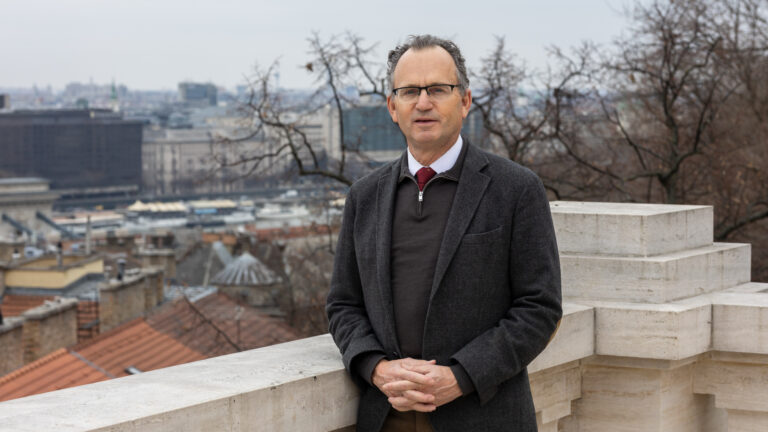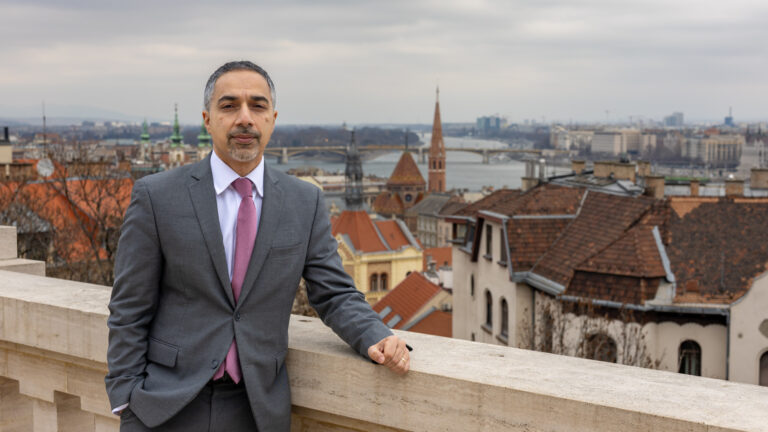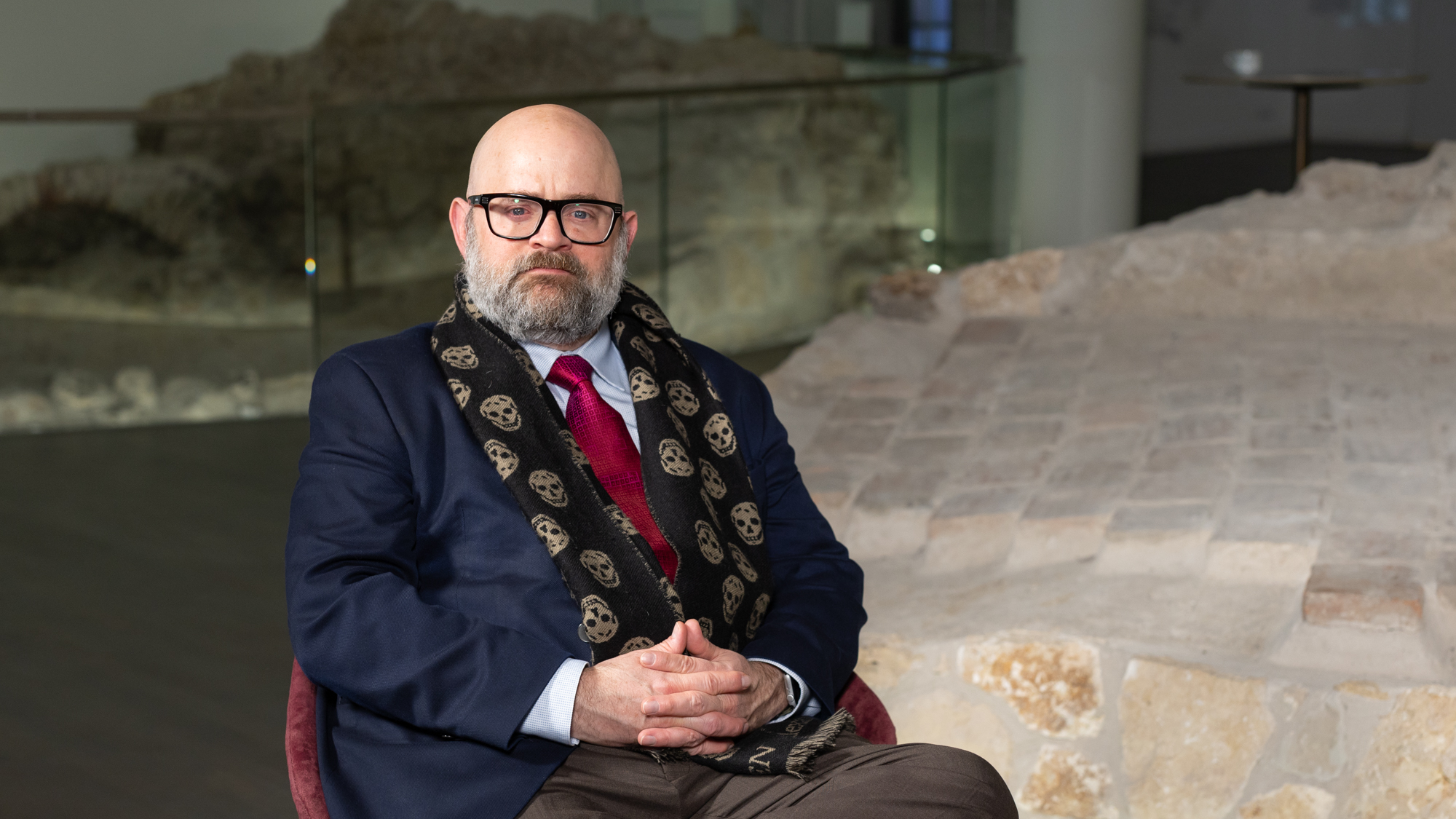
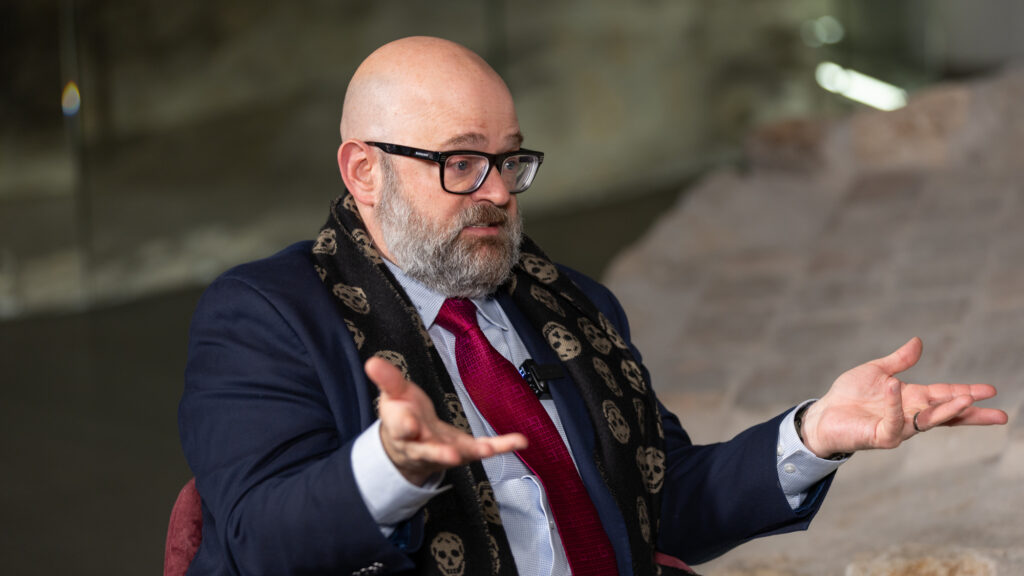
O Carter Snead is a professor of law and an expert in bioethics. He received his JD from Georgetown University, where he was elected to the Order of the Coif, and his Bachelor of Arts from St John’s College, Annapolis, Maryland. Snead served as general counsel to the President’s Council on Bioethics, where he was the primary drafter of the council’s 2004 report, and participated in UNESCO’s International Bioethics Committee. He is director of the de Nicola Center for Ethics and Culture at the University of Notre Dame. His research explores neuroethics, human enhancement, human embryo research, assisted reproduction, abortion, and end-of-life decision-making.
***
You wrote a book titled What It Means to Be Human. Can you give us a short definition of what is considered to be human?
There is a biological definition: a human being is any human organism from the moment of fertilization, throughout every gestational and developmental stage of their species-specific trajectory, from newborn to adult. It all begins with the fusion of egg and sperm in the mother’s body.
It’s a quite neutral, biological description. There are different concepts of man in different worldviews, religions, and philosophical traditions. What is the Christian concept of the human being?
I begin with the biological definition because, in bioethics, there’s often an effort to define humanity in a way that excludes some human beings at different stages of development—the unborn, the elderly, the disabled, and so on. My definition is meant to be inclusive of all human beings, because I believe that every human being, at every stage of development, possesses intrinsic and equal dignity. As Christians, we believe this dignity comes from being made in the image and likeness of God. We exist as integrated unities of mind and body. We’re not merely minds and wills. We’re not merely bodies, but a mysterious, beautiful integration of both. The fact that we are embodied beings in time places us into a particular kind of ethical relationship with one another, carrying with it certain obligations and privileges about what it means to be human.
‘I believe that every human being, at every stage of development, possesses intrinsic and equal dignity’
I think the Christian conception of Imago Dei is the most intelligible theoretical account of why we owe one another basic respect and why we enjoy equal protection under the law. The notion that we are made by a Creator who loves us and calls us to be with him in friendship, here and in the afterlife, is a beautiful account that makes sense of basic human equality and, in fact, is really the only coherent account of humanity that makes sense of human rights.
The spirit of the world dictates us to be self-centred, selfish; to concentrate on our careers and well-being only. Can we do anything we want with our bodies?
There’s a sort of anthropological mistake that is very common in modern thought, called expressive individualism. It understands the person simply as a function of their own mind and will: your mind is who you are, and your body is just an instrumental reality that can be molded and changed according to the wishes of your mind and will. The highest flourishing, according to this view, is to discover, by reflecting on your own interior sensibilities and sentiments, the authentic truths within you, express them, and then configure your life plan accordingly.
That is an attractive vision, but it misses the entirety of human life, because most of our lives are lived in a state of complete dependence on others due to our embodiment. We’re a mysterious union of mind and body. We begin our lives in total dependence, and, in the very best-case scenario, rise to the height of our powers, only to pivot back down into dependence again. Expressive individualism takes the human person in one snapshot—at the height of their powers—and really only considers a subset of human persons, the most privileged and powerful, to define what we are. It entirely misses the elderly, the disabled, the unborn, and so on. Therefore, it cannot give a coherent account of who we are or what our connections to one another are.
I think the way to correct that mistake is to think about what our embodiment means. It means that we are fragile, we are vulnerable, we get sick, we die, and we are subject to natural limits. Human flourishing, understood through the anthropology of embodiment, says that we are most human when we are taking care of one another.
The subtitle of your book is The Case for the Body in Public Bioethics. The transhumanist idea is that, with the help of biotechnology, we can overcome the biological limits of our bodies. Are there any limitations to this ambitious vision of transhumanism?
The proposal of transhumanism is to annihilate the body and replace humanity with a simulacrum of the body—a disembodied will that doesn’t exist. We might create something that simulates a will, through AI, or by downloading memories using cognitive neuroscience and various technologies. But it’s important to recognize that, to achieve the goals of transhumanism, you would have to literally erase humanity as it exists and replace it with something else. It doesn’t make sense, because in our lives we have loved ones, neighbours, and friends who are not capable of the cognition valued and prioritized by transhumanists. These are people for whom embodied living does not reflect the kind of cognitive activity these theorists prioritize, and so they would be left behind. Any ideology that leaves behind the weakest and most vulnerable is a suspect ideology.
‘To achieve the goals of transhumanism, you would have to literally erase humanity as it exists and replace it with something else’
One argument of transhumanists is that science and biotechnology can give the hopeless hope—for example, transplanting animal organs into humans, connecting IT technology with the human body, embryo research, or genetic engineering. Where is the borderline in biotechnological experiments that we should not cross?
The most important question before managing therapeutic or medical interventions is to define human health. Human health has to be normative; it can’t simply be a matter of desire. It can’t replace what human health actually is. If a person can’t walk, then providing them with prosthetics is therapy, because it restores them to a baseline of health that is objectively knowable. But if a person says: ‘I want to be able to jump 40 feet in the air,’ and we give them a prosthetic that allows them to do that, we know it’s enhancement, because, compared to the baseline of species-specific functioning, that is not part of normal human health. The very essence of medical ethics requires an ex ante understanding of what health is. People who abandon that notion say there is no objective definition of health—that it is whatever they want. Then we are no longer in the realm of medicine; we are in the realm of enhancement technologies. It seems to me that American law already reflects this definition of health: we define what health is, and from that, we can distinguish what is therapeutically required or advised from what is enhancement and what is not permissible.
I wonder what science will allow us to do in ten years. Combining human and animal genetic materials, creating hybrid chimeras, merging IT technology with the human body like cyborgs, or what Ray Kurzweil, Google’s chief engineer, has predicted—that by 2040 the human body and technology could merge through nanobots. What do you expect in ten years’ time?
We need to be sceptical about techno-optimism and to be sober. There are obviously very different kinds of chimeras. You could imagine a pig with a human liver used for transplantation. I think we feel quite differently about that than we would about a chimpanzee with a human brain, right? These are things that require us to ask questions: what are the markers of humanity, and what do we need to preserve? The markers of humanity include rationality and the capacity for reason, although it’s important to point out that these markers are not the basis of our inviolability. We need to consider the line between human and non-human, and what is essential about who we are and what makes us distinctive, before we plunge ahead. And just because we can do something doesn’t mean we should.
We have to be thoughtful, and we need to be the masters of technology, not let technology master us. Not everything is an engineering problem. Some talk about optimizing children. When you combine genomic information and analysis with assisted reproductive technologies, right now in the United States we have a company called ORIG3N, whose founder and CEO recently said: ‘Sex is for fun and IVF is for babies.’ This represents a radical separation of an essential human activity that has not just physical or biophysical meaning, but moral meaning. The way a baby comes into the world matters. If we move away from the idea that a child is not a project or a product to be optimized, but rather a gift to be welcomed and loved unconditionally, we are going very badly wrong.
What is wrong with abortion? What is your point as a Christian, as a scientist, and as a lawyer?
Abortion is an unjust taking of an innocent human life. The child in the womb is a living human being, and it is unjust for the law not to protect that child from lethal private violence. In the law governing human relationships, there are exceptions to homicide, such as self-defence. But in the abortion context, we need to begin with the proposition that the baby is a human being. This baby is the child of this mother, and the mother, oftentimes under coercion, is enlisting the assistance of a medical provider to end the life of this child.
‘Abortion is an unjust taking of an innocent human life’
If we reimagine abortion as a crisis involving a mother and her child, we think about it very differently. We don’t see it as two strangers—mother and child—fighting over scarce resources, the mother’s body, or her future. Instead, we ask: how can we come to the aid of this mother and her child? That is a very different question from asking: what is my right to repel this intruding entity inside my body that I no longer want here? Abortion is a matter of justice, and every human being, born and unborn, should be protected under the law with equal protection. As a lawyer, I would say there is a deep problem with any legal system that doesn’t protect the unborn child from lethal private violence. As a Christian, I know that taking the life of a child in the womb is a grave injustice. As a bioethicist, I understand that it is indisputable that the unborn child is killed in an abortion as a living member of the human species.
Assisted reproduction: infertility is a huge problem in modern society. Women need help, but there are moral questions about the methods.
I drafted the President’s Council on Bioethics report in 2004, Reproduction and Responsibility, when President Bush’s bioethics council addressed assisted reproduction and made recommendations to the President. In my own book, I have an entire chapter dedicated to assisted reproduction. I think the framing question we have to ask ourselves, when considering what it means to be human, is: what is a parent, and what is a child? A child must be understood as a mysterious stranger whom we welcome and love unconditionally. That should frame our entire thinking about reproduction of all kinds, including assisted reproduction, and whether we are being ethical or not.
Everyone who suffers from infertility experiences excruciating pain; they desperately want to be parents and may feel betrayed by their own bodies. I am not criticizing or judging people who are infertile and use IVF. What I am saying is that the way children come into the world has moral meaning. A child should not be treated as a product to be optimized for eye colour, hair colour, or sex. The idea of creating embryonic human beings at an early stage and deciding their fate based on selected tests is not consistent with the notion that a child is a gift.
How far can the assisted reproduction go in providing help for infertile women?
A woman suffering from infertility is likely experiencing a pathological condition, such as endometriosis or another problem. IVF, in many instances, does not cure the underlying condition but rather circumvents it. I think we should aim to restore reproductive health and try every intervention possible so that women can conceive naturally. There are clinics in the United States that focus specifically on these kinds of interventions.
‘A child must be understood as a mysterious stranger whom we welcome and love unconditionally’
Another deep problem with IVF is that basic practice involves superovulation of a woman, so that in one menstrual cycle she produces ten or twenty eggs, which are then extracted and fertilized. The standard practice now is single embryo transfer, which is good because it avoids multiple gestations and the associated health risks for mother and child. But this process creates surplus embryos—they are not usually destroyed, yet there are currently around a million embryos in freezers in the United States. IVF should be practised in a way that respects the intrinsic and equal dignity of every human being, and perhaps it is not possible to do so fully. There are, however, certain alternatives to IVF that could be pursued instead.
My final question is this: as a lawyer and a scientist, are you afraid of the future? Will AI, biotechnology, and scientific research bring us a dystopian future, or a utopian one?
Neither dystopian nor utopian. I believe in the basic goodness of human beings. I believe that we, as Christians and people of faith, have an obligation to love one another and care for one another. Arguments are good—they’re necessary—but the way to change hearts and minds is to love our neighbour as we love ourselves, especially those we disagree with, those we think are confused or misguided, or worse. People will know who we are by how we love them. And I believe—because I am an optimist—that this love will change hearts and minds.
Watch the full podcast below:
Related articles: