Paul Salem is a senior researcher and former CEO and President of the Middle East Institute (MEI). His research focuses on political change, transition, and conflict, as well as on the regional and international relations of the Middle East. Prior to joining MEI, Salem was the founding director of the Carnegie Middle East Center in Beirut, Lebanon, between 2006 and 2013. From 1999 to 2006, he was the director of the Fares Foundation and, from 1989 to 1999, directed the Lebanese Center for Policy Studies.
***
You held a speech at the Danube Institute’s conference in Budapest with the title: ‘Emerging Geopolitical Order and Disorder in the Middle East’. So what’s emerging in the Middle East, an order or a disorder?
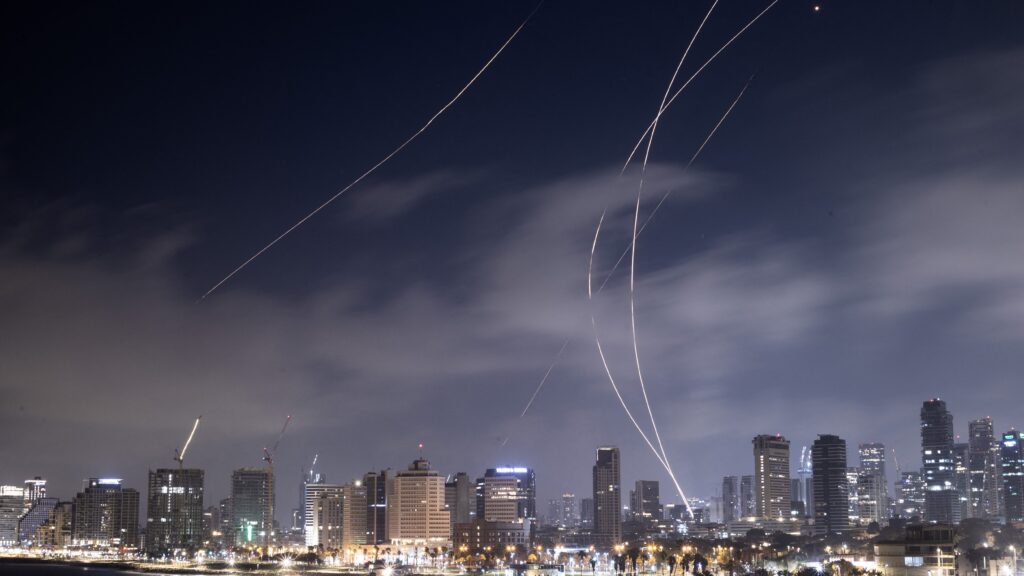
The Middle East has always been marked by a lot of disorder. It is the only region in the world which does not have a political and security architecture to manage the relations among the various states in the region. But before 7 October 2023, there was a kind of balance and a tentative stability between Israel and Iran and its proxy forces. There seemed to be a mutual deterrence that had lasted for many years without major direct wars. In the meantime, Israel was extending its relations through the Abraham Accords with the UAE and others, and Saudi Arabia was considering joining. The events of 7 October ended that old, fragile order, and we are now in a very uncertain time. Iran is much weaker than it was; Hezbollah is no longer effective in Lebanon; the Assad regime has gone from Syria; Israel has largely devastated both Hamas and Hezbollah; and it has been able to attack Iran directly with the United States. We don’t know if President Trump is going to negotiate a deal with Iran or if he’s going to launch a war against it.
There’s an American military build-up close to Iran; the US wants to push the country to sign a new deal on nuclear and maybe the ballistic missile programme, too. Will Tehran sign it?
Donald Trump would like a major deal with Iran, and the conditions for that deal are no nuclear enrichment, a reduced ballistic missile programme, and no support for proxy militias around the Arab world. My reading is that Iran is not willing to make that deal, so I think we will have maybe a week or two of attempted negotiation, but those negotiations would fail, and then I expect President Trump to launch an attack. The question is, what’s the nature of the attack? Is it a limited attack on certain targets that are signalled beforehand to Iran, or is it a major sustained war against Iran? I expect it will be limited. What Israel will do down the road is a different conversation.
‘Those negotiations would fail, and then I expect President Trump to launch an attack’
Let’s start that conversation. Israel wants to eliminate the Iranian threat, both the nuclear and the ballistic missile programme. Is the US willing to satisfy the Israeli demands?
No. I think the US has different interests, and President Trump sees things differently from Israel. They agree that Iran cannot have a nuclear weapon under any conditions, but President Trump is less focused on the issue of ballistic missiles, because those are missiles that do not reach the US, but they do threaten Israel.
And Europe.
And Europe. President Trump is less concerned about militias in Yemen, Lebanon, or Iraq, but Israel is very concerned. So their concerns are different. Trump is a deal maker; he wants to make deals. He wants to be known as the president of peace. But Prime Minister Netanyahu doesn’t think in those terms, and does not see any possibility of a deal with the Islamic Republic of Iran. He doesn’t trust them. He wants to degrade or destroy that regime or bring about regime change, if he could.
Last year, Trump ordered the bombings of the Iranian nuclear facilities. But now, there will soon be midterm elections in the US Congress, so it might not be the best time for the President to do risky business.
Well, that’s why he might decide between two different types of attacks. I think a limited attack on certain targets would have low risk and would not jeopardize his conditions inside the US for the midterm elections. However, Israel wants a large-scale and sustained attack, which would really degrade the Islamic regime. Hitting the Revolutionary Guards, the Basij forces, and the Navy, stop all the oil facilities. That is not something that Trump is willing to risk, mostly because of its potential impact on Gulf airlines or the price of oil.
Or maybe risking a regional war, as the Ayatollah said. Will Iran risk a new war by resisting the American demands?
They consider the conditions that President Trump is asking for to get a deal, which is no nuclear programme at all, very limited ballistic missile programme, no militias, they consider it as if they have surrendered, as if they’ve given up all their weapons, and hence they would expect the US and Israel to continue attacking them and to remove the regime. They don’t see that the US is going to be a friend. So negotiation for them on Trump’s conditions is negotiations to surrender. They think they have deterrence against a limited attack, and Iran is a big country; it can take a few hits. And if Trump does a big attack, then he will take a lot of risks.
‘However, Israel wants a large-scale and sustained attack, which would really degrade the Islamic regime’
How strong is the Iranian regime? Can it bear a new American (and Israeli) attack? Do they have the military arsenal to resist?
Yes, they can bear another attack if it’s a limited one. It’s a very diversified regime. Unlike Venezuela, it’s not like you just kidnap the president and everything changes. The regime has been preparing for such eventualities for a long time. When the regime is attacked, politically inside the country, they can claim that they’re at war, and hence, you’re not allowed to protest. It changes the internal dynamic, since the regime’s major risk is probably not an external attack but a domestic uprising. And for those domestic uprisings, external attacks from Israel and the US don’t necessarily make it easy, unless it’s a long campaign that completely destroys all the institutions and the regime. And I don’t think Donald Trump is interested in such a long war.
There are world powers and their interests in the Middle East. Can Russia and China counterbalance the vision and interests of America (and Israel) for the Middle East?
The Israelis have a very parochial view of their interests. They’re interested in the security of Israel itself. Their policy in the region is not to engineer a new region. Their policy is to attack enemies before they attack them. They see an enemy in Yemen, in Syria, in Tehran, and they hit them. They don’t have the ambition to redesign the whole region in a complex way. Russia has a very small footprint in the Middle East. It was present in Syria, and it still has its bases there, even after Assad has left. Russia can maintain some of its interests in the country; for example, the Russian fleet can operate in the eastern Mediterranean. For China, its interests remain largely commercial and energy-related. China gets half of its oil and gas from the Gulf, and it needs that energy to keep flowing. It sells a lot of materials across the Middle East and North Africa, but China does not challenge the US there. The US Navy protects the oil that’s going from the Gulf to China. So China is not interested in shaking the boat on that issue; they might challenge in the South China Sea or on Taiwan. So for the US, it’s a pretty hegemonic situation in the Middle East of today.
Talking about the Chinese influence, there was one visible presence of the Chinese diplomacy when they connected the arch-rival Iranians and Saudis. While the Israeli and Western interests are to connect the Saudis to Israel. Which project is stronger at the moment?
They are not mutually exclusive visions. Saudi Arabia opted to normalize relations with Iran because it was afraid of Iran, as Iran attacked Saudi oil fields and the Houthis bombed Saudi Arabia. Saudi Arabia realized that the US or Israel could not really protect Saudi Arabia—they made peace with Iran so they can go about their vision for 2030, the economic development and so on. In order to make a deal with Iran, China was the natural player to do the mediation. But Saudi Arabia was also exploring normalizing relations with Israel and a mega deal with the United States to get nuclear civilian materials, a big defence package. Saudi Arabia is definitely geostrategically aligned with the US. However, China is Saudi Arabia’s biggest trading partner. That’s where it sells most of its energy, and does more trade with China than it does with the US or with Europe. And for Saudi Arabia, that’s not a contradiction. That’s just the nature of the complex world that we’re in, that you deal with one issue with this power and another issue with that power.
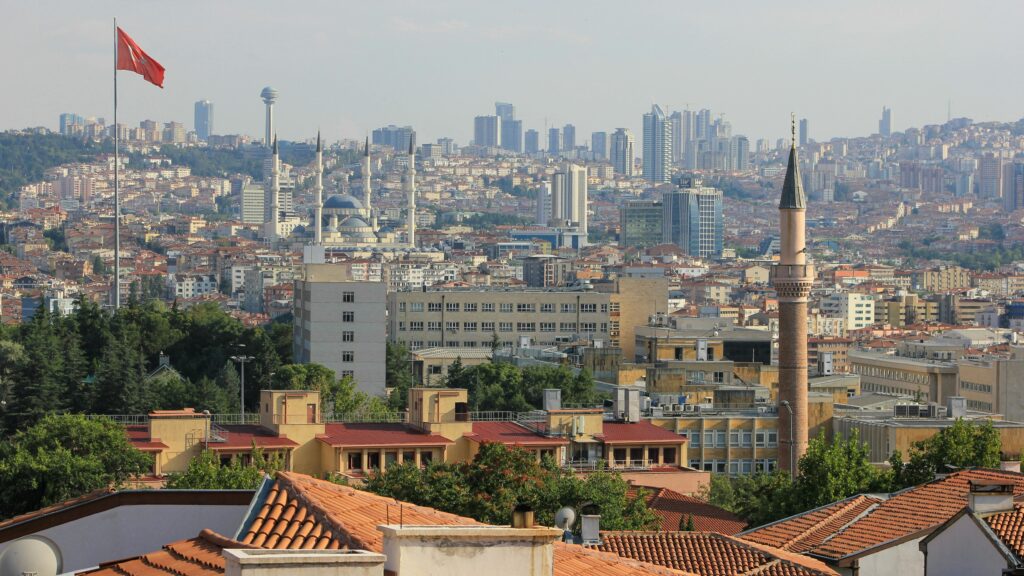
Türkiye is another Sunni regional power, a NATO member, a state which doesn’t like the Saudi-led role, and definitely doesn’t like the emerging Israeli hegemony after 7 October. What is the role of Türkiye in this matrix?
Saudi Arabia has very much been dependent on the US for its security for 80 years. Türkiye has a longer history of being an empire. It sits between Europe and Russia, as well as the Middle East, and it has recently become an independent strategic player. It has relations with Europe and with the Muslim world. It has relations with Iran, but at the same time, historically, has had relations with Israel as well. Türkiye, during the last two years, has made a major breakthrough because it supported the regime change in Syria, so it has made a huge geopolitical gain by being the main external regional player there.
‘Saudi Arabia is definitely geostrategically aligned with the US. However, China is Saudi Arabia’s biggest trading partner’
Türkiye’s relations with Saudi Arabia in the recent past were very bad, particularly after the killing of Jamal Khashoggi in Istanbul. But over the past few months, the Saudi–Turkish relationship has become very close, warm, and cooperative.
Do you expect the Saudis to sign an Abraham Accord with Israel?
I think that’s going to happen, but not right now. The obstacle is that the current Israeli government, which is facing elections in the next few months, is refusing to really talk about any concessions to the Palestinians on the West Bank, and very reluctantly accepted Trump’s terms for the de-escalation in Gaza.
The United Arab Emirates signed a deal with Israel without mentioning the Palestinian issue.
That happened, yes.
But the Saudis are not willing to do that, right?
Saudi Arabia was not even willing to do that before 7 October; they wanted some concessions to the Palestinians. But certainly after 7 October, public opinion in Saudi Arabia is such that the Crown Prince cannot go ahead with any deal with Israel unless there’s some significant concession to the Palestinians. I think that’s possible, but not this year, not until we see maybe a new leadership or new orientation from Israel after the elections.

What will happen to the Gaza Strip, and what will be the fate of Hamas? The war goal of Israel was to eliminate the military structures of Hamas, but that seems to be a mission impossible.
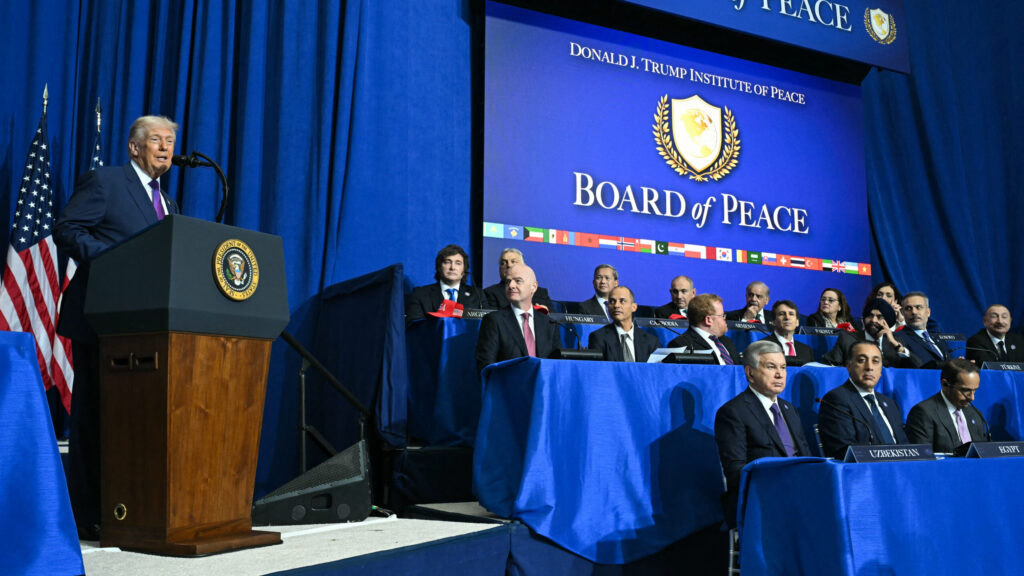
With the Gaza Strip, at least in theory, there is a plan, and there is the board of peace that President Trump announced and convened in Davos. The Gaza Strip is aligned. There are two districts. One is still controlled by Israel. The other is controlled by Hamas, but the board of peace is trying to recruit an international stabilization force, an armed force to go in and take it over from Hamas. They’ve appointed a Palestinian group of technocrats to begin managing reconstruction and humanitarian aid.
Is it a realistic plan?
It is very challenging and not easy to implement, particularly since I think the Israeli government is not enthusiastic about an international stabilization force. It’s not enthusiastic about bringing in Palestinians who are close to the Palestinian Authority, either. So it’s really a clash of wills between Donald Trump and Prime Minister Netanyahu. But I think Trump has more power when he puts his mind to it. So I expect steady, but very slow progress in the Gaza Strip, and very bad conditions may be extended for years in Gaza. Maybe after the Israeli elections, the question will be, what will President Trump’s proposal be for the West Bank? Because that is where a deal could be made, and that could then lead to normalization with Saudi Arabia and a real change in the region.
‘Maybe after the Israeli elections, the question will be like, what will President Trump’s proposal be for the West Bank?’
Will there ever be an independent, real state of Palestine? Not an entity, not an autonomy, but a real state.
Sadly, being realistic, I would say no. I don’t see a pathway. Obviously, there absolutely should be, and should have been long ago. The Israeli right wing’s ascendance in Israel, the internal disarray of the Palestinians, and the geography that Jewish settlements have done in the West Bank make it virtually impossible. I would think that a realistic scenario is something that is a one-state solution, where Jews and Arabs live in a country called Israel or Israel–Palestine, where these two communities can learn to live together, not against each other, and have a state where they all have rights, and they’re all safe. Maybe the first step is a Palestinian entity, a ‘Palestinian state’, but over time, they have to learn to live together, because it’s a tiny place, and the geography does not allow a real separation.
Watch the full podcast below:
Related articles: