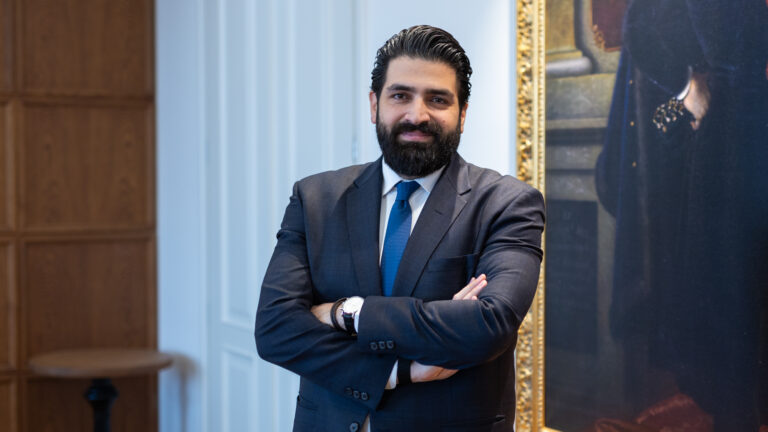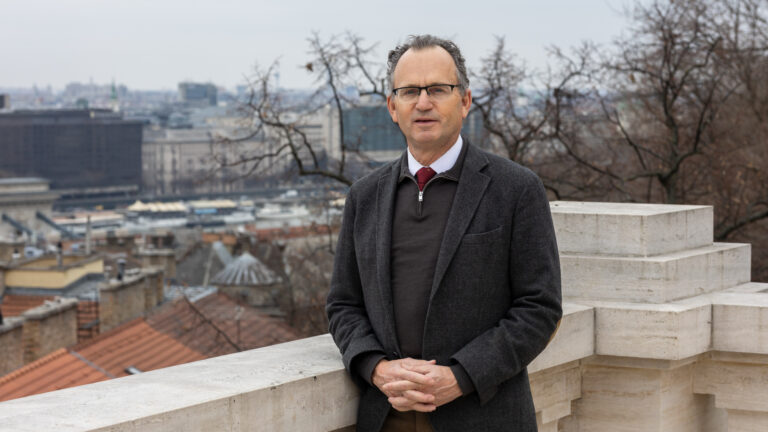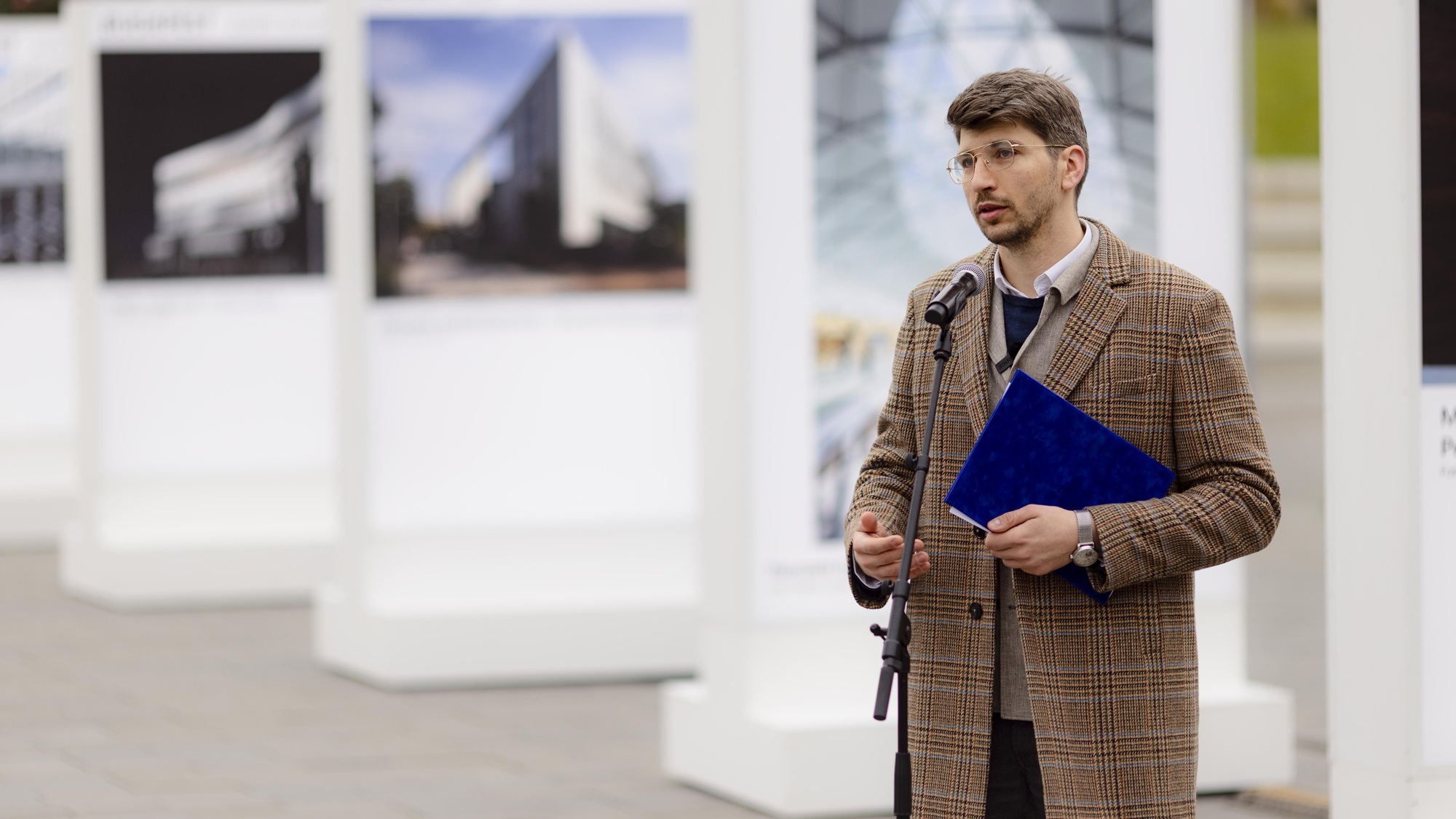
Dr Kristóf Heil serves as the Chief Operating Officer of the urban development research and analytics firm BP Műhely, which focuses on the capital city of Budapest, Hungary. He holds a law degree from Eötvös Loránd University (ELTE) and has a background in history and legal history.
***
How would you describe the primary functions of the organization led by you, BP Műhely? When was it founded, and with what mission?
BP Műhely is a professional organization specializing in urban development and urban analysis. Through data-driven research, analysis, and policy recommendations, we examine the functioning of Budapest, its long-term objectives, and its development needs. Our aim is to provide decision-makers and interested parties with clear, accessible, yet professionally rigorous insights, while also creating a platform for dialogue about the future of the capital. Founded in late 2024, our non-profit organization was established with the mission of contributing to a more livable, sustainable, and competitive Budapest by supporting urban development from a long-term, strategic perspective.
How has Budapest’s development changed since the foundation of BP Műhely?
As I mentioned earlier, BP Műhely is a relatively young organization. Nevertheless, in a short period of time, we have already completed substantial professional work and launched several programmes that provide a strong analytical foundation for Budapest’s future development.
Three major strategic projects are currently underway. The BP Index serves as a barometer of conditions across Budapest’s districts and the capital as a whole, allowing for comparisons based on objective indicators and public opinion. The BP Report, our annual publication, analyzes the functioning of the capital and its districts and evaluates the performance of local governments. In addition, the BP Database—a publicly accessible, thematically searchable repository—supports urban research and responsible decision-making through the standardized collection of statistical and policy data.
In early December, we organized the BP Conference, titled Budapest on the Scales – Is the Direction Good or Bad?, held at the Royal Riding Hall. Hungarian and international experts discussed the most pressing urban development challenges facing Budapest. We also host regular professional roundtable discussions under the title Let’s Talk, Budapest!, where experts engage in dialogue on topics such as the future of urban tourism and ownership structures in the city.
Our analytical work covers areas including transport development, the housing crisis, the reuse of brownfield sites, Budapest’s large public parks, and the capital’s portfolio of development tenders. It is important to emphasize that BP Műhely is not a decision-making body, but a professional think tank. Our role is to analyze ongoing and planned developments using data, international best practices, and long-term urban-structural considerations, and to formulate informed recommendations. Beyond our professional work, we also aim to strengthen residents’ connection to their city through community programmes. These include guided city walks highlighting lesser-known stories of Budapest, BP Quiz Night events, community runs, and organized visits to the Parliament Building.
Where is Budapest ranked currently among the popular European tourist destinations in terms of the number of visitors?
Based on recent tourism trends, Budapest clearly ranks among Europe’s leading capital-city destinations. Tourism has grown significantly in recent years, with the city welcoming more than six million foreign visitors annually. In 2024, approximately 6.03 million international tourists visited Budapest, representing an increase of around 24 per cent compared to the previous year and generating roughly 14.7 million guest nights.
The overwhelming majority of visitors—around 87 percent—were international tourists, underscoring Budapest’s strong global appeal. This is largely the result of extensive investments and developments carried out by the national government over the past 15 years, which have made the capital increasingly attractive to visitors. Major projects in the Castle District and City Park are particularly noteworthy, but numerous other renovations and developments across Budapest’s iconic locations could also be mentioned. Many of these projects have received international recognition and awards. For this reason, we felt it was important to contribute to the creation of a professionally curated photo album presenting iconic buildings whose renovation has played a key role in the capital’s development.
What can you tell us about Hitel Kiadó’s newly published photo album titled Budapest — What We Are Proud Of? What was the main concept behind the publication?
Thanks to government-led investments and developments, Budapest has experienced growth comparable to that seen at the turn of the 20th century. Two defining aspects of this process have been restoration and renewal. The capital’s buildings—whether preserved in their historical splendour or reimagined in a contemporary form—embody core elements of Hungarian identity: knowledge, talent, and pride. This is the central theme of the photo album Budapest — What We Are Proud Of.
From the outset, our goal was for the publication to be more than a simple catalogue. Rather than merely listing buildings and investments, we wanted to tell their stories—how they were renewed and what role they play in the city today. Each chapter therefore includes an in-depth interview with a prominent public figure, such as László Baán, Director General of the Budapest Museum of Fine Arts and Ministerial Commissioner for the Liget Budapest Project; Kossuth and Liszt Prize-winning pianist János Balázs; and Head Coach of the Hungarian men's national football team Marco Rossi. They speak not only about their own careers, but also about their personal connection to the featured buildings. The volume is further enriched with shorter written contributions.
This is a picture book that deserves a place on every bookshelf, whether the reader lives in Budapest or elsewhere. It documents the creative work that we Hungarians have collectively accomplished over the past 15 years. The book is available through the Libri bookstore network, and I warmly recommend it to everyone. In addition, an outdoor exhibition showcasing a selection from the album can be visited at Millenáris Széllkapu Park until the end of January.
Related articles: