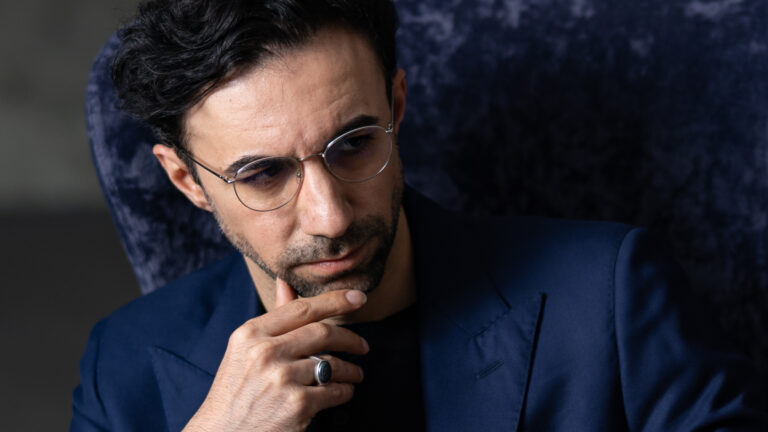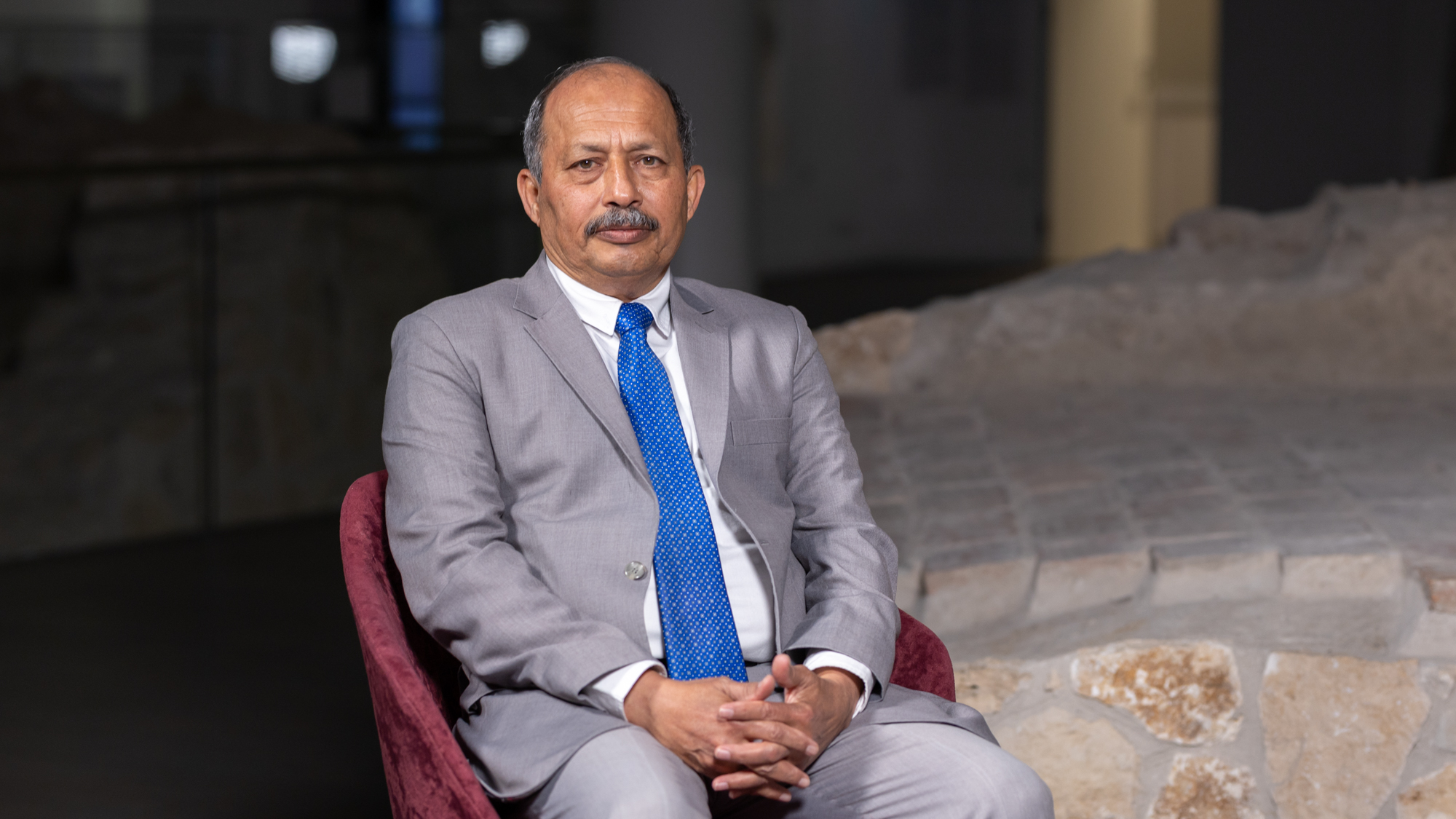
Mansoor Ahmad Khan is the Director of the BNU Center for Policy Research in Lahore and a Distinguished Fellow at the Ludovika Public Diplomacy Hub in Budapest. He holds a Master’s degree in Diplomatic Studies, and he joined the Foreign Service of Pakistan in 1992. He is a former Ambassador of Pakistan to Afghanistan; previously, he was the ambassador to Austria, and from 2018 to 2020, he also served as the Permanent Representative of Pakistan to the UN in Vienna.
***
You were the Ambassador of Pakistan to Afghanistan at the time of the catastrophic American troops withdrawal in 2021. What is your assessment of this event now?
In 2021, as a result of the Doha peace process, a peace agreement was signed between the United States and the Afghan Taliban. Its purpose was the withdrawal of the US and NATO forces, and to install a future government in Afghanistan that leads to durable peace and stability. And since no consensus was reached among the Afghan groups, the Taliban took over. They were the strongest group, and they established their own government. The international community’s expectation was that the Taliban would work for some inclusivity in their government, they would work for human rights, and they would also take action against some terrorist groups in Afghanistan. Unfortunately, not enough progress has taken place, no inclusivity, and there are human rights gaps, particularly in women’s rights and girls’ education. And then the worst area is the fight against terrorism.
The Biden administration delayed the withdrawal, and on the very day set in May, the Taliban launched an offensive, making the American withdrawal chaotic. What does this event reveal about American strategic planning and the true intentions of the Taliban?
There was a date of May 2021 set for the withdrawal, but in the meantime, there were elections in the US, and a new president came in. President Biden became the US president, and his government reviewed the agreement. The US unilaterally decided that they would delay the withdrawal by four months. But on 15 August, before the completion of this period, the former president of the Republic of Afghanistan, Ashraf Ghani, fled the country.
‘There are human rights gaps, particularly in women’s rights and girls’ education. And then the worst area is the fight against terrorism’
So the Afghan Taliban, who were surrounding Kabul, took over Afghanistan. And there was no other option to prevent the country from descending into anarchy and chaos.
This withdrawal ended a 20-year-old war, which started after the 9/11 trauma in America. What did the US accomplish in the Afghan war, and what didn’t it achieve?
I think many things were accomplished. Afghanistan became a kind of modern state, a nation-state, and adopted its own constitution, although for many years, there have been some differences among the Afghan groups. But Afghanistan grew in size and also in population. Educational institutions began operating in Afghanistan, and the country began engaging with the rest of the world as a normal state. What wasn’t achieved by the US and NATO was that they needed to have a dialogue with the Taliban immediately after they came to Afghanistan. But they delayed that dialogue; it started only 14–15 years later. If they had tried to bring all the political parties to the table, then there would have been some possibilities for reaching a political agreement between the Afghan groups and ending the war.
Osama bin Laden was found and killed in your country, Pakistan; the Mumbai attacks were committed by terrorists with Pakistani origins; the American secret service accused the Pakistani intelligence, ISI, of helping Islamist, jihadist organizations in the tribal areas between Afghanistan and Pakistan. Is the Pakistani–American relationship difficult?
I think that’s not a correct description of our relations, because from 2001 to 2021, Pakistan was an ally of the United States and NATO. All the supplies of the US and NATO forces were transported through Pakistan to Afghanistan. Pakistan remained an ally until 2021, and the US and NATO forces withdrew from Afghanistan through a cooperative arrangement with Pakistan. Pakistan and the United States are close partners even today. There have been this kind of relation, when there were military operations with about 100,000 US and NATO troops in Afghanistan, when they were facing insurgency by the Taliban. Regarding the terrorism issue in Mumbai, there is no conclusive evidence about the involvement of ISI. India did not agree to any joint investigation between the two sides, and also at other occasions, when the Indian government accused Pakistan, these claims have been proven false.
But the relationship between your country and the US is difficult, right?
Look, the United States is a superpower. And it has been involved in the region, in Pakistan, in Afghanistan, for four decades, since the Soviet Union occupied Afghanistan. Pakistani institutions have been very closely engaged with US institutions. When the two countries are negotiating or coordinating with each other on some difficult strategic issues, at times, differences also emerge. But Pakistan and the US have been very close partners.
‘Regarding the terrorism issue in Mumbai, there is no conclusive evidence about the involvement of ISI’
There is an Islamic Emirate in your neighbouring country, Afghanistan, the Taliban. Is it a difficult situation for your government?
It is a difficult situation at the moment. After the takeover in 2021, the world was expecting that the Afghan Taliban would move towards inclusivity in governance, towards human rights, and take action against terrorist groups on Afghan soil, but that progress has not taken place. And Pakistan is now the worst-affected country because of the terrorist groups attacking its provinces.
But it’s vice versa, isn’t it?
Yes.
The Afghan government accuses Pakistan of letting some terrorist groups infiltrate and operate in Afghan territory.
That is why Pakistan has been trying to engage with the Afghan government in order to have a dialogue on finding solutions for securing the borders. We have a 2600-kilometre-long border. No terrorist group should cross from Afghanistan into Pakistan, or from Pakistan into Afghanistan.
It’s a long story. These kinds of Islamist groups, like Lashkar-e-Taiba or Jaish-e-Mohammed, have been operating there for many decades. Do you have hope that you can improve the security situation?
For combating cross-border terrorism, it is important that Pakistan and Afghanistan have bilateral engagement with each other, and have a joint mechanism which tracks terrorist groups from where they enter the territory, and they should be apprehended immediately. Pakistan has proposed such a joint monitoring mechanism to Afghanistan, but the Taliban government has not yet given its agreement to that. Friendly countries like Qatar and Turkey have also been trying to facilitate dialogue between the two countries. The governments have to take action against terrorism in Afghanistan and in Pakistan.
Pakistan is in the eye of the storm; your country and Afghanistan are somehow important for all global players. For instance, Russia officially recognized the Emirate of the Taliban. Why is Afghanistan important for them?
Since 2021, we have been living in a changing world where geopolitical changes are taking place. Since the Taliban takeover, Russia, China, Pakistan, some neighbours of Afghanistan and Middle Eastern countries have been engaging with the Taliban government diplomatically. We have ambassadorial-level relations with them. Russia has gone a step ahead, and it has become the first country to formally recognize the Afghan Taliban government. Our position is that, while practically it is important to have connections with the Taliban, the formal recognition depends upon a consensus among the international community. The Taliban should be convinced to address the internal Afghanistan issues. Terrorism remains an issue not only for Pakistan, but for China and for other Central Asian countries, too.
‘Russia has gone a step ahead, and it has become the first country to formally recognize the Afghan Taliban government’
Russia is losing some of its influence in the Middle East, particularly in Syria and Iran, while China is using Pakistani ports to gain access to the region. Are these their main reasons for reaching out?
Russia is already involved in the Ukrainian war. Therefore, it wants to ensure its engagement with the Afghan government. Russia and China are interested in peace and stability in Afghanistan. Pakistan also desires that, so regional connectivity between Central Asia and South Asia should open channels for Pakistan through Afghanistan.
I understand that China supports your case in Kashmir; in return, you support the Chinese interest with Taiwan. China uses your country as a gateway to the Muslim world; in return, you can enter the huge Chinese market. Are there any other aspects of this strategic partnership?
China is one of Pakistan’s closest strategic partners. Between Pakistan and China, we say, it is an all-weather relationship. It is a relationship in the field of defence and security cooperation, trade, transit, and regional connectivity. China has invested almost $60 billion in Pakistan in connection with the Belt and Road Initiative. Of this initiative, there is its flagship project, which is the China–Pakistan Economic Corridor. So in the first phase, almost $60 billion has been invested by China and Chinese firms in Pakistan, and now we are entering into the second phase of CPEC, where we can look forward to further connectivity with Central Asia first, and with the Middle East second.
And China gives Pakistan a lot of loans. What is the profit of it? Maybe China tries to get Pakistan on its side in its global rivalry with the US?
No. China–Pakistan cooperation is based on our mutual interests. China and Pakistan are very close neighbours. China has invested in Pakistan, and China is one of our largest trading partners. As far as loans are concerned, Pakistan has acquired loans not only from China, but also from the US and Western countries, and from the IMF for its own economic needs. Pakistan has a very good relationship with China, not at the cost of relationships with any other countries.
‘China has invested almost $60 billion in Pakistan in connection with the Belt and Road Initiative’
We have a very close relationship with the US, also. The US is one of the leading trading partners and one of the leading strategic and defence partners of Pakistan. We are looking forward to welcoming US investors to Pakistani infrastructure, energy, and connectivity projects.
So you don’t want to be lost in this geopolitical rivalry between the US and China.
We are living in an era of contemporary politics where it is not ‘either-or’—it is not that you are part of one alliance and this way you are against the other. Rather, it is an era of partnerships. So we have a partnership with China, and we also have one with the United States. We would like to have a very close partnership with our neighbour, Afghanistan. And we would like to have a very good relationship with another neighbour, India—we have been having a troubled relationship for the past 75–77 years.
Do you see any rational solution to the Jammu and Kashmir problem, this territorial conflict between Pakistan and India?
Jammu and Kashmir has been a disputed territory since 1947–48, and it is on the UN Security Council agenda. So the rational solution is to have discussions, to have a dialogue at the bilateral level between Pakistan and India with an intention to resolve all the disputes peacefully, including Jammu and Kashmir, and also to invoke UN mechanisms. The UN should be playing an active role in terms of helping countries to resolve their disputes. That was the basic aim of the United Nations when it was formed. So I think dialogue is the solution, whether at the bilateral level or through the UN.
Watch the full podcast below:
Related articles: