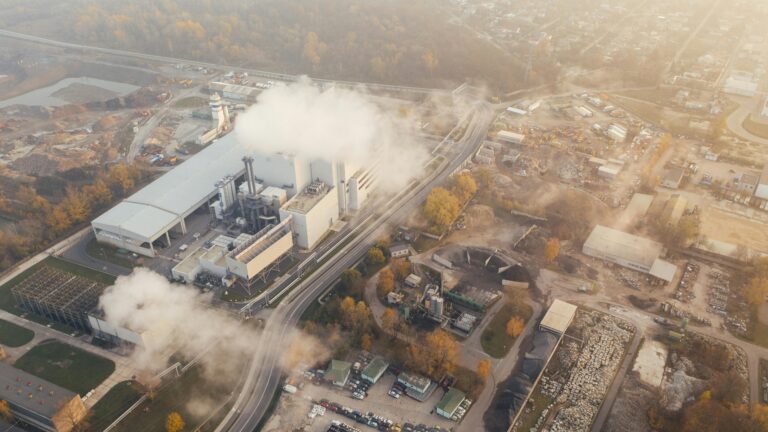
The health effects of climate change and their financial costs have been increasingly recognized; however, the burden that health care itself imposes on the environment has received far less attention. While health care services are essential for sustaining and improving human well-being, the substantial carbon footprint they generate creates additional risks to population health. Thus, health care systems present a paradox: despite being designed to protect health and ensure standards of care, their contribution to environmental pollution undermines human welfare.
Sectoral Emissions
Health care is a major economic sector, accounting for approximately 9 per cent of gross domestic product across OECD member states and supporting a significant number of jobs. It is, however, also a major emitter. Recent studies from 2018 to 2023 have shown that at least 1–5 per cent of global greenhouse gas (GHG) emissions are related to health care. Some sources suggest that if health care were a country, it would rank as the fifth-highest emitter worldwide. Its environmental footprint includes water and soil contamination and air pollutants originating from byproducts of energy use in the sector, pharmaceuticals, medical devices, waste treatment, and transport. As investments in health systems grow globally, there is a risk that environmental harm will expand simultaneously.
Analyses reveal that health-sector GHG emissions averaged about 4.4 per cent of national emissions across OECD member countries, surpassing global aviation’s share. National emissions shares range from 2.7 per cent (China) to 9.8 per cent (USA). In many assessments, 79 per cent of these emissions come from health-care supply chains, while hospitals account for almost 30 per cent on average (depending on the accounting method used). Resource-intensive activities can improve quality of care while also intensifying climate impacts. Beyond hospitals, medical retail and ambulatory care account for the largest share of emissions globally, while an average surgical case emits between 146 and 232 kg CO₂e.
Key Sources of Emissions
On a global scale, pharmaceutical production accounts for 11–18 per cent of total health-sector emissions, whereas medical equipment accounts for about 7–10 per cent. Within hospitals, operating theatres, intensive care units, and gastrointestinal endoscopy emerge as the greatest contributors. Notably, all inhaled anaesthetics qualify as potent greenhouse gases, which are exhaled unchanged by patients and ultimately vented into the atmosphere. Of all types of anaesthetic gases, desflurane is the most harmful to the climate, with nearly 18 times the warming impact per unit compared to sevoflurane. Nitrous oxide exacerbates this threat through ozone depletion, although it accounts for only 1–3 per cent of global N₂O emissions. While these agents are staples of surgical care, substituting higher-impact agents with lower-impact alternatives could be crucial for decarbonization.
‘All inhaled anaesthetics qualify as potent greenhouse gases’
Beyond anaesthetic emissions, the surgical field also amplifies waste streams, generating 21.33 per cent of health care solid waste, rising to 70 per cent when labour and delivery are included. In China, the amount of medical waste reached 1.4–2.29 million tons in 2019. Up to 80 per cent of operating theatre waste is pre-incision, making it non-biohazardous and recyclable. Yet it is often classified as regulated medical waste. At least 30 per cent of medical waste qualifies for recycling, underscoring that not all intraoperative discards require regulated medical waste treatment.
Surgery relies heavily on technology, and innovations seem to carry a higher environmental footprint: for example, while a robot-assisted laparoscopy emits 40.3 kg CO₂e per patient, a conventional laparoscopy accounts for 29.2 kg CO₂e, and a laparotomy for 22.7 kg CO₂e. This, however, does not imply that we should sacrifice the achievements of modern medicine for green ambitions, but rather that we should find ways to align clinical excellence with environmental responsibility.
Mitigation Pathways
Efforts to quantify and mitigate the carbon footprint of the health sector are accelerating. However, there are multiple obstacles complicating progress, such as competitive pressure and data gaps. Decarbonization of the sector depends mainly on energy-efficiency standards, minimally invasive protocols, and reshaping service models.
Reducing avoidable admissions and the average length of hospital stays could lower hospital emissions by 25 per cent, benefitting both patients and health care employees. Broader reforms include curbing low-value care, administrative burdens, and unnecessary diagnostics, which could significantly cut overall transport emissions. Evidence also suggests that substituting certain tools—such as high-emission anaesthetic gases or certain inhalers—for more sustainable alternatives can reduce emissions with minimal clinical impact or cost trade-offs.
‘Reducing avoidable admissions and the average length of hospital stays could lower hospital emissions by 25 per cent’
Transitioning towards greener health systems further requires integration of transport electrification, data standardization to close transparency gaps, and low-impact anaesthetics and devices. Pioneering incentives include Norway’s mandatory environmental criteria in hospital procurement and Belgium’s shortening of the length of inpatient care and prioritizing outpatient procedures.
Despite some progress in the sector, significant challenges remain. Health care workers face dual imperatives: delivering high-quality care amid burnout and resource constraints, while also attempting to minimize the sector’s climate impact. The carbon footprint of health care reveals the aforementioned profound and consistent contradiction: climate change takes a health toll on populations, which health care must manage, while the sector itself contributes to the looming climate-related health crisis.
While greening the sector is essential, a major constraint is that multiple parts of the health care system cannot be compromised, as they are indispensable and standards of care must take precedence over decarbonization imperatives. Hospitals, anaesthetics, surgical waste, and sprawling supply chains thus represent pivotal leverage points where low-regret interventions—such as gas substitution, waste segregation, and care-pathway optimization—promise substantial emissions cuts without sacrificing outcomes.
Related articles: