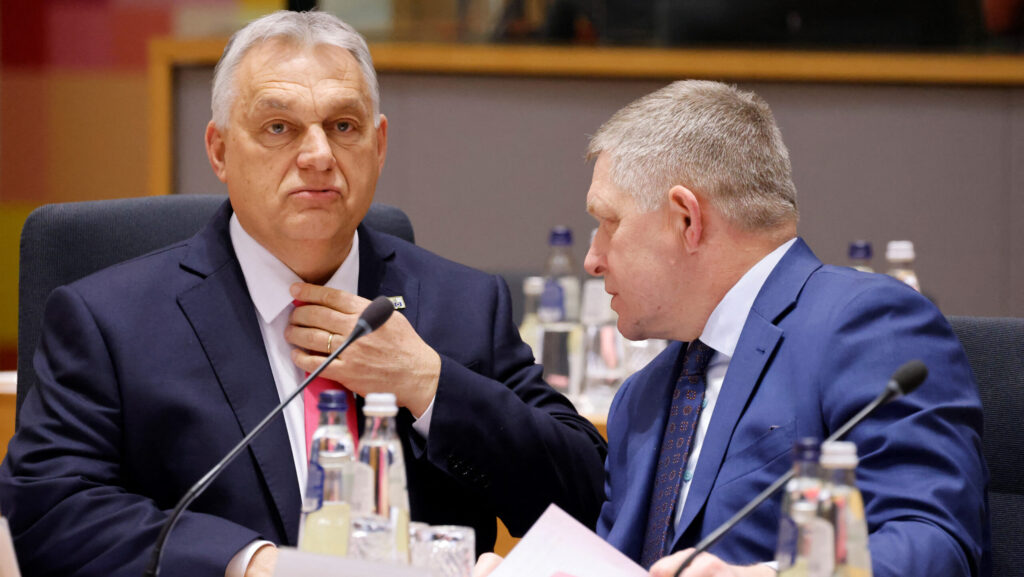
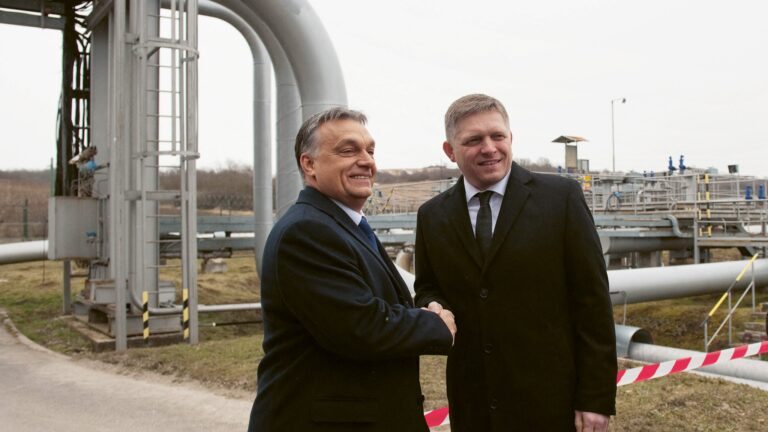
Hungarian Prime Minister Viktor Orbán kicked off 2026 with a large international press conference on Monday, attended by 63 media outlets, including The Telegraph, Financial Times, Bloomberg, and Reuters. Opening his remarks, Orbán said that 2025 marked the end of the liberal world order, paving the way for what he described as an emerging ‘age of nations’, adding that Hungary had been an early forerunner of this shift since 2010.
According to the prime minister, the defining European question of the new era is whether the continent moves towards war or peace, with the government’s primary task being to keep Hungary out of any military conflict. Orbán reiterated that Hungary would not provide financial support to Ukraine in the form of joint EU borrowing, nor would it send weapons or troops. He rejected proposals for what he termed a ‘war economy’, stating that Hungary had instead opted for a ‘peace economy’ focused on development. The prime minister argued that so-called loans to Ukraine amounted to a deception, as he did not believe they would ever be repaid. ‘We will not give the Hungarians’ money to Ukraine,’ he said, adding that Hungary would also refuse any form of war bonds.
The Hungarian Path
Orbán framed security as the key concept for the coming decade, arguing that Europe’s strategic centre of gravity has shifted as European Council meetings have effectively become ‘war councils’. He presented Hungary’s position as a peace-oriented alternative, warning that compulsory conscription should be understood as a wartime measure and therefore is not timely in Hungary. He also said the strongest peace camp in Brussels is currently organized under the Patriots, and argued that an eventual Russian–American understanding could significantly reduce the risk of escalation.
Turning to domestic economic policy, Orbán listed a series of previously announced measures, including the doubling of family tax allowances, personal income tax exemptions for mothers with multiple children, minimum wage increases, a corporate tax reduction programme, the introduction of a 14th-month pension, and the continuation of the Home Start Programme. He also confirmed six months’ additional pay for members of the armed forces, continued pay rises for teachers, and wage increases in the cultural, social, and justice sectors. A new residential energy storage programme was also announced.
Orbán argued that while the war is constraining growth prospects, the government intends to keep both the budget deficit and public debt under control, while continuing to protect households. He contrasted this approach with what he described as an opposing economic logic—one that would place the burden first on voters—saying his government’s preferred model is to involve actors that can bear more, such as banks, multinational companies, and energy firms.
On demographic policy, Orbán acknowledged that Hungary has not yet achieved a demographic turnaround, despite the extensive family-support measures introduced in recent years. He said Hungarian family policy has two primary objectives. First, it seeks to ensure that those who raise children do not have a worse material standard of living than those who do not, noting that this gap has narrowed significantly. He added that Hungary is approaching a point at which women raising two children will pay no personal income tax at all.
The second objective, he said, is to increase the number of births. Here, however, the government faces biological limits, as the number of women of childbearing age is steadily declining. ‘Money on its own is not enough,’ Orbán said, adding that while the government can provide rules and financial incentives, there are clear limits beyond which the state should not intervene. He stressed that Hungary is among Europe’s most liberal societies when it comes to private life, arguing that people strongly resist state interference in personal decisions. Orbán added that although the demographic situation has not improved, its deterioration has been slowed, estimating that without Hungary’s family policies there would be around 200,000 fewer children in the country today.
Migration was identified as another major issue of the ‘new era’. Orbán rejected the implementation of the EU’s migration pact, noting that Hungary would be required to process 23,000 asylum applications annually, establish a facility capable of hosting 10,000 people, and accept 350 migrants who had applied elsewhere in the EU. ‘We will not take in a single migrant. We will not build migrant camps, and we will not change our border protection system,’ the prime minister said, insisting that Hungary would not become an immigration country or accept Brussels deciding ‘who we live together with’.
He argued that staying out of the 2015 migration crisis was a decisive moment for Hungary, and said the country has accepted the political and financial costs of resisting Brussels. He also suggested that, in the longer run, Hungary may attract more Western European citizens seeking the kind of public order and social environment that has eroded elsewhere—framing this as a demographic trend distinct from non-European immigration.
On energy policy, Orbán criticized EU gas and oil regulations, particularly plans to sever ties with Russian supplies, which he said would be damaging to Hungary. He announced that the government was considering legal action against the European Commission, arguing that sanctions were being introduced under the guise of trade policy and that decisions on the energy mix fall under national competence. Politically, he said Hungary was working to overturn current EU energy rules, expressing hope that by 2027 the war would end, a new balance would emerge between Russia and Ukraine, and sanctions could be lifted. According to Orbán, existing EU price regulations increase energy costs in Europe by around 20 per cent.
A New Reality
Orbán also addressed developments in Venezuela and their implications for both international norms and energy markets. He argued that the meaning and practical force of international law have changed, with major powers increasingly setting it aside in their decision-making. He said Hungary does not seek to form a global moral judgement on the US operation that resulted in the capture of Venezuela’s president, adding that, from Budapest’s perspective, the development is beneficial. He argued that international law has never provided Hungary with meaningful protection, adding that Brussels has instead used it against Hungary. In that context, he questioned why Hungary should regret the emergence of a new reality.
Orbán described the collapse of ‘narco-states’ as positive news in the context of intensifying global efforts against drug trafficking, while also highlighting energy-market implications. He argued there is a serious chance that bringing Venezuela under control could contribute to a more favourable global energy-price environment. Orbán linked this to what he described as the US reindustrialization agenda and the energy intensity of modern technologies, stressing that both the US and Hungary have an interest in cheaper energy. He said Hungary needs to ‘get through’ to 2032—when Paks II is expected to come online—while securing affordable energy in the interim. He also said Hungary vetoed, or declined to endorse, a common EU position on Venezuela, framing the decision as a matter of sovereign foreign policy.
Orbán also said that Hungary has direct knowledge of conditions in Venezuela, noting that in recent years hundreds of people have fled to Hungary from the country. He said that accounts from those who left—including Hungarians with firsthand experience—have given the government a clear picture of everyday realities there. According to the prime minister, many of those who fled are also relieved that change has now occurred. He described Venezuela as a beautiful, wealthy, and inherently strong country, arguing that it could still have a significant future ahead of it.
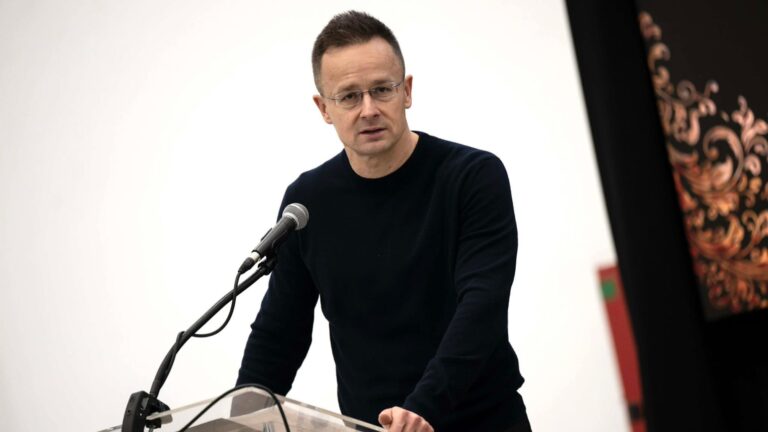
On transatlantic relations more broadly, Orbán emphasized his strong personal ties with US President Donald Trump and highlighted their meeting in Washington last October as ‘successful’. Responding to a journalist’s question, he said that Minister of Foreign Affairs and Trade Péter Szijjártó is still working on a ‘financial shield’ agreement—a currency swap arrangement—between Hungary and the US, arguing that Hungary cannot rely on the EU for support in a crisis. He also pointed to continued American investment interest in Hungary as evidence that ‘there is life outside Brussels’.
On the European Union, Orbán said Hungary has no interest in leaving the bloc, arguing that such a step would be irrational for a country of Hungary’s size and capabilities. At the same time, he claimed the EU is undergoing a process of disintegration driven by internal contradictions and implementation failures—citing unrealistic timelines in the green transition and the dysfunction of Schengen as examples. He described Brexit as a courageous assertion of national self-consciousness, but added that Hungary has been among those harmed by the UK’s departure, arguing it weakened the counterweight to Franco–German dominance. He summed up Hungary’s strategic posture as remaining inside the EU and under NATO’s security umbrella, while insisting on sovereign decision-making in foreign and energy policy.
On China and the ‘Eastern Opening’ policy, Orbán said Hungary consistently supports the one-China principle, describing it as a long-standing tradition. He argued that Hungary does not view China as a threat but as a major opportunity, and presented recent Chinese–Hungarian cooperation as mutually beneficial modernization—an invitation for Hungarian companies to participate in China’s modernization and for Chinese actors to participate in Hungary’s economic modernization, including through investment. Orbán criticized the EU’s framing of China as a ‘systemic rival’ as misguided, arguing that systems do not compete in an abstract sense and that governance models grow out of distinct cultures. In that context, he said attempts to synthesize different political systems into universal models reflect flawed thinking. He added that pro-China policy is not currently the majority position within the EU.
A Decisive Election Ahead
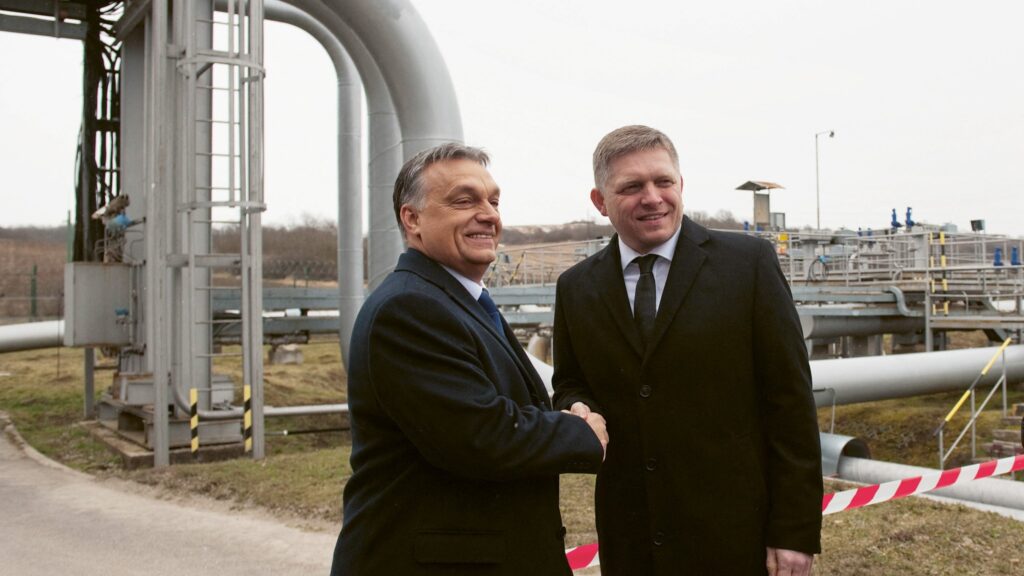
Responding to questions on Slovakia, Orbán addressed a law announced by the Slovak government led by Robert Fico, under which challenging the Beneš decrees could potentially carry prison sentences. Speaking to the Slovak outlet Paraméter, Orbán said that ethnic Hungarians in Slovakia can count on the Hungarian government’s support. He said the legislation is difficult to interpret, noting that although many people in recent weeks have publicly criticized the Beneš decrees and the principle of collective guilt, there have so far been no legal consequences.
At the same time, he pointed out that the decrees are still being applied in an ongoing legal dispute involving around 1,000 hectares of agricultural land, which he said clearly requires attention. Orbán said Hungary rejects the principle of collective guilt, pledged unconditional support for ethnic Hungarians in Slovakia, and said he would consult with Fico once he has a full understanding of the situation.
Orbán portrayed the coming parliamentary election as a choice between continuing the ‘Hungarian path’ or shifting to what he called the ‘Brussels path’. He criticized the economic policy thinking around the Tisza party as reflecting Brussels’ expectations, and said the campaign environment resembles 2022, claiming the same circles of influence have returned on the opposition side. Orbán also ruled out a prime ministerial debate with Péter Magyar, and stated that he will remain the Fidesz–KDNP prime ministerial candidate in 2026, arguing that no better alternative has been found within his camp. Orbán also rejected media reports suggesting that Hungary is considering a shift from its parliamentary system to a presidential one.
Related articles: