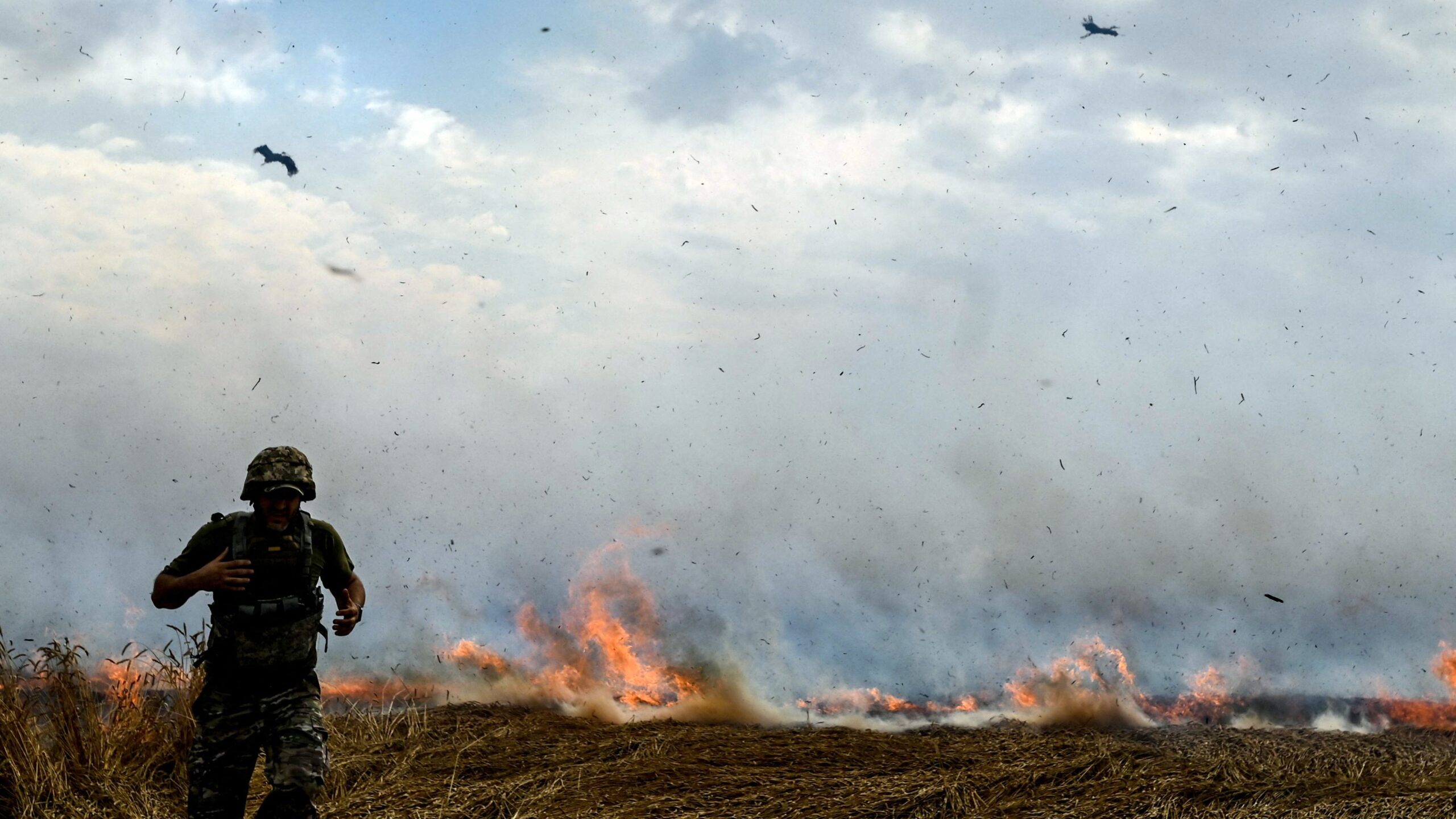
Four years after Russia’s full-scale invasion of Ukraine, the European Union finds itself confronting not only a protracted war on its eastern flank but also a fundamental question about its own political identity.
In an address to the European Parliament on 24 February 2026, Volodymyr Zelenskyy urged EU leaders to provide Ukraine with ‘a clear date for accession’ to the Union. Framing enlargement as part of the diplomatic architecture necessary to end the war, Zelenskyy argued that ambiguity emboldens the Kremlin. Without a concrete timeline, he warned, Moscow will seek to ‘block Ukraine for decades by dividing Europe’.
The request was met with applause in Strasbourg. Yet applause is not accession. And solidarity, in today’s Europe, is no longer a given. Actually, it has never been.
Enlargement as Strategy
Zelenskyy’s intervention was not merely symbolic. It was strategic. By linking EU membership to war termination, he placed enlargement at the centre of Europe’s security calculus. The message was blunt: if Ukraine’s European trajectory remains uncertain, Russia retains leverage.
In his speech, Zelenskyy described Vladimir Putin as a dictator intent on destroying ‘the freedom of neighbours, entire regions, and sometimes even the world’. He contrasted regimes that confine repression within their borders with those that actively export domination. Russia, he suggested, belongs firmly to the latter category.
The moral framing was clear. Yet the political reality inside the EU is more complex. Enlargement is not simply a gesture of solidarity; it is an institutional transformation requiring unanimity among Member States. And unanimity is precisely what is lacking.
The €90 Billion Question
Simultaneously, Brussels is preparing a new €90 billion support package for Ukraine for 2026–2027. In a joint statement from Kyiv, Ursula von der Leyen and António Costa reaffirmed that the EU remains Ukraine’s largest donor, having already mobilized nearly €200 billion since 2022. Of the new package, €60 billion would reportedly be directed to military needs under the so-called ‘Porcupine Programme’.
‘The EU remains Ukraine’s largest donor, having already mobilized nearly €200 billion since 2022’
The scale is extraordinary, and it reflects the EU’s evolution from a primarily economic bloc into an increasingly geopolitical actor. Yet here too, the consensus is fraying.
Budapest’s Red Line
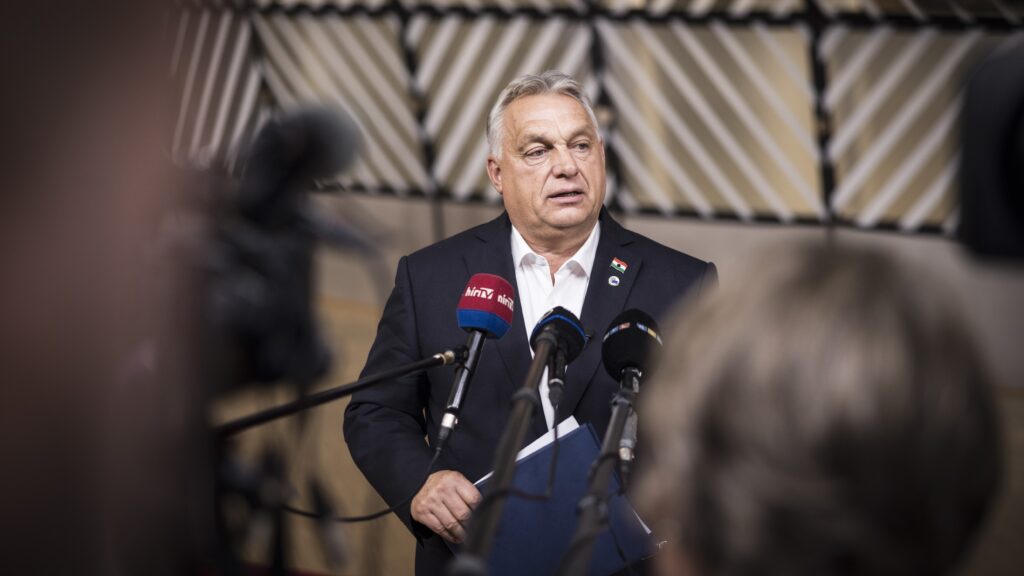
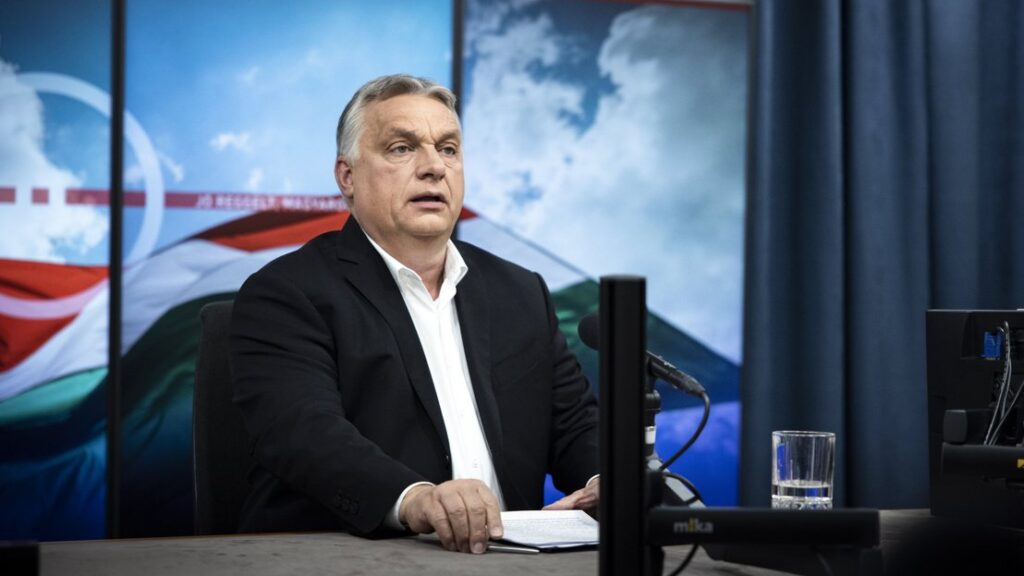
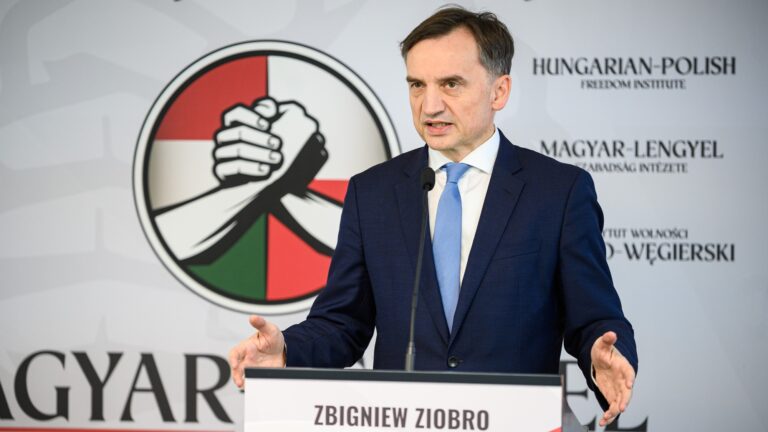
Viktor Orbán has blocked the package, declaring that Hungary will not approve ‘any decision favourable to Ukraine’ until Zelenskyy ‘regains common sense’. The Hungarian Prime Minister has tied his veto to disputes surrounding the Druzhba oil pipeline, which supplies Russian crude to parts of Central Europe, as Budapest accuses Kyiv of endangering energy security by allegedly blocking or damaging the infrastructure.
But the pipeline dispute is only part of the story. Hungary faces national elections on 12 April, and the Ukrainian issue has been woven into broader narratives of sovereignty, energy security, and resistance to Brussels’s pressure.
From Budapest’s perspective, the €90 billion package is not merely about Ukraine; it is about the precedent of financing a war effort through collective European debt and about the creeping centralization of foreign and defence policy at the EU level.
Solidarity as the EU’s Stress Test
The debate unfolding in Brussels is not merely institutional. It is existential. For what does European solidarity actually mean? Is it financial redistribution? Political endorsement? Or does it ultimately imply the willingness of armies and citizens to fight—and potentially die—for causes beyond their national borders—and, frankly, their national interest?
Would a Spaniard be expected to die on the Russian–Ukrainian front in the same way that a Pole might be expected to defend the fences of Ceuta in the hypothetical event of Moroccan escalation? This uncomfortable symmetry reveals the limits of rhetorical unity. Solidarity is easily proclaimed in parliamentary chambers; it becomes far more complex when translated into reciprocal sacrifice.
Last month, Spain’s socialist Prime Minister, Pedro Sánchez, declared that Spain would pursue an agenda to bring about ‘a security framework that could ultimately make it possible to bring the war to an end and achieve a just and lasting peace in Ukraine.’ He underlined that Spain is prepared to consider the participation of its military capabilities within future security guarantees for Kyiv—but only after a sustainable ceasefire has been achieved.
In a world of shifting paradigms in international politics, this formulation is significant. In Spain, sectors of the political left—historically critical of NATO and Atlanticism—now speak of sending what some have provocatively labelled a ‘new Blue Division’ to support Ukraine. The historical irony is striking. The original División Azul fought alongside Nazi Germany against the Soviet Union during the Second World War.
This is a striking irony, as many draw parallels between Russia and the USSR, and even more have accused Kyiv—well before 2022—of neo-Nazi sympathies. In any case, at the very least, symbolic references persist. And sometimes even more than references, as reports have emerged of Spanish volunteers fighting on the Ukrainian side, and of individuals associated with a so-called ‘Division 250’—branded as a 2nd Blue Division—dying near Pokrovsk shortly after arrival at the front last summer.
For some, such participation in the war effort represents a moral commitment to European freedom. For others, it raises difficult questions about escalation in a way that cannot help but recognize that solidarity, once abstract, is now measured in concrete risk. The more the EU deepens its military and political engagement, the more national electorates will ask whether solidarity is symmetrical, reciprocal, and in line with their own strategic interests.
Europe Confronts Itself
As a result, four years into the war, the European Union is not only confronting Russia. It is confronting itself.
One vision sees Europe as a geopolitical bloc whose credibility depends on binding Ukraine irreversibly into its institutional framework. Enlargement becomes both shield and signal; financial support becomes both necessity and moral duty.
‘Strategic overreach is not a sign of strength; it can be a path to self-destruction’
Another vision prioritizes sovereignty, prudence, and domestic accountability. It questions whether open-ended commitments—financial, military, and institutional—serve national interests in an era already marked by inflation, energy volatility, demographic decline, and social fatigue.
This sovereigntist caution should not be caricatured as indifference. On the contrary, it may be the most responsible position available. If prudence is abandoned and Europe drifts into confrontation with Russia, there may be no European Union left to integrate or fragment. Strategic overreach is not a sign of strength; it can be a path to self-destruction. Counterintuitively, those resisting further integration under wartime pressure may be the ones safeguarding not only their own nations’ interests but, by extension, the long-term survival of the Union itself.
Moreover, what exactly would Ukrainian accession mean under present conditions? Would EU membership apply only to the territories currently controlled by Kyiv? Would the Union implicitly commit itself to recovering, at potentially enormous military and financial cost, all territories claimed by Ukraine? Would Brussels transform a frozen conflict into a permanent frontier of the Union?
And then there is the economic question. Integrating a war-ravaged country of Ukraine’s size into the EU’s budgetary and cohesion structures would require unprecedented transfers. The cost of reconstruction, institutional alignment, agricultural integration, and defence guarantees would be vast. At a time when many Member States struggle with fiscal constraints and public discontent, the bill would not be abstract—it would be political. A political revolution would follow a very certain financial crisis.
Four years into the war, European solidarity does not merely face an external adversary. It tests European unity more than ever. And unity, if it is to endure, must rest not only on moral impulse but on strategic clarity and limits.
Related articles: