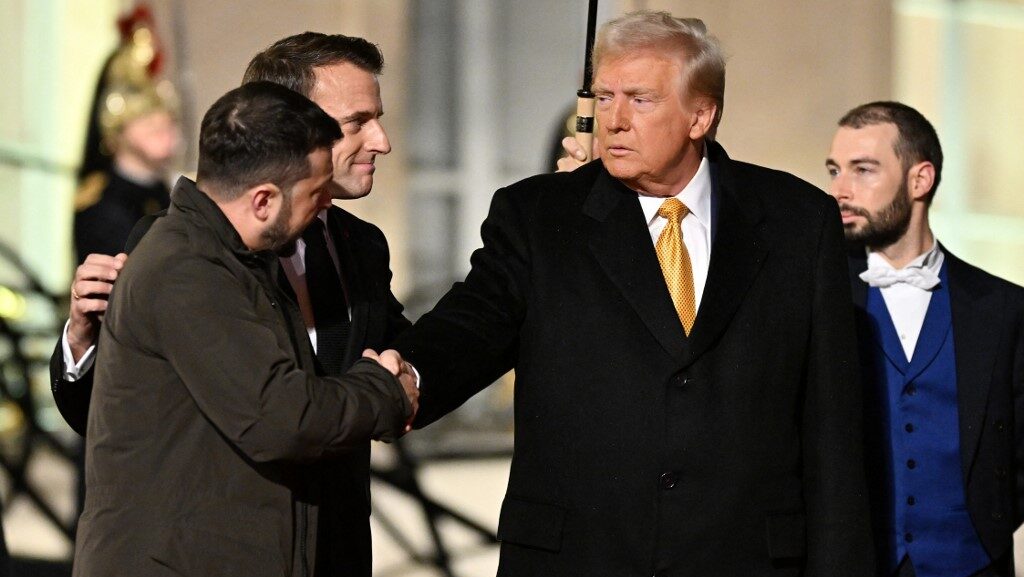
Moscow claimed on Monday that Ukraine had attempted a drone attack on President Vladimir Putin’s residence in the Novgorod region, alleging that 91 long-range drones were intercepted by Russian air defences. Ukrainian President Volodymyr Zelenskyy dismissed the allegations—which emerged shortly after his meeting with US President Donald Trump at Mar-a-Lago, Florida—as false, describing them as a deliberate attempt to sabotage peace efforts.
‘This alleged “residence strike” story is a complete fabrication intended to justify additional attacks against Ukraine, including Kyiv, as well as Russia’s own refusal to take necessary steps to end the war,’ Zelenskyy wrote on X on Monday. ‘Ukraine does not take steps that can undermine diplomacy,’ he added.
Volodymyr Zelenskyy / Володимир Зеленський on X (formerly Twitter): “Russia is at it again, using dangerous statements to undermine all achievements of our shared diplomatic efforts with President Trump’s team. We keep working together to bring peace closer. This alleged “residence strike” story is a complete fabrication intended to justify… / X”
Russia is at it again, using dangerous statements to undermine all achievements of our shared diplomatic efforts with President Trump’s team. We keep working together to bring peace closer. This alleged “residence strike” story is a complete fabrication intended to justify…
Russian Foreign Minister Sergei Lavrov described the incident as a ‘hostile act’ and labelled it ‘state terrorism’, asserting that Russia’s negotiating position would be reconsidered in light of the attack. Lavrov also said that Moscow had already identified targets for retaliatory strikes and warned of consequences. Despite this, he continued, Russia does not intend to withdraw from the negotiation process with the United States regarding Ukraine.
Trump spoke by phone with Putin following the alleged attack, a conversation the American president later described as ‘positive’. Speaking to reporters, Trump said he was ‘very angry’ about the allegation and stressed the sensitivity of the current diplomatic environment, while acknowledging that there was no definitive evidence and that investigations would be required.
The Kremlin’s readout of the call indicated that President Putin raised concerns about the alleged attack and signalled a possible reassessment of Russia’s negotiating posture, echoing Lavrov’s earlier remarks.
Critical Moment for Peace
The Kremlin’s claim came at another critical moment in the fragile peace process that began in February after Donald Trump took office. Just hours before the alleged Ukrainian drone attack, Trump hosted Zelenskyy at Mar-a-Lago, after which both sides stated that they were ‘very close’ to finalizing an agreement. The Ukrainian leader even said that as much as 90 per cent of the peace plan had already been agreed, including Kyiv’s long-sought Western security guarantees. Despite these developments, other core issues—such as the future status of contested territories in Ukraine and arrangements concerning nuclear facilities—remain unresolved.
Hungarian Conservative on X (formerly Twitter): “🚨🇺🇸🇺🇦 90% OF UKRAINE PEACE PLAN AGREEDTrump and Zelensky held a joint press conference in Florida, outlining progress on a peace plan and future cooperation👉 Peace plan close to completionZelensky said the peace plan is 90% agreed, with security guarantees 100% agreed… pic.twitter.com/eQtP9RKEGE / X”
🚨🇺🇸🇺🇦 90% OF UKRAINE PEACE PLAN AGREEDTrump and Zelensky held a joint press conference in Florida, outlining progress on a peace plan and future cooperation👉 Peace plan close to completionZelensky said the peace plan is 90% agreed, with security guarantees 100% agreed… pic.twitter.com/eQtP9RKEGE
The timing of Moscow’s claim regarding the alleged drone attack therefore rightly raises suspicions of a deliberate attempt to derail peace negotiations. Such tactics would hardly be unprecedented in the decade-long conflict: the interests of many—both directly and indirectly—involved parties contradict peace in Ukraine, whether it be the United Kingdom, EU elites, the Washington establishment, or Russia itself. Brussels has been quietly undermining Trump’s peace efforts since even before he took office in January, while Putin is clearly attempting to buy time for Russian forces to advance towards more favourable negotiating positions on the battlefield.
On the other hand, conducting such attacks would not be entirely foreign to Ukrainian military strategy. Kyiv’s drone units have carried out several successful operations inside Russia in recent months, most notably Operation Spiderweb. At the same time, political tensions within Ukraine are growing over peace talks and corruption linked to the highest levels of Zelenskyy’s government. While the Ukrainian public is increasingly open to a negotiated settlement, many within the political elite—not to mention military—oppose an agreement based on the proposals currently on the table.
True or Not, It Already Hurts
While many question marks remain over the incident, the alleged drone attack could carry significant implications for both peace talks and the course of the war. As Russian officials have already indicated, the incident could prompt a re-examination of Moscow’s stance in negotiations, potentially leading to more rigid demands on territorial issues or ceasefire terms. The alleged attack would also provide a convenient pretext to justify escalated military action—as already suggested by references to ‘retaliatory strikes’—and could bolster domestic support for a more hawkish negotiating posture while reducing internal pressure on Putin to compromise in a potential deal.
How the narrative surrounding the incident evolves in the coming months could also influence US policy towards Zelenskyy’s administration. If the perception persists that Ukraine engaged in a controversial action—even in the absence of verification—it could catalyze a shift towards increased diplomatic pressure on Kyiv to refrain from steps perceived as jeopardizing negotiations. Such a shift could constrain Ukraine’s ability to conduct military strikes against targets inside Russia, which would, in turn, reduce its prospects in the war.
That being said, if such an attack did indeed occur, it almost certainly could not have happened without Washington’s approval. While the initial White House response and Trump’s own reaction were largely neutral and diplomatic, such a move would risk eroding the diplomatic trust and working routine established over recent months between the Trump administration and the Kremlin regarding Ukraine. Should that trust collapse, peace talks would effectively be over—without both the United States and Russia at the table, there can be no peace in Ukraine.
Related articles: