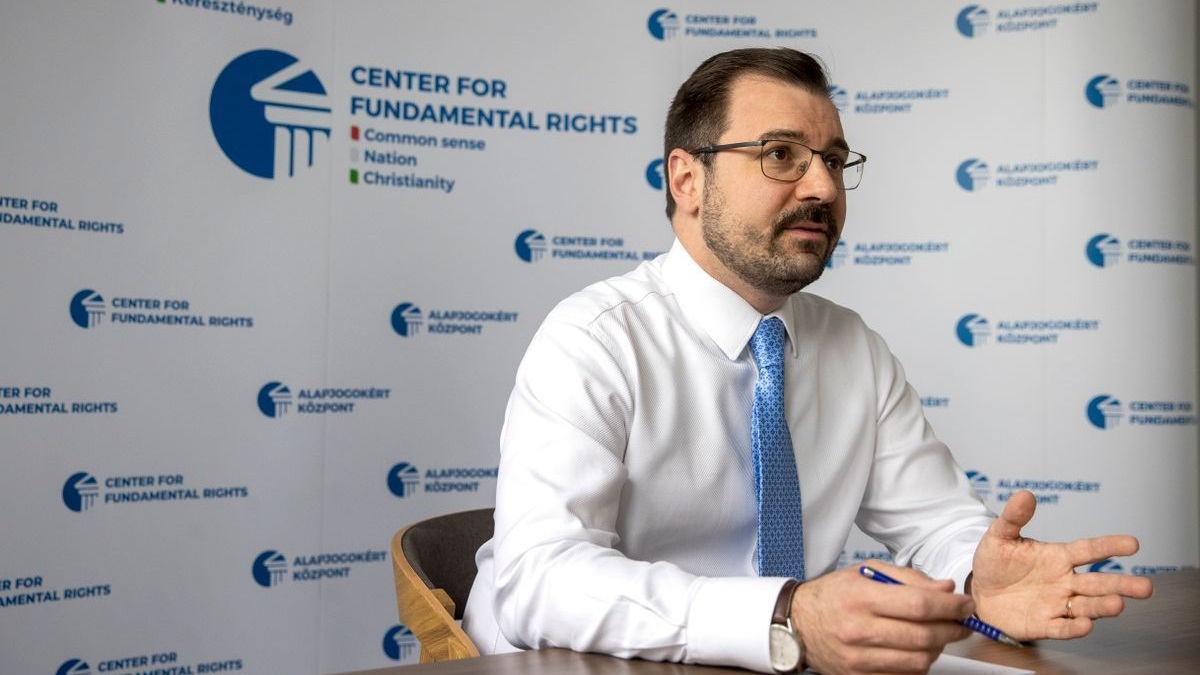
‘2025 was the year Tisza was exposed: they are preparing to introduce austerity measures that Generation Z has only seen in history books, Director General of the Center for Fundamental Rights Miklós Szánthó said in his year-end interview with the Hungarian daily Magyar Nemzet.
He added that ‘the Tisza-supporting judge may want to ban this information as well, just as he did in the case of Bors.’ Here, Szánthó was referring to a December injunction by the Budapest-Capital Regional Court that prohibited the distribution of a free special edition of the Hungarian tabloid Bors. The banned issue detailed Tisza’s supposedly planned austerity measures, based on leaked information.
In response to the leaks, the Center for Fundamental Rights launched the #FreeHungarians Against Austerity Measures Task Force, aimed to raise awareness about the alleged plans.
‘Nothing that could be taxed escapes the attention of Tisza’s left-wing experts,’ Szánthó warned. ‘Under the proposed excise tax hikes, beer would cost 350 HUF more per litre, while wine would become 1,500 HUF more expensive. And this is without even mentioning the long-standing ambition of László Kéri and his associates to privatize the pension and health insurance systems. It seems the old saying holds true: under a right-wing government, even those who don’t vote for it are better off—while under a Tisza government, even those who do vote for them would be worse off.’
In the interview, Szánthó also confirmed that CPAC Hungary will be held again in the spring of 2026, marking the event’s fifth edition. At the same time, he emphasized that due to the Hungarian parliamentary elections, the 2025 political season will not conclude until 12 April 2026. 'The fall political season is over, spring is approaching, and only then will the champion be determined,' he said.
Szánthó described 2025 as 'the year of sovereignty protection' in Hungary; and pointed to major geopolitical shifts following President Donald Trump’s return to power in the United States.
He went on to criticize liberal political thinking, saying: 'The liberal "offer" once appeared simple and appealing. They persuaded people that politics could be conducted in a worldview-neutral way, and that we should therefore leave governance to "experts" who would deliver economic growth. But this was a lie. István Csurka recognized this early on when he famously said that "expertise is a Bolshevik trick".
With their mantra of neutrality, they essentially took over culture and academia. Meanwhile, the neoliberal doctrine based on austerity, which now wants to make a comeback in Hungary in the form of Tisza, was unable to implement a successful economic policy.'
He also argued that 'while most of the world is seeking a way out of the Russo–Ukrainian war, Europe is instead marching deeper into it,' referring to the recent agreement between the European Parliament and the European Council to phase out Russian gas imports in Europe.
'The only person capable of bringing about peace is Donald Trump,’ Szánthó went on to declare. 'He—and Prime Minister Viktor Orbán of Hungary—understand that the global order is changing. If the West fails to act in its own interests, it risks losing everything.’
Related articles: