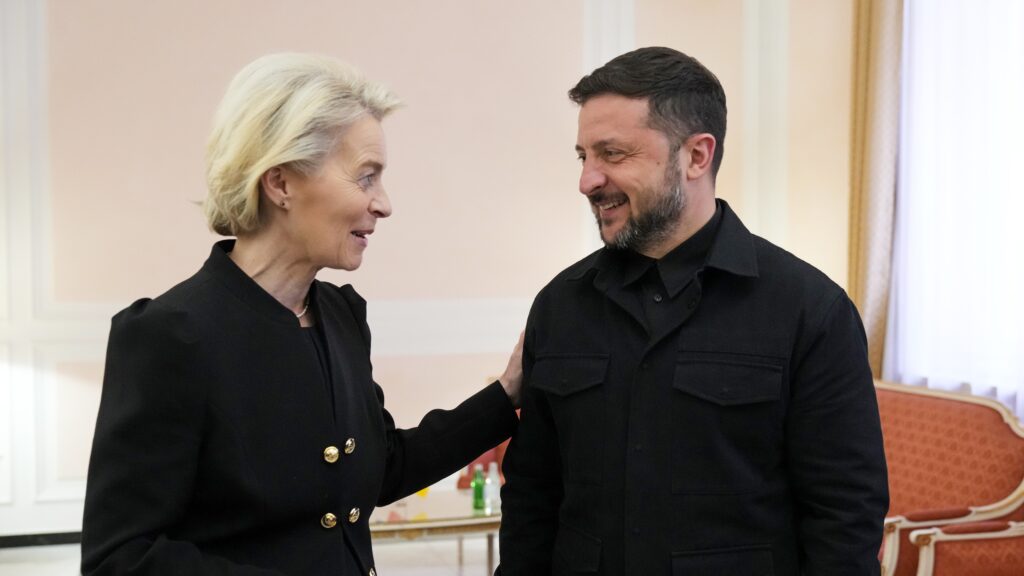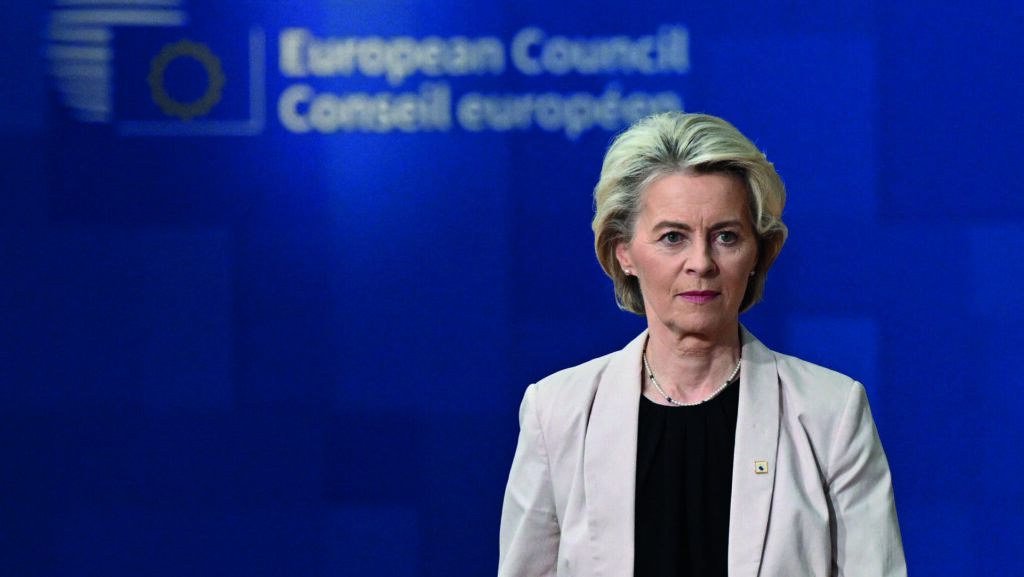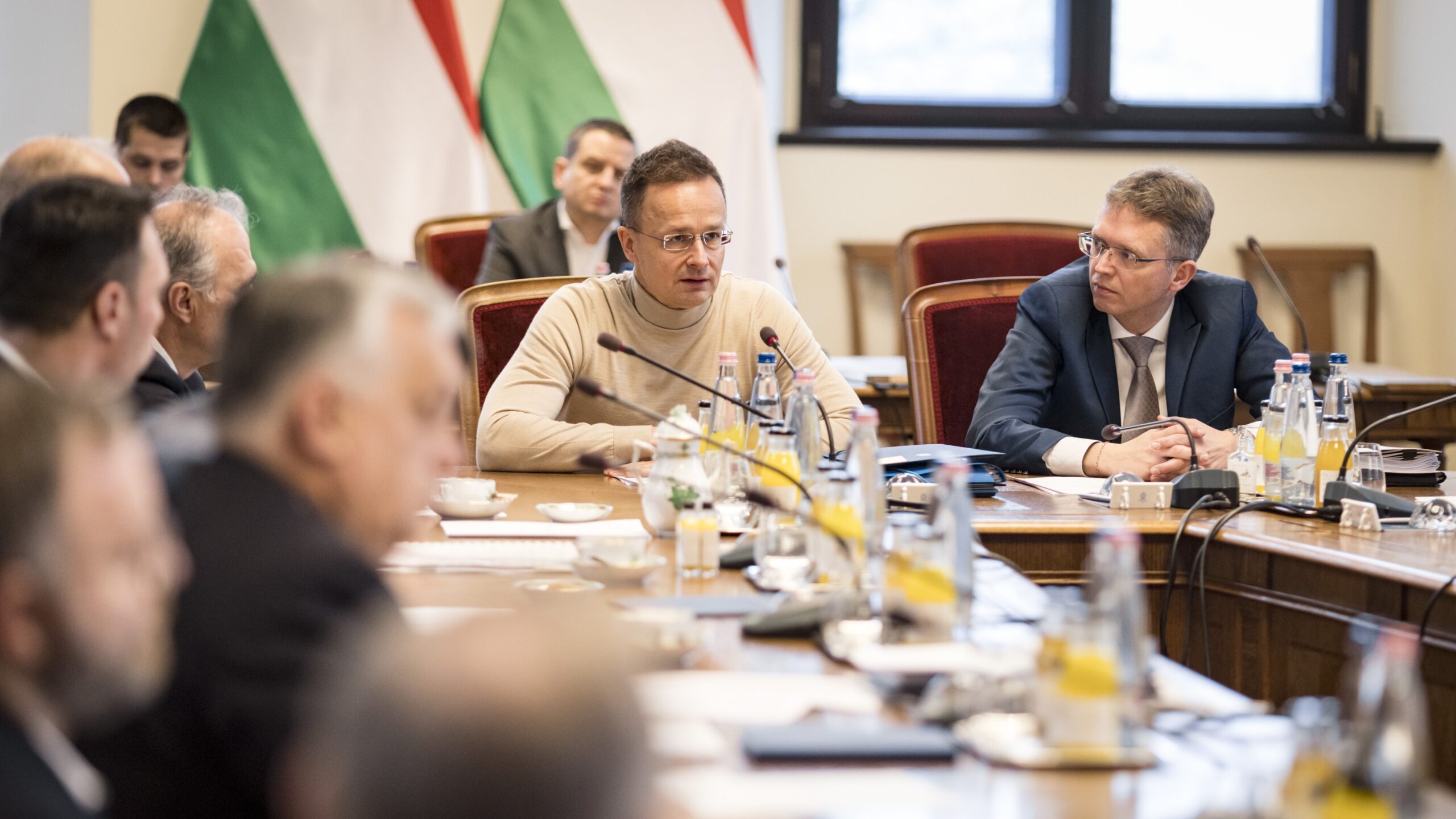
A so-called Brussels–Kyiv alliance is seeking to sideline Hungary’s national government in order to accelerate Ukraine’s accession to the European Union as early as next year, Foreign Minister Péter Szijjártó said on Wednesday in Budapest.
According to a statement from the foreign ministry, Szijjártó told a government meeting that a coalition has emerged between Brussels and Kyiv with three core objectives: to keep weapons deliveries to Ukraine uninterrupted, to ensure continued financial transfers, and to secure Ukraine’s EU membership.
He said the alliance rests on military, financial and political pillars, with the political dimension becoming increasingly prominent under what he referred to as the ‘Zelenskyy plan’, as the situation in Ukraine deteriorates. Szijjártó cited gradual Russian advances on the front line, worsening living conditions, forced conscription, limited electricity supply and growing difficulties in protecting areas away from the front as factors driving Kyiv to seek rapid political gains.
According to the minister, Ukraine’s leadership has therefore urged Brussels to prioritize EU accession in order to maintain domestic political support. He said this intention is reflected in a recently published five-point plan that envisages Ukraine becoming an EU member as early as next year.
Szijjártó argued that Ukraine’s proponents have identified Hungary as the main obstacle to this goal. While Brussels may be able to use procedural manoeuvres or even breach its own rules during the preparatory phase, he said there is no legal way to admit Ukraine to the EU against Hungary’s explicit opposition.
As a result, he claimed, the plan focuses on removing the Hungarian government as a political barrier. In his interpretation, the first two points of the proposal outline the objective of granting Ukraine EU membership by 2027 without reforms and despite the ongoing war, while the third point addresses how this could be achieved by engineering political change in Hungary.
He added that the fifth point aims to provide long-term guarantees by preventing similar ‘sovereign national government incidents’ in the future, which, he said, would involve abolishing the EU veto right and ending unanimous decision-making.
Szijjártó warned that eliminating unanimity would entrench what he described as a liberal mainstream in EU decision-making, particularly on issues such as the war and migration. He said the sequence of actions matters because abolishing the veto itself would also require unanimous approval.
‘If Hungary can be removed, a decision-making system can be established in the European Union that permanently sidelines member states, their democratically elected governments and their voters from Brussels decisions,’ he said. The minister concluded that the long-term vision of building what he described as a ‘United States of Europe’ is aligned with the short-term interests of the Brussels–Kyiv alliance, potentially leading to an EU structure in which member states are effectively excluded from key decisions in favour of Brussels-based institutions.
Related articles: