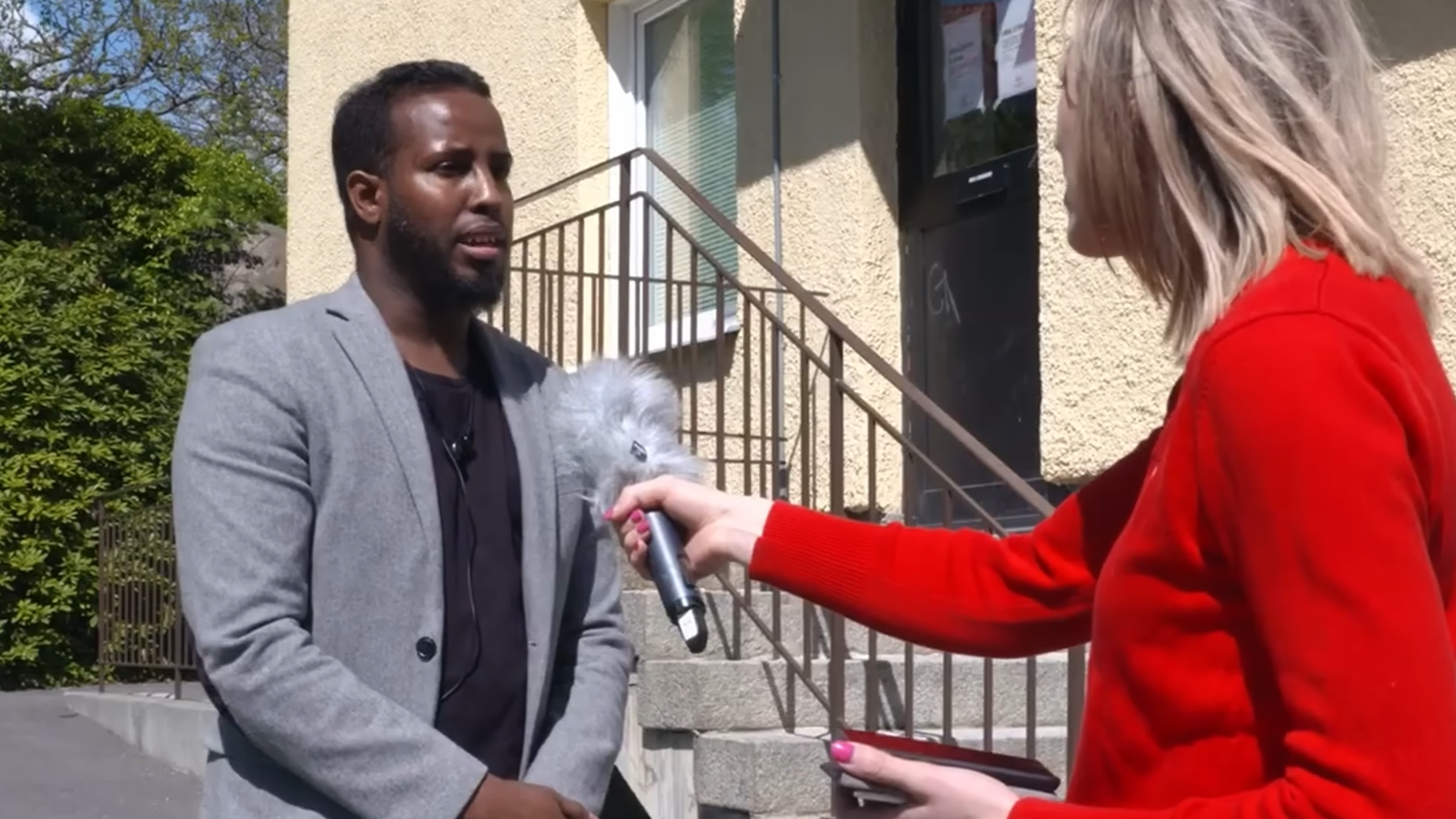
Swedish investigative journalist Isabelle Eriksson says that the massive Minnesota Somali fraud scandal is not an isolated case—it reveals a troubling blueprint she has also observed in Sweden. According to her reporting, the biggest fraud conspiracy in US history, uncovered by independent journalist Nick Shirley in December 2025, reflects a form of wrongdoing that has become common within Somali communities worldwide.
‘What you [Mr Shirley] uncovered there is the exact same blueprint we are seeing here in Sweden,’ Eriksson said in a video uploaded to YouTube two days ago. In her reporting, Eriksson covered the case of a Swedish association called Raju Kulturförening, which received more than one million Swedish kronor in 2021 from the Swedish National Agency for Education to provide homework help, cultural programmes, and sports activities for children in Nynäshamn, Sweden.
When Eriksson and staff from Swedish news channel RIX visited a scheduled football tournament purportedly organized by the association, no children or participants were present; only two adults were in an otherwise empty facility. An online investigation later revealed that individuals listed as staff on Raju’s website appeared to be stock photographs or fictitious identities, and that the only real person connected to the group was its vice chairperson. The association also received rental funding for space that was already taxpayer-funded through another adult education organization, raising further questions about the use of public funds. RIX was unable to reach those responsible for any explanation or accounting.
Miljoner till tomma verksamheter – somaliska nätverk avslöjas
Bli prenumerant för att stötta Riks https://Riks.se/prenumerera Ange koden: RIKS300 för rabatt I slutet av december 2025 publicerade den amerikanske journalisten Nick Shirley en video på X där han besöker flera barnomsorgs- och vårdföretag i Minneapolis, USA.
‘Millions of Swedish taxpayers’ money is gone,’ Eriksson declared in the video, adding that, following her reporting, Swedish outlet Expressen conducted a nationwide investigation and found this type of fraud to be widespread. ‘Last year, the Swedish government stopped all grants to this type of organization; most of them were Somali,’ Eriksson said.
The Swedish journalist added that, despite five years having passed since the revelations, the fraudsters have not faced justice. ‘In a report published last year, Sweden’s financial police concluded that a lot of money from associations in Sweden has gone to terrorist organizations abroad, just like in Minnesota, as well as to money laundering and private purchases,’ Eriksson said. According to police estimates, welfare fraud in Sweden amounts to approximately 75 billion Swedish kronor (around $8.1 billion) annually.
‘The crimes are so extensive that they pose a systemic threat to our society,’ Eriksson emphasized, adding that socialist and mainstream parties on the left have often ‘turned a blind eye’ to these kinds of problems related to immigration, ‘as they have been dependent on the loyalty and votes of these large groups.’
‘Despite five years having passed since the revelations, the fraudsters have not faced justice’
Nick Shirley’s investigations in Minnesota similarly led to wide exposure of fraud schemes linked to Somalis. As a result, federal authorities continue to investigate interconnected fraud schemes across social services, including autism therapy, housing assistance, Medicaid, and child care reimbursements. The case is especially unpleasant for the Democrats, as Tim Walz, Governor of Minnesota and the party’s vice-presidential candidate in 2024, is deeply involved.
At the beginning of 2026, the Trump administration suspended more than $129 million in benefit payments to Minnesota, citing widespread fraud involving local non-profits and businesses.
‘This type of corruption in the name of woke must come to an end,’ Eriksson declared, adding that the scheme reflects a broader international problem that undermines public trust and wastes taxpayers’ money across borders. ‘I also want to encourage more countries to take a closer look at where public grants are actually going and how they are being used,’ she concluded.
Related articles: