In the coming weeks, German authorities are expected to decide whether to approve a controversial licence application by Framatome, a subsidiary of France’s state energy giant EDF, to produce nuclear fuel using Russian-sourced components supplied by Rosatom’s TVEL at its Lingen plant in Lower Saxony.
The facility would manufacture fuel assemblies for Soviet-era VVER reactors using essential Russian parts, even as the European Union is actively phasing out Russian oil and gas imports under its REPowerEU energy strategy. In other words, France is pushing for the reintegration of Russian industrial links into Europe’s economic system at precisely the moment when the EU seeks to reduce Moscow’s energy leverage—and it would do so in Germany, with the consent of the bloc’s two largest economies. This juxtaposition exposes a serious strategic contradiction at the heart of European energy policy: a Franco-led effort to re-embed Russian industrial inputs into Europe’s energy infrastructure while Brussels pursues economic disengagement and zero dependence on Russian energy.
The joint venture is undoubtedly important for Paris. President Emmanuel Macron has been personally involved behind the scenes to secure approval for the project, applying diplomatic pressure on Berlin. French officials argue that expanding Framatome’s cooperation with Russia serves Europe’s long-term industrial interests and constitutes a ‘European solution’ to nuclear fuel supply for Eastern European reactors. However, by effectively embedding Russian technology within the EU’s energy system, the initiative runs counter to Brussels’s stated objective of reducing dependence on Moscow—not only in fossil fuels, but potentially in nuclear supply chains as well.
‘Macron has been personally involved behind the scenes to secure approval for the project, applying diplomatic pressure on Berlin’
German authorities remain cautious. Decision-makers in Berlin and Lower Saxony have cited national security concerns, including the risk of espionage or undue influence over critical nuclear technology. They frequently point to past vulnerabilities created by Russian control over key gas infrastructure and are wary of replicating similar dependencies in the nuclear sector. As a result, the licensing process has already been delayed while federal and regional ministries review updated security assessments.
Hungary Told You So — Long Ago
For Hungary, France’s push intersects with Budapest’s own approach to energy security. Nuclear power is central to the Hungarian energy mix: the Paks Nuclear Power Plant supplies more than half of the country’s electricity, and an expansion project involving two new VVER-1200 reactors—Paks II—remains under way, under an agreement with Russia’s Rosatom originally signed in 2014 and financed largely through a Russian state loan.
Hungary has pursued a pragmatic and diversified strategy with regard to nuclear fuel and technology suppliers. In October 2025, Budapest announced that it had initiated talks with the United States on purchasing nuclear fuel from American companies, including Westinghouse, in order to diversify supplies beyond its traditional Russian source. At the same time, Hungary has signalled its intention to continue purchasing Russian fuel for its expanded capacity and has concluded agreements to buy French nuclear fuel from Framatome starting in 2027.
This diversified approach reflects a broader Hungarian position: maintaining robust trade relations with Russia where national energy interests require it, while simultaneously engaging with Western suppliers to strengthen energy resilience. Budapest has also opposed EU sanctions targeting Russian nuclear energy, repeatedly threatening to veto measures that would disrupt existing contracts with Rosatom.
After the War Ends
Economic and trade considerations have also become an increasingly prominent element of US–Russia negotiations running parallel to Washington’s diplomatic and peace efforts related to the war in Ukraine. The United States has recently held talks with Russian negotiators in Miami, exploring potential pathways that include economic engagement alongside broader geopolitical discussions. Among many experts and policymakers, there is an emerging understanding that once negotiations reach a certain stage, Western sanctions on Russia would likely be lifted—possibly in phases as part of a broader settlement.
These US–Russia economic interactions underscore a complex reality. Washington’s pragmatic approach increasingly clashes with Brussels’s ideologically driven confrontation with Moscow. At the same time, there are growing signs that EU member states themselves may be reassessing their priorities, placing national interests above the dictates of European elites. This shift was evident at the recent European Council summit, where a Belgium-led coalition successfully blocked plans to use immobilized Russian assets in the EU as collateral for a €210 billion reparations loan to Ukraine, and in the continued delay of the Mercosur trade agreement.
‘Washington’s pragmatic approach increasingly clashes with Brussels’s ideologically driven confrontation with Moscow’
Hungarian Prime Minister Viktor Orbán has long called for a broader EU–Russia economic and security deal that would repair the damage and resolve the disagreements caused by four years of war and more than a decade of tense stand-off between the EU and Moscow. Avoiding the confiscation of Russian assets has kept such a scenario from being entirely out of reach, and it increasingly appears that President Emmanuel Macron aims to pursue a similar approach—one based on dialogue rather than escalation.
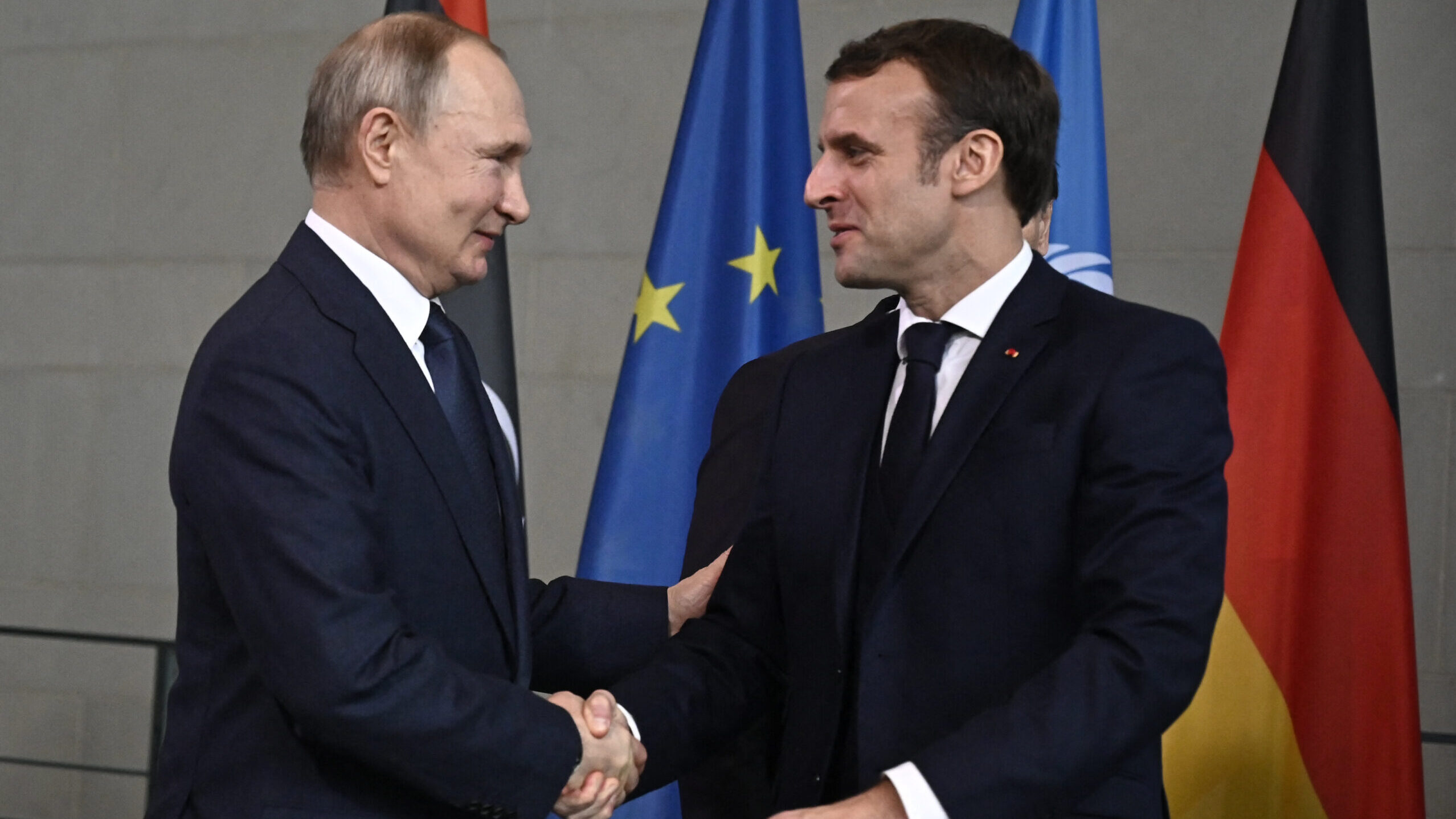
The French president has recently stated that he would be prepared to take over mediation in the Ukraine peace talks should Washington’s efforts fail. Russian President Vladimir Putin welcomed the prospect of negotiations with Macron; however, the Kremlin noted that any such engagement would depend on ‘mutual political will’. Macron is one of the very few European leaders—alongside Viktor Orbán—who have maintained formal communication with Putin since the war began in 2022, including a two-hour phone call between the two presidents last year.
Related articles: