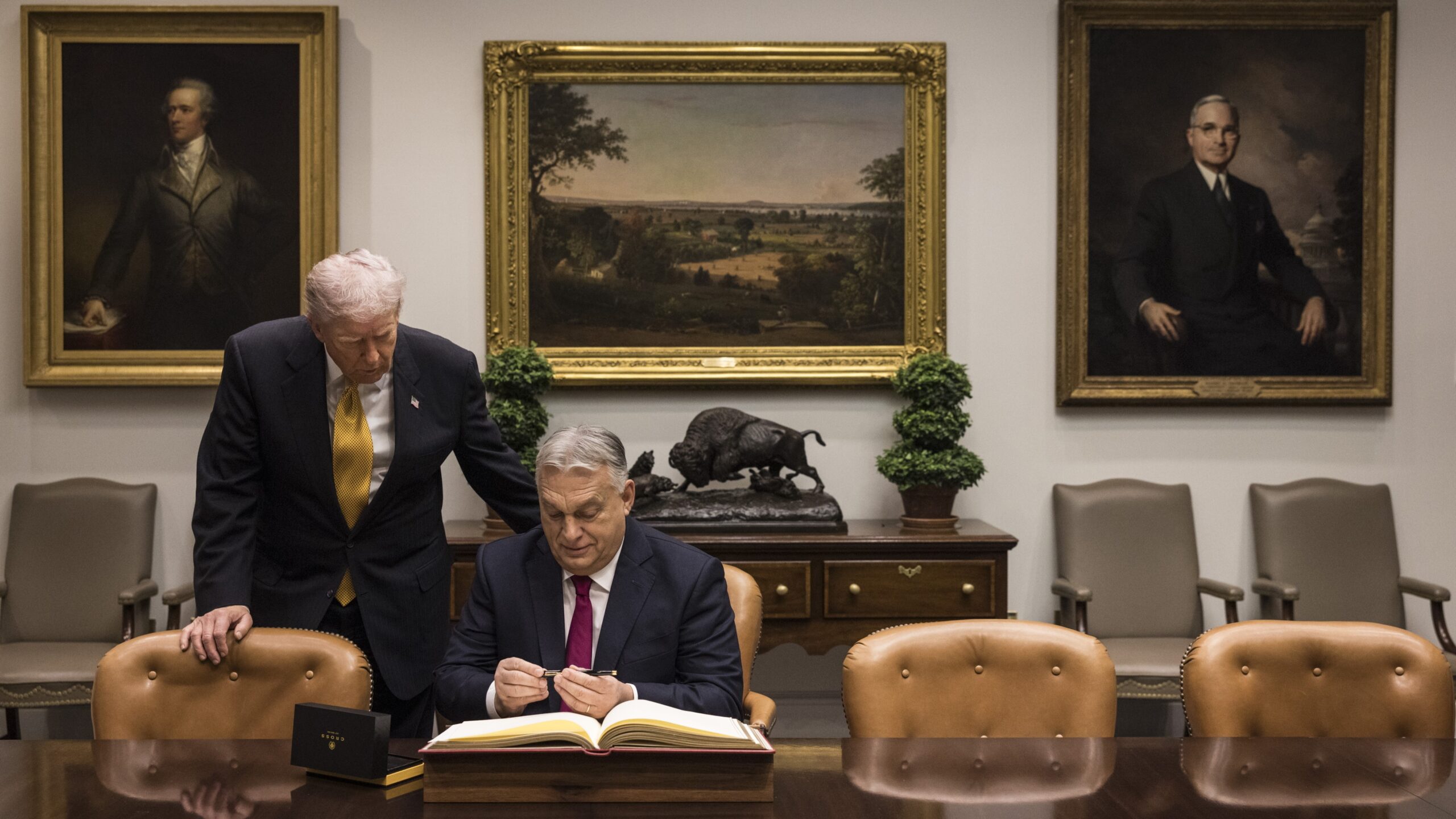
Hungarian Prime Minister Viktor Orbán has been invited to join the Gaza Peace Council by US President Donald Trump, Foreign Minister Péter Szijjártó said on Kossuth Radio’s Sunday News programme. He added that the Hungarian government considers the invitation an honour and will take part in the council’s work.
Szijjártó said the prime minister had instructed him to notify the US administration accordingly. He praised Donald Trump’s peace-focused efforts globally, saying Trump represents hope in the Gaza peace process. He added that Hungary has a strong interest in peace in the Middle East, as regional security there significantly affects Central European security.
Viktor Orbán also posted the entire letter on his social media page, emphasizing that the invitation was gladly accepted:
Orbán Viktor
Ha Trump, akkor béke! Újabb levelet hozott a posta. 🇭🇺🇺🇸📩 Magyarország békéért tett erőfeszítéseit elismerik! 💪 Trump elnök felkért, hogy csatlakozzunk a Béketanács munkájához, alapítóként. Elnök…
During the programme, Szijjártó reiterated that Hungary will reject Ukraine’s accession to the European Union. He said EU treaties clearly require unanimous approval from member states for admitting new members, leaving no room for alternative interpretations.
He said Hungary has consistently stood up to Brussels over the past 16 years and will continue to do so on the issue of Ukraine’s membership. He added that this stance is a key issue in the upcoming parliamentary election, arguing that opposition parties would support Brussels’ positions without reservation.
Szijjártó described proposals for a two-speed EU accession as a nonsensical tactic, claiming Brussels is misleading Ukraine while knowing that, as long as Hungary has a sovereign national government, Ukraine cannot join the bloc. He also accused EU institutions of attempting to influence Hungary’s parliamentary elections in order to install what he called a Brussels-aligned government.
He criticized the European Commission and its president Ursula von der Leyen for interpreting EU rules arbitrarily, saying this poses a serious risk to the future functioning of the European Union.
Szijjártó also said he had recently met ambassadors of EU member states and warned them against questioning the democratic nature of Hungary’s elections or attempting to delegitimize the outcome. He said such actions would lead to significantly more difficult working conditions for those involved.
Turning to energy issues, he confirmed that Hungary’s MOL is in talks over the potential acquisition of Serbia’s NIS oil company. He said an agreement was close and would represent a major step forward for regional energy security and pricing if refineries in Hungary, Slovakia and Serbia could operate in an integrated manner. He dismissed reports that MOL plans to close the Pančevo refinery as false.
Related articles: