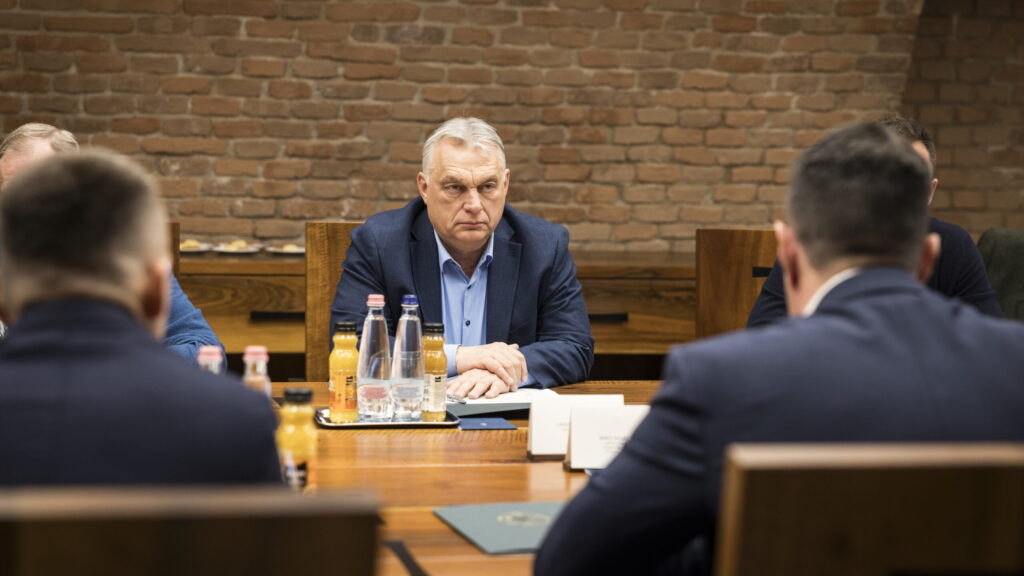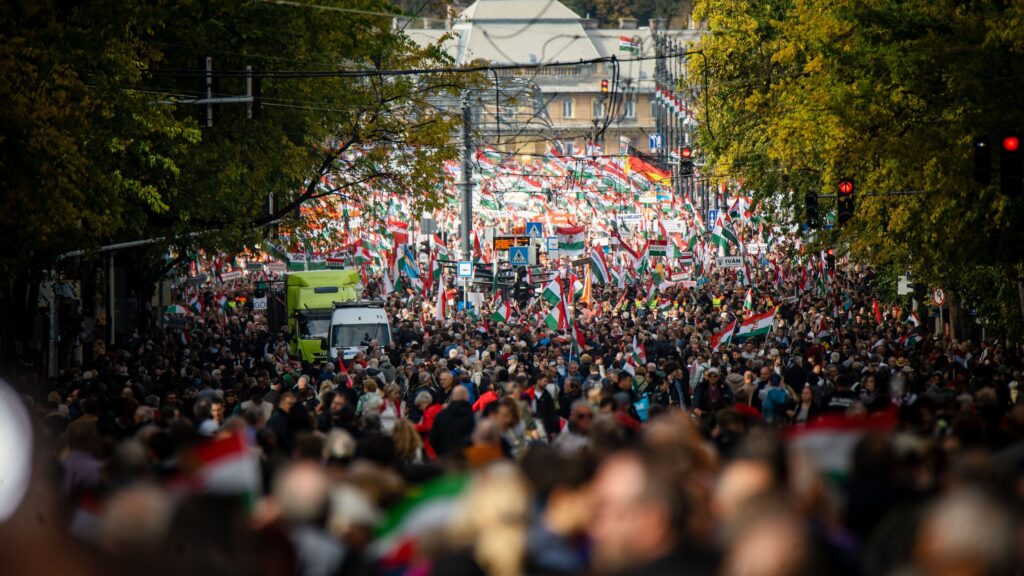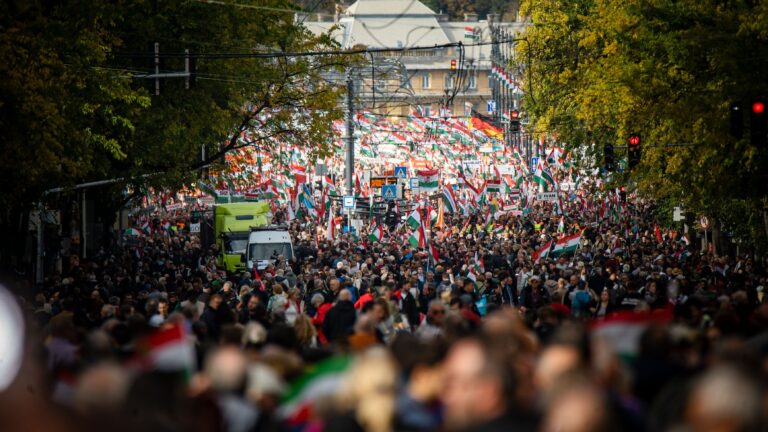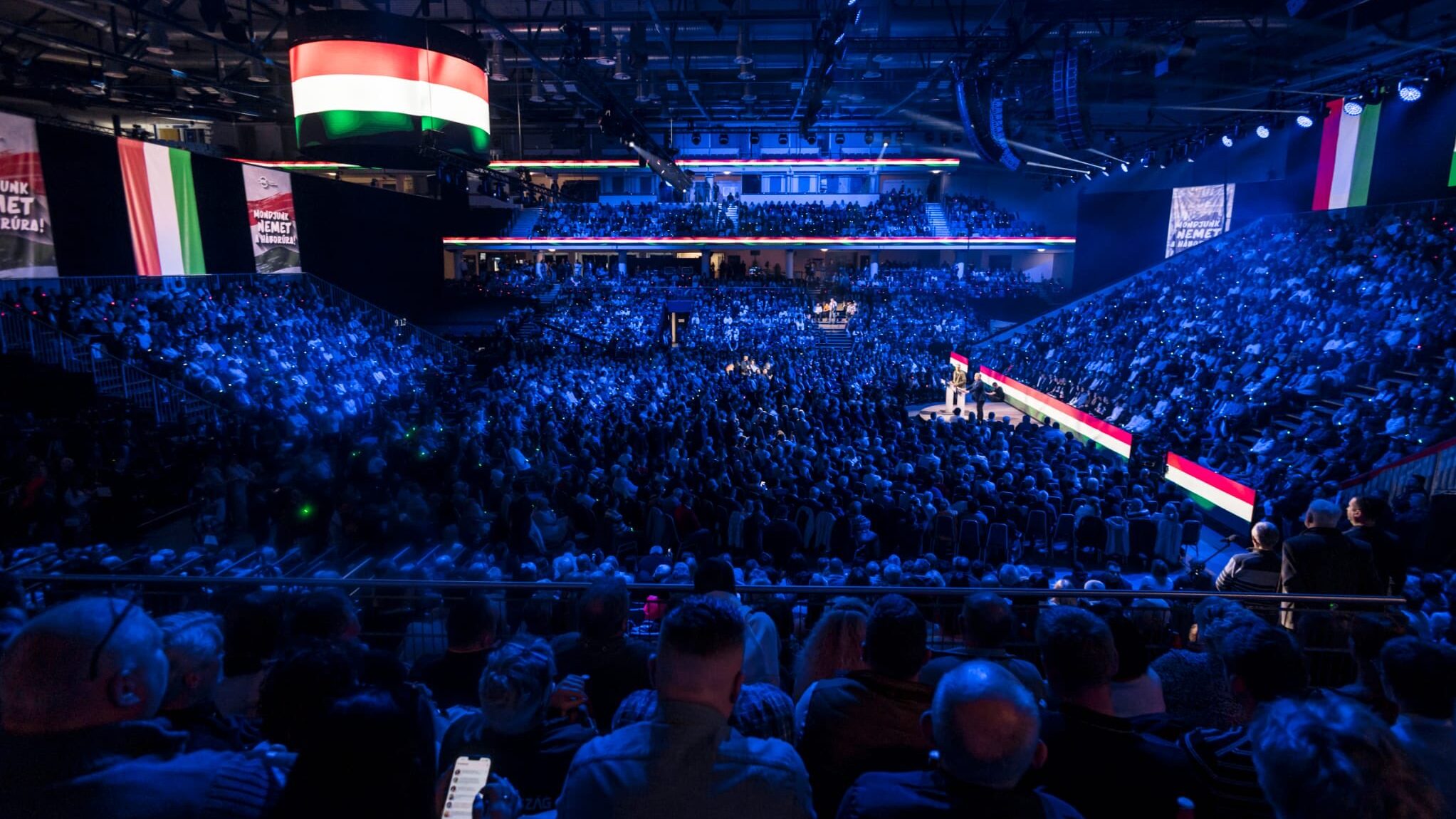
Prime Minister Viktor Orbán sharply criticized Ukraine’s recent hostile actions toward Hungary and warned against attempts to blackmail Budapest during a speech at an anti-war rally in Debrecen on Saturday.
Speaking at the Főnix Hall, Orbán said Hungary was open to reaching agreements with Ukraine on many issues but would never accept negotiations conducted under pressure. ‘Hungary is willing to reach agreements with Ukraine on many issues, but we will never do so under the weight of blackmail. Every form of blackmail will be rejected,’ the prime minister said.
Orbán’s remarks came amid tensions surrounding the Druzhba oil pipeline, which transports Russian crude to Hungary through Ukrainian territory. Transit through the key route is halted by Kyiv since 27 January, with Ukrainian President Volodymyr Zelenskyy recently stating Ukraine has no political will to resume the flow of oil to both Hungary and Slovakia. By doing so, Orbán explained, Kyiv had effectively opened a political conflict with Hungary.
‘Instead of fighting the Russians…they have opened a western-directed conflict against Hungary,’ Orbán said. ‘They could not have thought that they would block Hungary’s oil supply and we would just sit here twiddling our thumbs.’
The prime minister said Hungary has its own strategy to counter the Ukrainian blackmail. ‘Just as the Ukrainians have a plan, I also have a plan for how to counter blackmail,’ he said, adding that Kyiv will run out of money sooner than Hungary run out of oil.
Orbán stressed that reopening the Druzhba pipeline is an existential issue for Hungary. ‘We must win this fight to reopen the oil pipeline,’ he said, expressing confidence that the government’s strategy would produce results, possibly even before the upcoming parliamentary election in April.
Energy security, he added, is central to Hungary’s economic stability. Orbán linked the dispute with Ukraine to the country’s utility price reduction system, introduced by the government back in 2013, which he said protects Hungarian families from dramatic increases in energy costs.
‘Despite the tensions, the prime minister emphasized that Hungary has refrained from retaliatory measures that would harm ordinary Ukrainians’
Orbán warned that both oil and gas blockades could threaten this system. He recalled that earlier in the war, Ukraine had disrupted Hungary’s gas supply by shutting down the pipeline carrying Russian gas through Ukrainian territory. Hungary avoided a deeper crisis because the government had previously built a southern bypass route allowing Russian gas to reach the country without passing through Ukraine, he said. ‘If it had been up to Zelenskyy, this would not exist,’ Orbán added.
Despite the tensions, the prime minister emphasized that Hungary has refrained from retaliatory measures that would harm ordinary Ukrainians. He noted that around 40 per cent of the electricity consumed in Ukraine still arrives through transmission lines running from Slovakia and Hungary.
Orbán did not rule out the possibility of suspending electricity exports but said the government has avoided taking such a step so far because of the ethnic Hungarian minority living in Transcarpathia. ‘Our enemy is not the Ukrainian people, but the leaders who have turned Ukraine against us,’ he said, adding that cutting electricity supplies would only be considered as a last resort.
The prime minister also warned that energy infrastructure across the region remains vulnerable. ‘The one who dared to blow up the Nord Stream pipeline owned by the Germans is capable of doing the same in the south,’ Orbán said, suggesting that pipelines in southern Europe could also become targets.
Orbán also talked about the recent interception of a convoy of armoured vehicles transporting huge amounts of cash and gold through Hungary toward Ukraine. Hungarian authorities launched a money-laundering investigation after the vehicles were stopped.
While saying the authorities still have unanswered questions, Orbán suggested the case raises concerns about possible foreign influence. ‘I suspect that many of the pro-Ukraine voices in Hungary are only partly sincere and heartfelt; the other part comes from the pocket,’ he said. ‘And I want to know how that money gets into those pockets.’
Turning to Ukraine’s long-term future, Orbán expressed strong scepticism about the country’s possible accession to the European Union. ‘We do not know what Ukraine’s future will be, or whether it will exist at all,’ he said, pointing to the ongoing war and uncertainty surrounding the country’s borders. If Ukraine were admitted to the EU, he warned, ‘all of Hungary’s money will go to Ukraine,’ while member states would also have to increase their contributions to finance reconstruction and military programmes.
Instead of EU membership, Orbán said Hungary would support a strategic partnership with Ukraine that helps its economy but does not grant the same rights as EU accession.
Orbán also responded to threats directed at him by President Zelenskyy earlier this week. ‘Such things are not pleasant,’ he said. However, he added that anyone who takes on the responsibility of leading a nation must prepare for such challenges in advance so that ‘there are no surprises along the way’.
The prime minister concluded by reiterating that Hungary’s strategic goal remains clear: staying out of the war while protecting the country’s economic stability and energy security.
‘Europe is marching into war,’ Orbán warned. Hungary, he said, must remain a place of ‘peace, calm, and stability’.
Related articles: