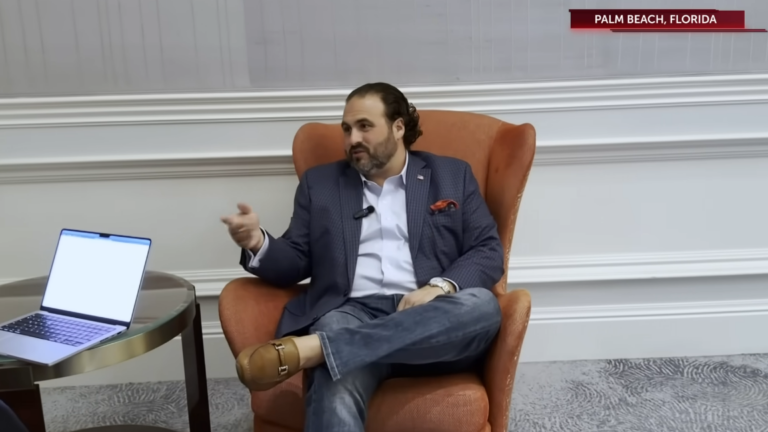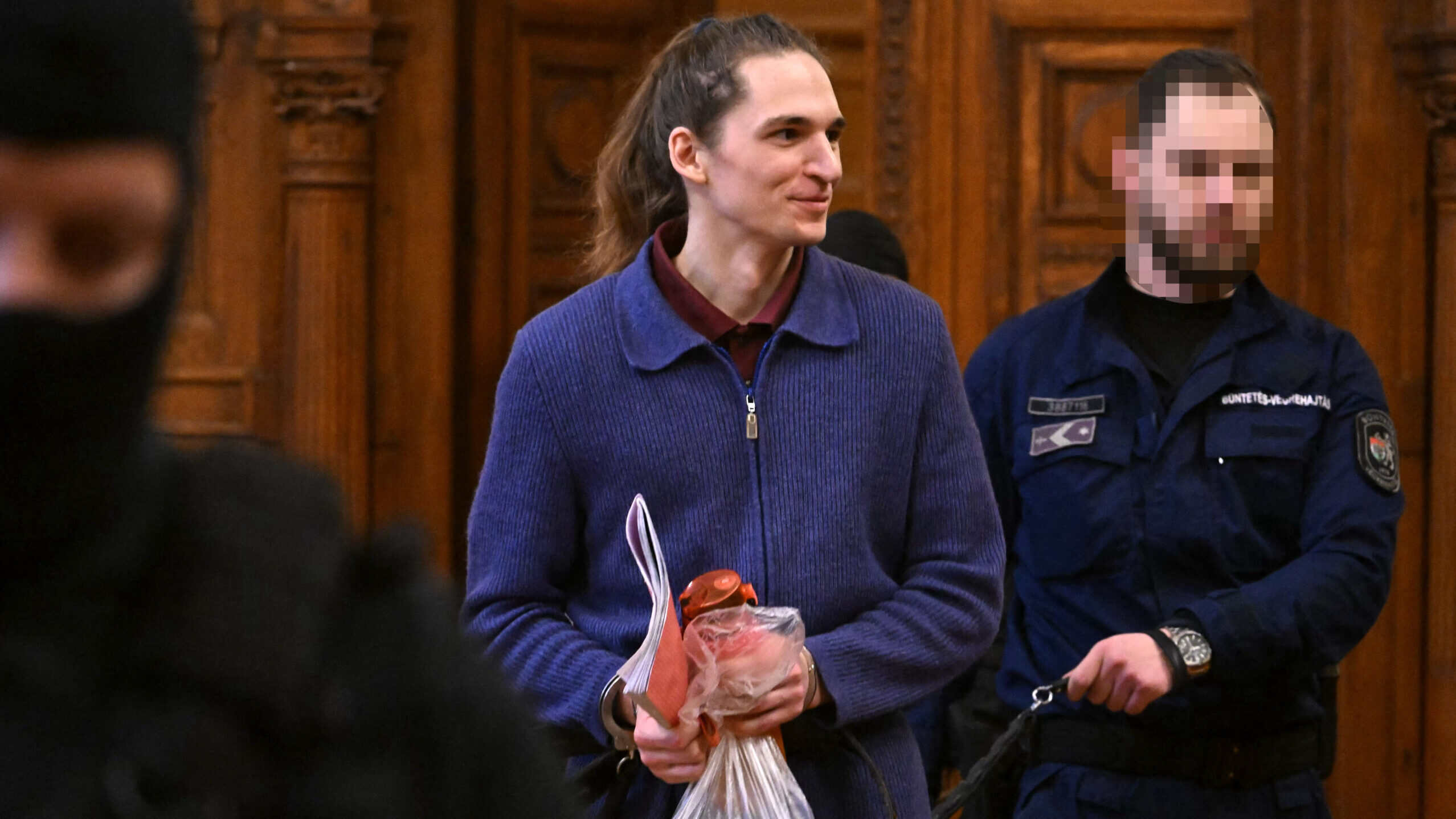
Deutsche Welle has published a bizarre propaganda interview with one of the suspects in the 2023 Budapest Antifa terror attacks, Maja T. During the interview, Maja T accused the Hungarian government of attempting to influence the courts and claimed that the circumstances of his detention do not meet European standards.
The discussion begins with Maja T—who regularly speaks about himself in the third person and claims he is ‘neither male nor female’—declaring that he will not speak about the case against him, only to add that he decided to appear publicly ‘in connection with the trial’. ‘I am the person sitting here. A human being who has been in prison for two years,’ he said, presenting himself as a victim.
On 11 February 2023, an Antifa mob—consisting mostly of German and Italian nationals—attacked individuals in Budapest solely based on their assessment of the victims’ appearance as ‘far-right’. One of the most severely injured victims, László Dudog, was beaten in the head with iron bars, resulting in the ‘complete paralysis of the left side of his face.’ Among the attackers were Maja T and Ilaria Salis. Salis was detained by authorities hours after the attacks; however, she has since become a Member of the European Parliament for the Italian far-left party Alleanza Verdi e Sinistra (AVS) and is now using her immunity to avoid responsibility for the violent crime.
Maja T, however, was not as lucky. He managed to escape Hungary after the attacks, but German authorities detained and transferred him to Hungary around a year and a half ago. He is accused of four counts of attempted assault against innocent passers-by.
A significant portion of the interview focused on Maja T’s detention conditions. The Antifa attacker claimed the Hungarian prison system is structured around ‘binary sex categories’—what else, a normal person might ask—arguing that this resulted in ‘segregation and restrictions’. He also alleged that he experienced prolonged isolation and claimed that his level of ‘meaningful daily human contact’ fell below European standards. Maja T also quoted his father, who described his situation as ‘isolation amounting to torture’.
The reason behind this, as Maja T explicitly stated in the interview, is that he rejected being treated as either male or female, arguing that he should be handled differently by prison authorities. Maja T has been placed in a facility holding men; however, he was assigned a solitary cell due to his ‘non-binary’ identity.
He also said he sometimes smiles in the courtroom because it is one of the few places where he can see other people, including family members, and observe normal human interactions such as hugging. He portrayed the courtroom as a sharp contrast to what he described as the ‘coldness, contempt, indifference, and violence’ of prison life.
‘The Antifa attacker claimed the Hungarian prison system is structured around “binary sex categories”...arguing that this resulted in “segregation and restrictions”’
The interview also discussed Maja T’s political identity, which he claimed is rooted in antifascism, describing his upbringing in eastern Germany in a city where the National Socialist Underground (NSU) neo-Nazi militant group was founded. He claimed he witnessed discrimination, antisemitism, and racism at school, which he said shaped his worldview.
He described antifascism as opposition to ‘totalitarian, authoritarian, nationalist’ movements and organizations that, in his words, exclude people and promote violence. He argued that antifascism means standing up for a ‘free society’ in which individuals are not marginalized simply for being who they are.
Despite this ideological framing, he insisted he is not a member of any organized antifascist group. ‘I am not a member of any antifascist organization,’ he said, adding that he considers himself part of Germany’s left-wing civil society without formally affiliating with a specific organization.
The interview ends with Maja T describing solidarity with supporters and a determination to maintain hope, referring to what he characterized as a shared search for truth, responsibility, and the will to act.
The Deutsche Welle interview perfectly illustrates how the European mainstream media and establishment have sought to whitewash the Budapest Antifa attackers. Beyond consistently sympathetic political coverage of their cases, the European Parliament even voted recently not to invoke Ilaria Salis’ immunity, allowing her to avoid trial in Hungary.
‘It is incomprehensible and outrageous that the @Europarl_EN legitimizes far-left terrorism,’ State Secretary Zoltán Kovács wrote on X at the time. ‘By upholding her immunity, they are not only excusing a criminal but in fact harboring an antifascist terrorist,’ he continued, stressing that ‘we will not forget, and we will not give up.’ ‘Ilaria Salis is a dangerous criminal who belongs in prison,’ Kovács concluded.
Watch the full interview below:
„Antifasiszta vagyok, nem terrorista" | Interjú a Kitörés napi támadások vádlottjával, Maja T.-vel
Börtöninterjú: a budapesti Antifa-ügy egyik legismertebb szereplője, Maja T. a Deutsche Wellének állt először kamera elé. A 24 éves német állampolgárt életveszélyt okozó súlyos testi sértéssel vádolják a 2023-as „Kitörés napi" támadások kapcsán. Részletesen beszélt a berlini letartóztatásáról, a kiadatásáról, a fogva tartási körülményeiről, amelyek miatt nyáron éhségsztrájkolt is.
Related articles: