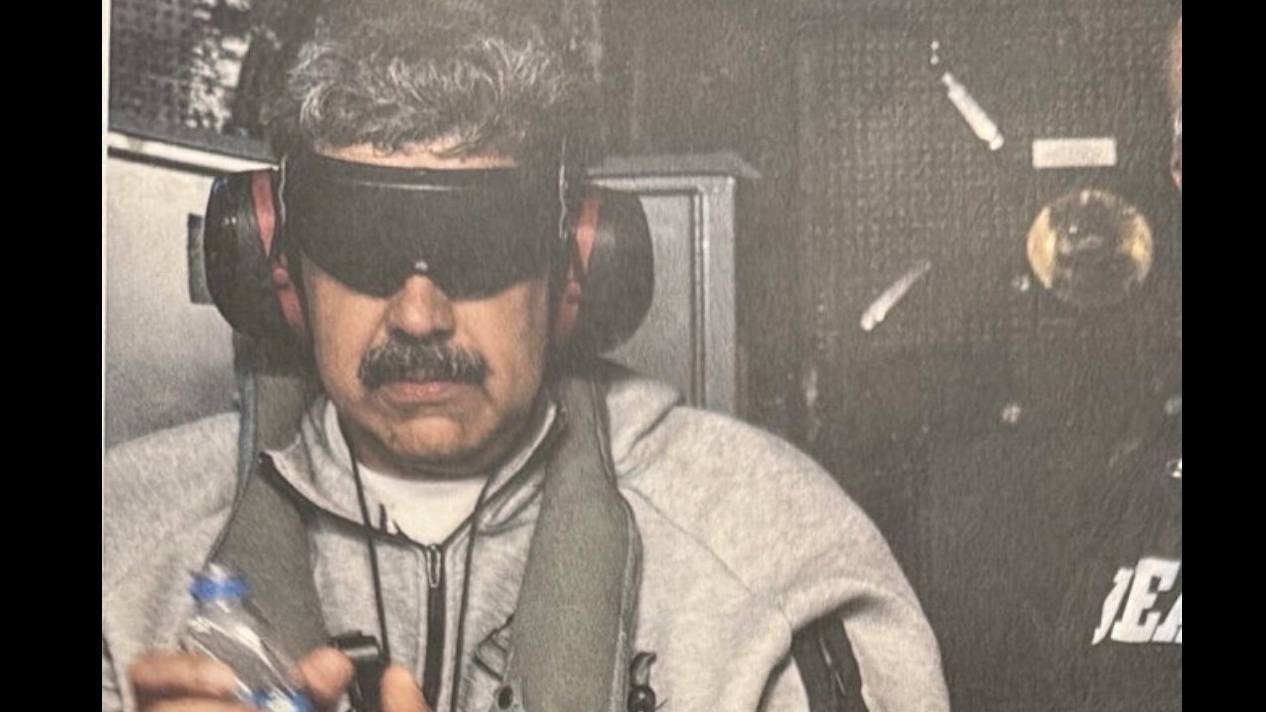
Major international news broke over the weekend: the White House announced that American forces had captured President Nicolás Maduro of Venezuela on the morning of Saturday, 3 January.
‘Operation Absolute Resolve’ was put into motion months ago, with constant surveillance of the Venezuelan President that involved a US spy inside his own government. It culminated with the Special Operations Forces of the US Army capturing President Maduro in his residence in Caracas, Venezuela.
Press reports have revealed interesting details of the operation, such as that the US Military has built an exact replica of Maduro’s residence to rehearse and optimize entry routes; and—this is coming from President Trump directly—the operation was pushed back a few days to wait for better weather conditions. President Trump also touted no American casualties during the operation.
Going above the ‘how’, the question remains: why did the US government capture President Maduro? And what legal justification did they have?
Assuming office in 2013, President Maduro has not been recognized as the legitimate leader of Venezuela by the United States since 2018. That year, he won a presidential election in which multiple of his viable opponents were banned from running, and rampant fraud was alleged as well. The official stance on his illegitimate regime persisted through the Biden administration. However, in a deal to revoke some sanctions, President Maduro vowed to hold a free and fair election in 2024, a pledge that he did not follow through with. Thus, the Biden administration reinstated sanctions, and the US has maintained its position that the Maduro regime is illegitimate.
Trump touts ‘AMAZING’ capture of Venezuela’s Maduro: ‘Could not have been better’
President Donald Trump opens up about the U.S. capture of Venezuelan dictator Maduro on ‘Fox & Friends Weekend.’ #fox #media #breakingnews #us #usa #new #news #breaking #foxnews #trump #donaldtrump #maduro #nicolasmaduro #venezuela #latinamerica #world #politics #government #dictator #international #global #usmilitary #whitehouse Don’t just watch Fox News-be part of it.
Amidst that series of events, in March 2020, Maduro and 14 of his senior officials were also criminally indicted in the Southern District of New York in the United States for allegedly conspiring with Colombian cartels to traffic large volumes of cocaine into the US.
In that regard, the capture of President Maduro parallels that of General Manuel Noriega, who was the military leader of Panama between 1983 and 1989. In 1988, he too was indicted on drug trafficking and racketeering charges in the US (his case was based in Miami, Florida). The Bush administration at the time also blamed the death of a US Marine on the Panamanian government. In December 1989, 27,000 US troops invaded Panama and captured its leader.
However, one major difference between Noriega and Maduro’s respective cases is that the US already had a major, ground military presence in Panama, as the Panama Canal was not yet fully turned over to the local government (President Carter relinquished the Canal in 1977, but the treaty stipulated that it would only be taken over by Panama in 1999). Meanwhile, the US has no permanent ground force presence in Venezuela, only naval presence in the Caribbean Sea near its coastline.
There is another crucial aspect of President Maduro’s capture: oil. Venezuela has vast amounts of crude oil reserves within its territory, but extraction cannot be performed at its highest capacity, as the Maduro regime has not allowed Western oil companies with high-end technology to operate within its country due to ideological reasons, even before sanctions were imposed on his country. If a new administration in Venezuela were willing to cooperate with Western (presumably American) energy companies, that would increase the global crude oil supply, further pushing down the prices on the international commodities markets.
‘Nicolás Maduro was indicted in the United States in 2020, he is not the legitimate President of Venezuela,’ US Secretary of State Marco Rubio stressed at a press conference after the capture. ‘He is not recognized by the European Union and multiple countries around the world. He is a fugitive of American justice…I want to be clear about one thing: Maduro had multiple opportunities to avoid this. He was provided multiple very, very, very generous offers and chose, instead, to act like a wild man, chose instead to play around. And the result is what we saw tonight [on 3 January],’ Secretary Rubio stated.
Related articles: