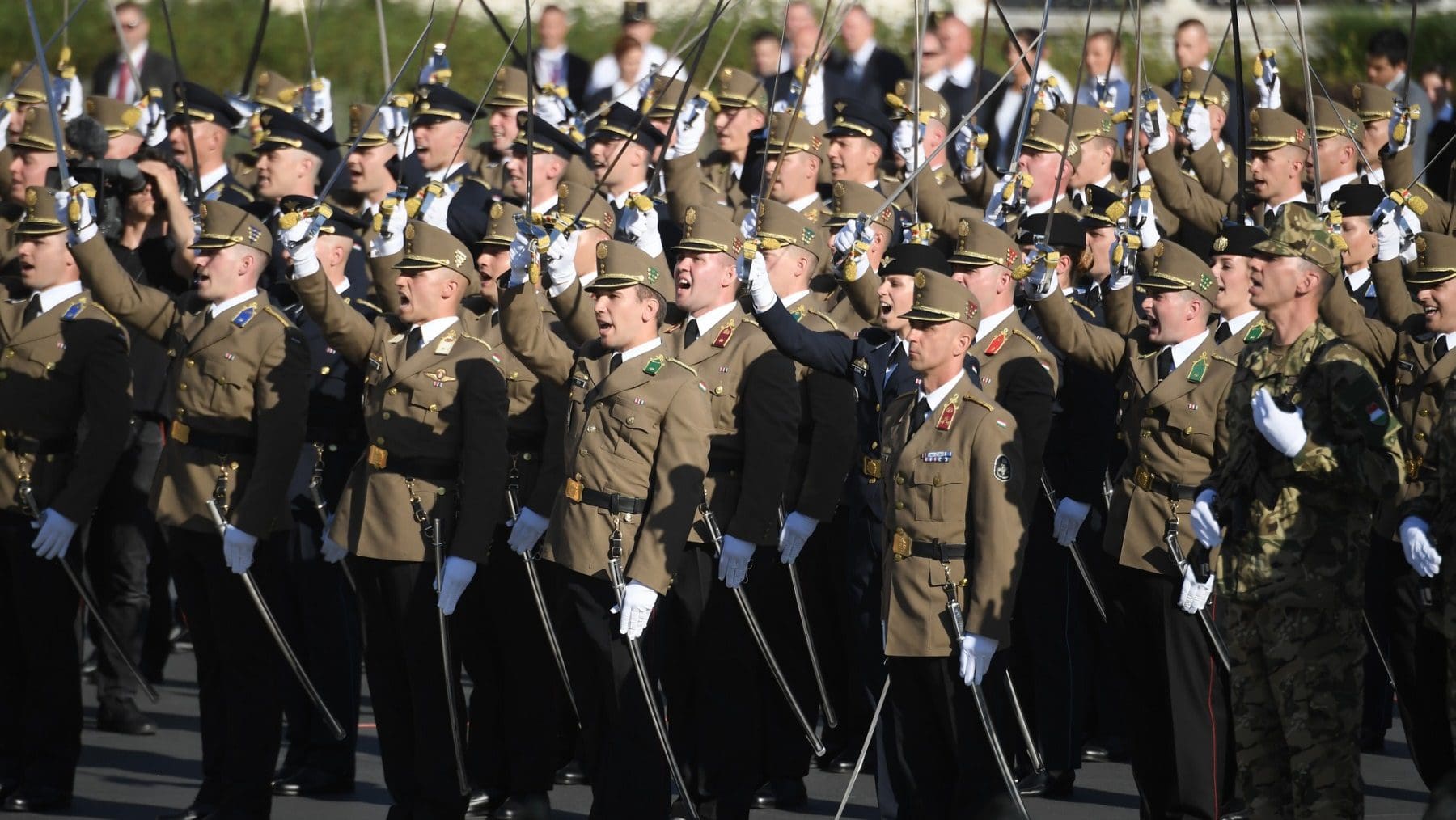
A clear majority of Hungarians oppose the reintroduction of conscription, according to the latest public opinion survey by the Nézőpont Institute. The research shows that 71 per cent of the voting-age population would reject mandatory military service.
The institute examined domestic attitudes to a possible return of conscription amid growing debate within the European Union and several member states about preparing for a potential direct military confrontation with Russia.
According to the survey summary, the reintroduction of compulsory military service is considered one of the most explicit measures linked to war preparedness. Latvia decided to restore conscription in 2023, Croatia issued military call-up notices in early 2026, while Germany has introduced what it describes as a needs-based form of conscription.
In Hungary, the research notes that governing parties clearly oppose both war and the reinstatement of compulsory military service. By contrast, the Tisza Party and its representatives are described as belonging to a political family at European level that supports a more confrontational approach, a stance which the institute says could create uncertainty among younger voters.
The survey found that opposition to mandatory military service is widespread, with no social group showing support below two-thirds rejection. Around one quarter of respondents said they would support the reintroduction of conscription, while only 2 per cent were undecided or declined to answer.
Nézőpont Institute analyst Ákos Berzétei said the rejection of conscription may stem from both principled objections and generational differences. He noted that younger generations did not grow up in a militarized environment, unlike older cohorts shaped by the Cold War period, when military preparedness was part of everyday life.
Younger people also lack first-hand experience of conscription, while older generations can recall that compulsory service was far from a positive experience, the analyst added.
Berzétei also pointed out that EU leaders often justify increased defence spending and borrowing by citing the risk of war, particularly in countries such as Germany, while modern warfare increasingly relies on advanced technology. He questioned whether short-term conscripts could acquire the complex skills required to operate drones, digital systems and artificial intelligence-based reconnaissance tools.
Referring to the war in Ukraine, he said recent conflicts show that soldiers deployed after only brief training face extremely high risks. The analyst argued that Western Europe’s approach towards Russia is driven largely by ideological considerations, portraying the country as an autocratic state and seeking to sever economic ties, despite Europe’s previous reliance on Russian energy and raw materials.
He also commented on remarks by Romulusz Ruszin-Szendi, a defence expert linked to the Tisza Party, who has stated that conscription is only suspended and could be reactivated in an emergency. According to Berzétei, military planners prioritize large deployable forces, but governments must also take democratic and social expectations into account.
He added that those committed to serving the country can do so through voluntary programmes or as professional members of the armed forces.
The representative survey was conducted in cooperation with MTVA on 26–27 January, based on telephone interviews with 1,000 respondents.
Related articles: