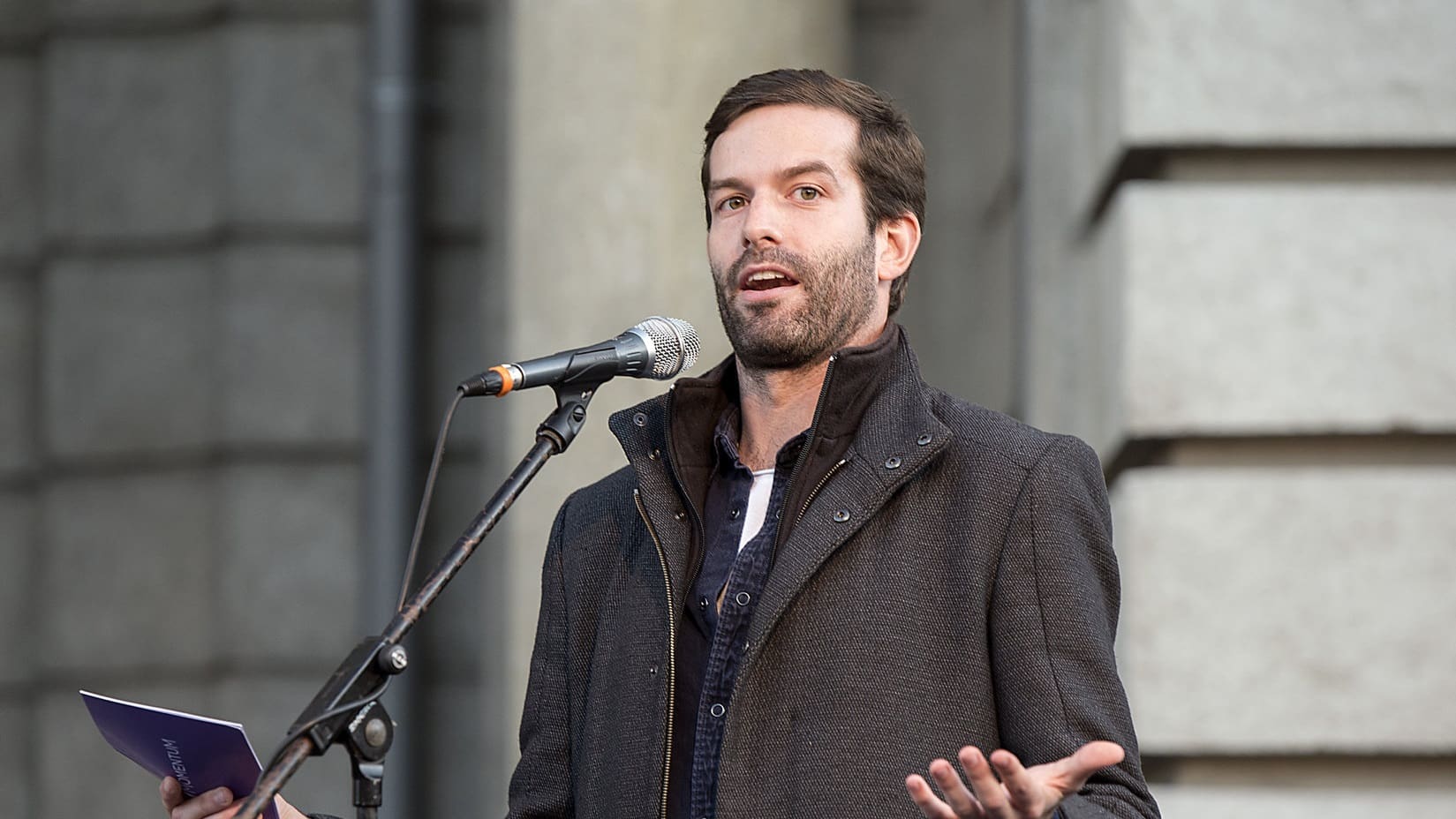
Former leader and founder of Hungarian progressive party Momentum András Fekete-Győr asked NATO Secretary General Mark Rutte to ‘take action’ against alleged Russian interference in Hungary’s upcoming election.
In a long open letter posted on his social media page, Fekete-Győr referred to a recently published media report by investigative outlet Direkt36—a constant receiver of funding linked to Western European governments, the European Union, and the now-abolished USAID—alleging that Russian military intelligence GRU deployed an operative team in Hungary to influence the upcoming April election in support of Hungarian Prime Minister Viktor Orbán. According to Direkt36, the operative team is directed by First Deputy Kremlin Chief of Staff Sergey Kiriyenko.
The report was quickly picked up by most of the Western mainstream media, including POLITICO Brussels, despite the lack of evidence it provides to support such claims. It solely bases the narrative on anonymous American and European intelligence sources, with no official confirmation or denial issued by either any EU member state government or Washington at the time of writing. Russia denied any wrongdoing, as did the Hungarian government.
Nevertheless, the Hungarian opposition already treats the report as fact, with leader of the Tisza party Péter Magyar publicly accusing Orbán’s government of allowing Russian intelligence activity in the country. He further demanded that the alleged GRU operatives be expelled from Hungary.
‘The report was quickly picked up by most of the Western mainstream media…despite the lack of evidence it provides to support such claims’
Similarly, in his open letter to Secretary General Rutte, Fekete-Győr framed the allegations as an ‘unprecedented security risk’ to the entire NATO, calling on Rutte to ‘take action’ against the ‘unprecedented intervention attempt’ using the ‘power of publicity’. According to Fekete-Győr, a condemnation by NATO’s highest-ranking official would openly direct attention to the alleged operation and would drastically narrow the ‘room for manoeuvre’ for foreign interference. ‘A firm international statement…could be capable of breaking through this information blockade,’ Fekete-Győr continues. ‘Please help us preserve the possibility for the Hungarian people to freely decide the fate of their own country in April, without external influence,’ he concluded.
The open letter was posted on Sunday morning and, as expected, has not received any reaction from either Rutte or any NATO officials. In itself, the letter could be interpreted as a pathetic attempt by a party that has less than 1 per cent support nationally, according to almost every poll, to stay relevant. Just before posting the letter, Fekete-Győr also accused Viktor Orbán of treason over the allegations, which is rather ironic coming from the former leader of a party that played a very significant role in cutting Hungary off from EU funding it rightfully committed to, only to undermine and overthrow Viktor Orbán’s government—basically exhausting the concept of treason.
Who’s Really Interfering in Hungary’s Election?
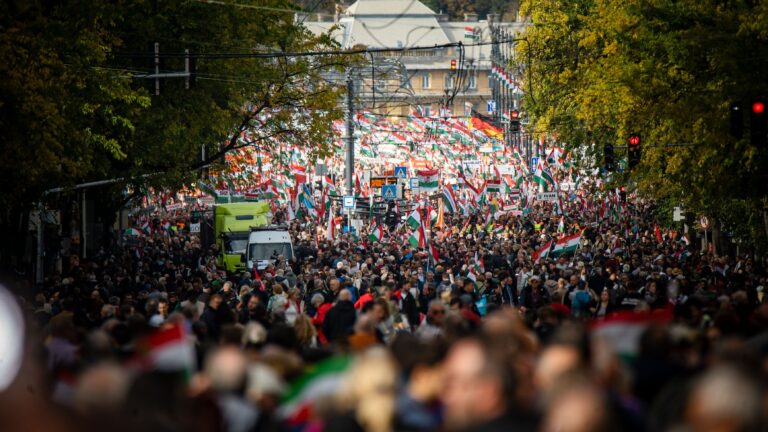
The timing of Direkt36’s report and the opposition’s allegations that followed is, however, far from accidental, which also shows how hypocritical the claim itself is. Hungary’s election campaign is entering its final phase, with less than 35 days until the vote scheduled for 12 April. In recent weeks, Orbán and other senior officials from the Hungarian government have accused Ukraine of openly interfering in the election by halting oil transit through the Druzhba pipeline since 27 January and, in cooperation with Brussels, financially supporting the Tisza Party.
Last week, Hungarian authorities intercepted a convoy of armoured vehicles transporting huge amounts of cash and gold through Hungary toward Ukraine, led by former general of the Ukrainian Security Service (SBU) Hennadiy Kuznetsov. While authorities are still investigating the case, Orbán—speaking at an anti-war rally on Saturday—suggested it raises concerns about possible foreign influence. ‘I suspect that many of the pro-Ukraine voices in Hungary are only partly sincere and heartfelt; the other part comes from the pocket,’ he said. ‘And I want to know how that money gets into those pockets.’
On top of all of that, Ukrainian President Volodymyr Zelenskyy openly threatened Orbán last week, implying possible military action if Hungary continues to veto the €90 billion EU loan to Kyiv. Zelenskyy’s remarks sparked outrage among many European politicians; even the European Commission condemned them in a surprising move. Just days before the direct threat, Zelenskyy also said Orbán would lose the election, paving the way for a reset in Hungarian–Ukrainian relations.
‘Currently it is rather Ukraine, not Russia, that is interfering in Hungary’s election’
Putting the pieces together, it increasingly appears that the Direkt36 report was intended to counter the facts on the ground: that currently it is rather Ukraine, not Russia, that is interfering in Hungary’s election. The Druzhba blockade in itself threatens the country’s energy security and the utility price reduction system, which is widely considered to be one of the major successes of Orbán’s 16 years in power. With escalating tensions in the Middle East, the situation is even more serious and carries the potential of skyrocketing energy prices in the final days of the campaign. Orbán said on Saturday that he is confident the government can break the Ukrainian oil blockade, possibly even before 12 April.
If anything, Direkt36’s report is part of the Western mainstream media disinformation and smear campaign against Hungary, which has clearly shifted up a gear in recent months. As the election approaches, the narrative that Orbán is losing badly to Magyar and will do basically anything to stay in power is being pushed increasingly aggressively by outlets such as POLITICO Brussels, Financial Times, and others that largely base their reporting on Hungarian opposition outlets and opposition-aligned pollsters.
Many analysts consider this to be a well-orchestrated narrative, preparing the ground for Tisza’s election defeat in April, suggesting that the party’s internal polls are far from the huge margin lead propagated by aligned pollsters. The results of recent by-elections also point in this direction, as Orbán’s governing alliance Fidesz–KDNP has won eight contests since Tisza’s appearance in 2024, with the most recent victory coming on Sunday, 8 March. A similar ‘stolen election’ narrative was already tested by the Georgian opposition, backed by EU officials and Western media, in 2024, leading to serious unrest in the South Caucasian country. The plot is increasingly starting to look very similar in Hungary as well.
Recent articles: