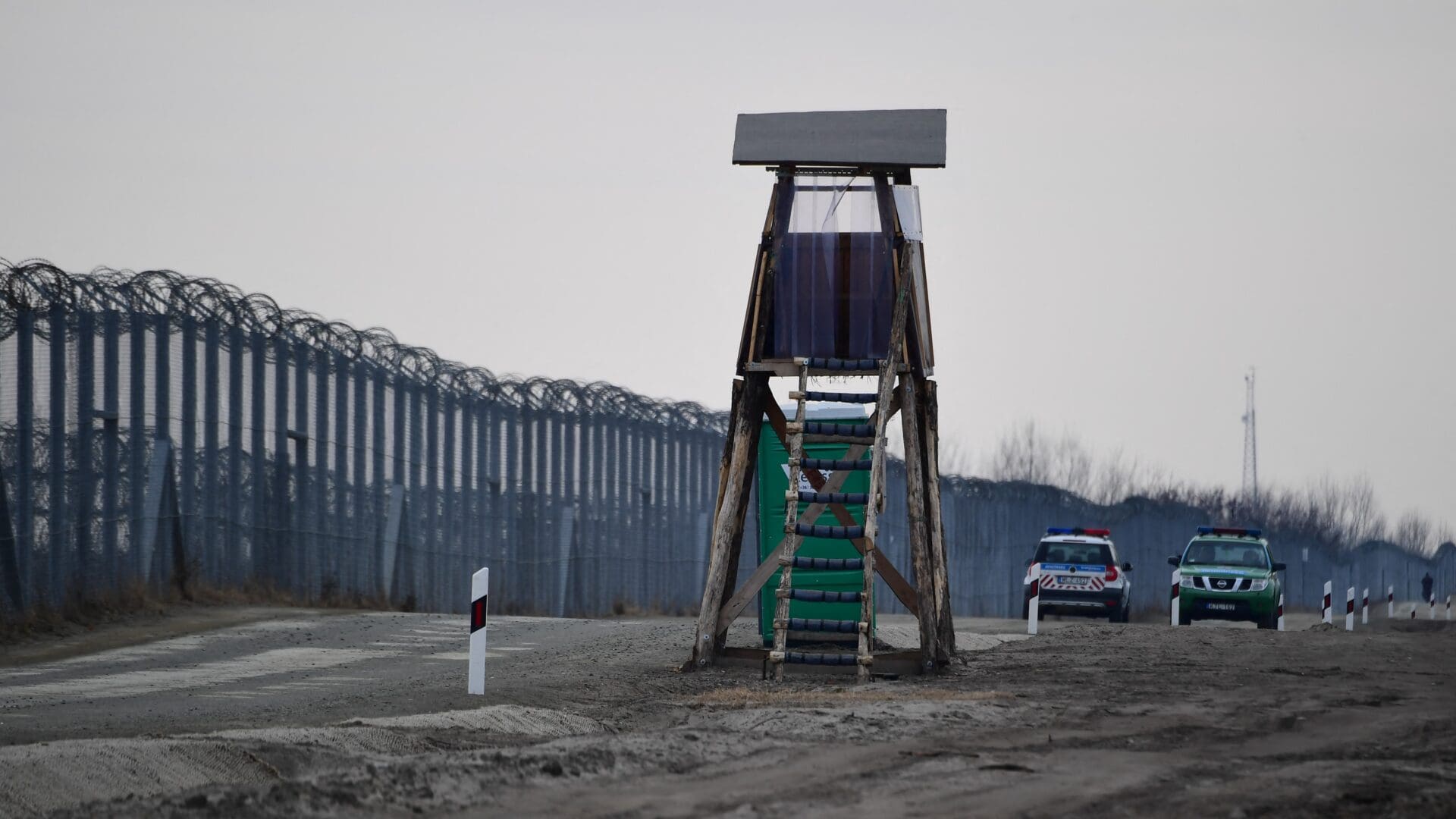
Hungarian civil guards were involved in more than 2,600 actions against border violations last year, according to Sándor Csorba, head of the border protection division of the National Civil Guard Association. Speaking at the division’s annual review meeting in Mórahalom, he said civil guards assisted in 1,816 cases involving the detention of border violators and took part in locating and apprehending 827 irregular migrants.
Csorba said civil guards alerted police on 809 occasions over suspected crimes or misdemeanours. Members of the division also supported 58 intensified border control operations, during which they helped prevent 424 migrants from crossing the border and assisted in the arrest of two human smugglers.
He said 122 civil guard associations with 2,209 members are currently involved in border protection, including 78 associations with 1,869 members operating along the Schengen external border. Last year, civil guards assigned to border protection carried out a total of 140,664 hours of service, including 31,641 hours jointly with the police.
Csorba noted that the use of service dogs, drones, handheld thermal cameras and night vision equipment is playing an increasingly important role in border protection work.
Gergely Czukor, head of the border policing department at the National Police Headquarters, said Romania’s full accession to the Schengen area has not led to a significant change in illegal migration. He said hiding in freight vehicles had already been the dominant method along that border section, and that destination countries had not reported increased migration pressure since Romania joined Schengen.
Following the accession, Hungarian and Romanian police have primarily conducted joint checks on Romanian territory to prevent irregular migrants from reaching Hungary. Czukor said October 2023 marked a turning point along the Hungarian–Serbian border, when Serbian authorities began taking stronger action against illegal migration.
As a result, the main migration routes shifted further south towards Bosnia and Croatia, though he warned authorities must be prepared should the Serbian–Hungarian border again become a primary route. He stressed that the local knowledge of civil guards is essential for effective action against illegal migration, alongside the technical support they provide.
Czukor also said a joint water patrol service between the police and civil guards was launched last year, and drone surveillance totalling 2,500 flight hours was carried out in border areas. From 10 April, biometric identification of third-country nationals will be mandatory at all border crossing points. To prevent longer waiting times, police will rely on civil guards to assist with traffic control during peak periods such as holidays and the summer travel season.
Related articles: