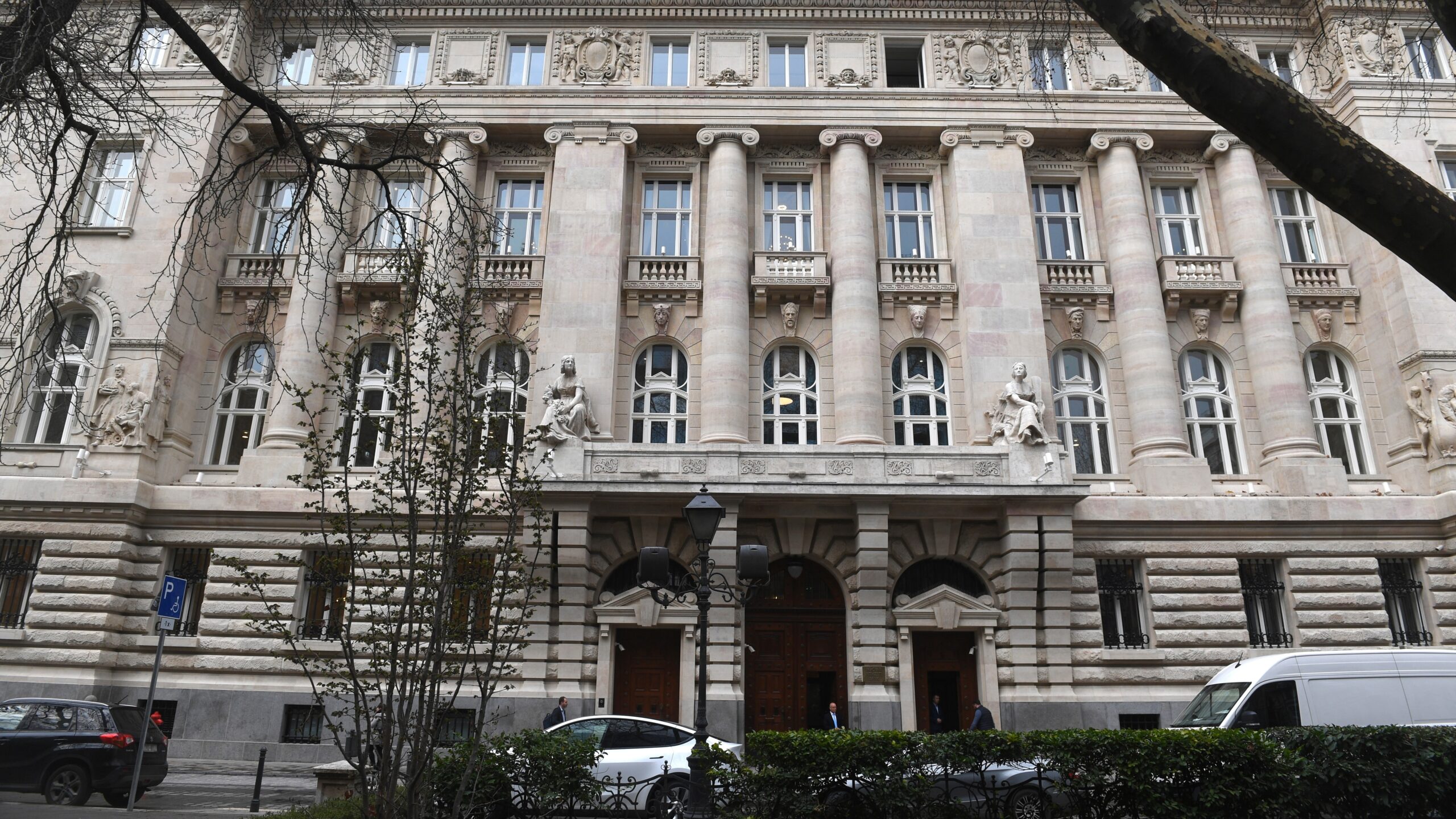
Artificial intelligence (AI) could serve as the new engine of the financial system, according to Norbert Izer, Managing Director for Financial Markets and Digitalization at the Hungarian National Bank (MNB). Speaking in the central bank’s podcast, he highlighted that while Hungary’s financial system remains stable and well-capitalized, the rapidly changing global environment requires greater agility from regulators.
‘It’s not enough for supervision to detect risks months after they emerge; we need an information base that operates almost in real time,’ Izer explained. He noted that digitalization could greatly enhance supervisory efficiency and responsiveness to market shifts.
Izer said the MNB is currently implementing AI across multiple functions, expanding its use beyond the limited applications already in place in recent years. The goal is to integrate AI solutions more deeply into the bank’s operations in the near future.
AI is expected to bring major advances in analysis, forecasting, and oversight. With its help, economic growth, inflation, and the effects of monetary policy decisions could be modelled with far greater accuracy. On the supervisory side, AI can process large volumes of data quickly, detect risks early, and enable real-time monitoring.
In Hungary’s banking sector, AI adoption is already widespread: over 90 per cent of banks use some form of AI-driven solution, primarily to boost internal efficiency and prevent fraud. Examples include internal chatbots assisting staff, and digital customer service systems that support loan applications and financial advice.
‘Artificial intelligence is one of the most effective tools in the fight against fraud, but fraudsters also adapt quickly, so protection must constantly evolve,’ Izer said. He cautioned that banks and regulators must fully understand the models they use and remain accountable for their outcomes. ‘An AI applied to a flawed process won’t fix it, it will amplify it. That’s why every new technology must be introduced thoughtfully,’ he added.
He concluded by emphasizing that AI’s true potential lies in addressing real societal and environmental challenges. ‘Financial digitalization has already sparked a revolution, but the next challenge is using technology to improve quality of life, whether in food security, water management, or other vital areas,’ he said.
Related articles: