On 21 October, the Hungarian Embassy in London hosted the Roger Scruton Symposium, organized by the Hungarian Scruton Hub and the Roger Scruton Legacy Foundation. The day-long event featured four panel discussions reflecting on the legacy of the British conservative philosopher, each examining different aspects of his oeuvre.
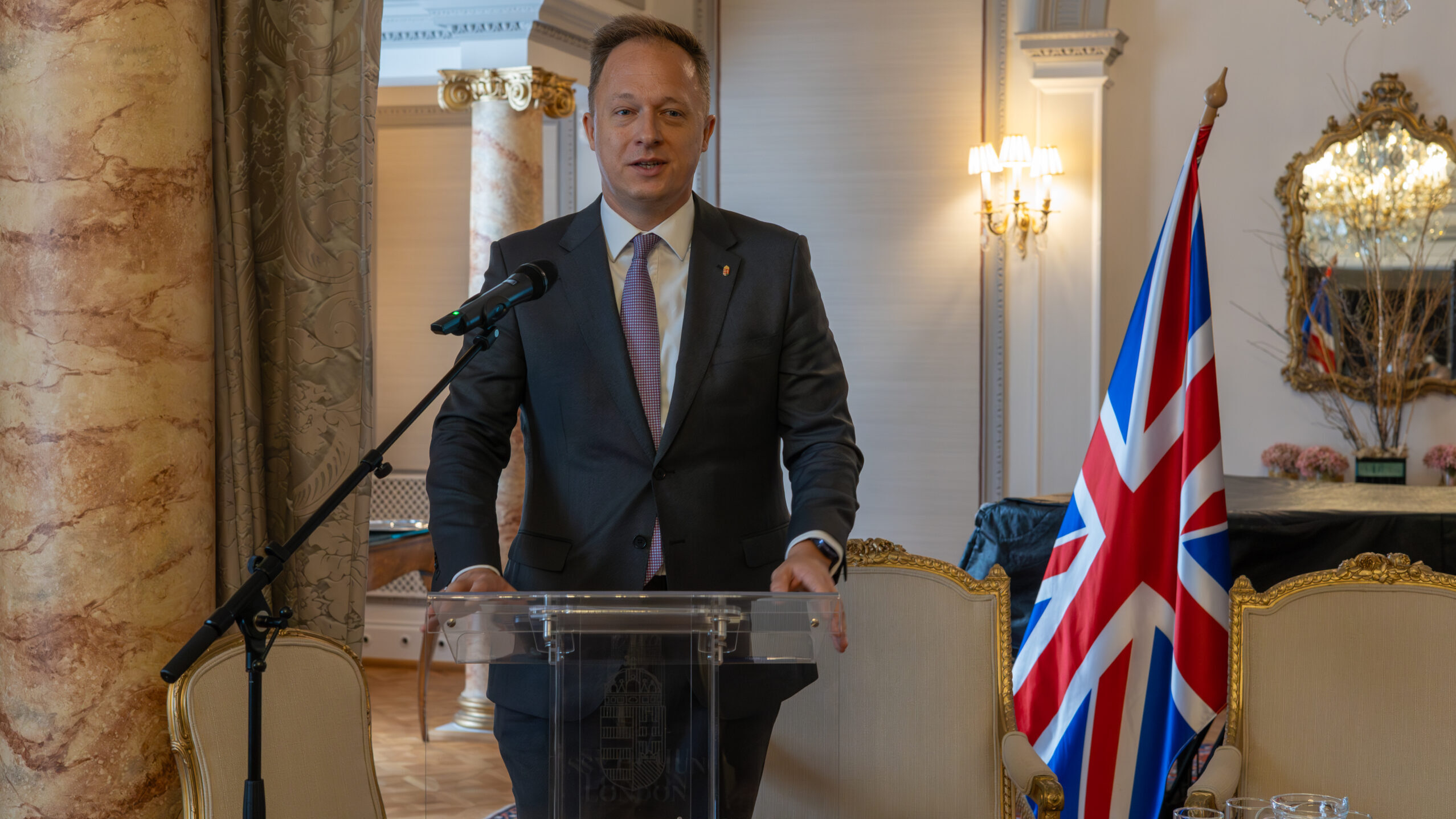
The symposium was opened by Head of the Hungarian Scruton Hub Noémi Genda. In her remarks, she recalled Scruton’s observation that ‘good things are easy to destroy, but difficult to create’, and emphasized that the task of conservatism today is to defend truth and beauty against ideological and social-engineering ambitions.
Ferenc Kumin, Hungary’s ambassador to London, noted that six years earlier, in the same venue, Prime Minister Viktor Orbán had presented one of Hungary’s highest state honours to Scruton. According to the ambassador, Scruton’s ideas are particularly relevant today in European debates over sovereignty and federalism. Sophie Scruton de Courcy, the philosopher’s widow, praised the work of the Scruton communities in Budapest, saying they preserve her husband’s intellectual legacy in an appropriate and living way.
The first panel revisited Scruton’s connections to Central Europe. Douglas Hedley, professor at the University of Cambridge, observed that it was in Central Europe that Scruton most clearly grasped the link between freedom and culture. Ferenc Hörcher, recalling his personal encounters with Scruton, stressed that Scruton could be both critical and supportive of Hungary when it came to the defence of core values.
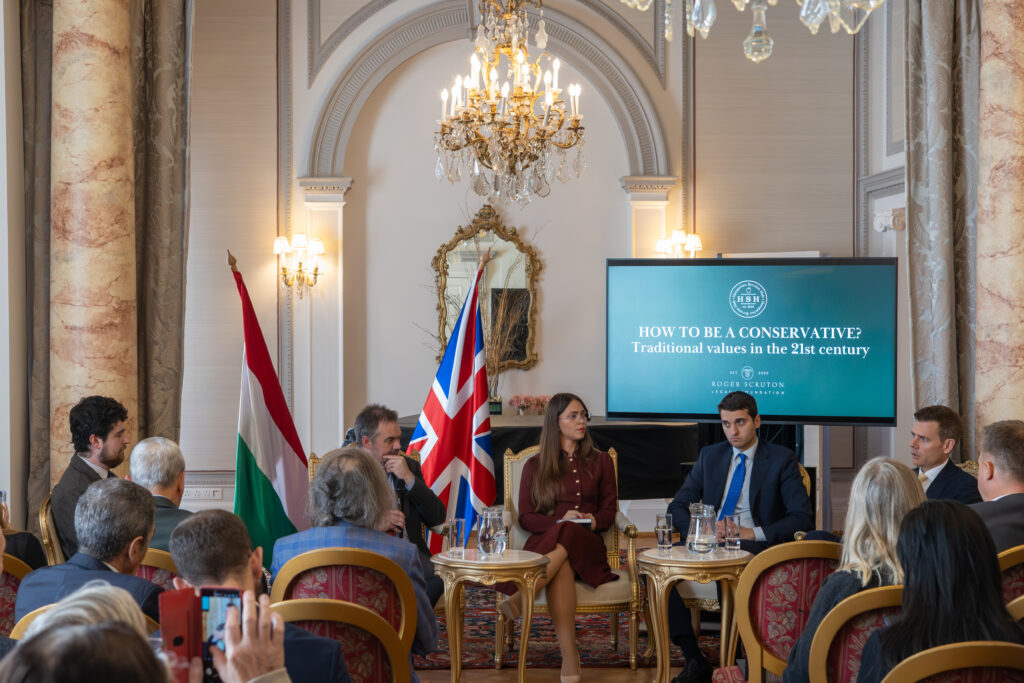
The second panel examined the significance of the nation-state in light of Scruton’s work, The Need for Nations. Historian Nicholas Tate argued that the era of nation-states is far from over, noting that the overwhelming majority of democratic decisions continue to be made at the national level. Boglárka Bólya of the Ministry for European Union Affairs highlighted the tension between EU bureaucracy and national sovereignty, while Philip Cunliffe described recent globalization projects as largely unsuccessful.
The third panel discussed the prospects for preserving traditional values and a conservative way of life. Francesco Giubilei linked the identity crisis of Western societies to secularization, while Matthew Goodwin pointed to increasing resistance among younger generations to progressive cultural norms. Enikő Szakos cautioned against ideological overreach in education, and Justin Stover outlined Scruton’s understanding of virtue, which emphasizes lived virtues rather than abstract moral principles.
The closing panel explored the role of Christianity in the foundations of Western civilization. Frank Füredi, head of MCC Brussels, argued that the West’s freedom has long been sustained by a balance between secularism and spirituality. Participants agreed that conservatism today functions as a counter-cultural movement capable of responding to social fragmentation. Father Benedict Kiely warned of the dangers of secularization, stressing that Hungary’s example offers hope for the preservation of Christian culture.
Related articles: