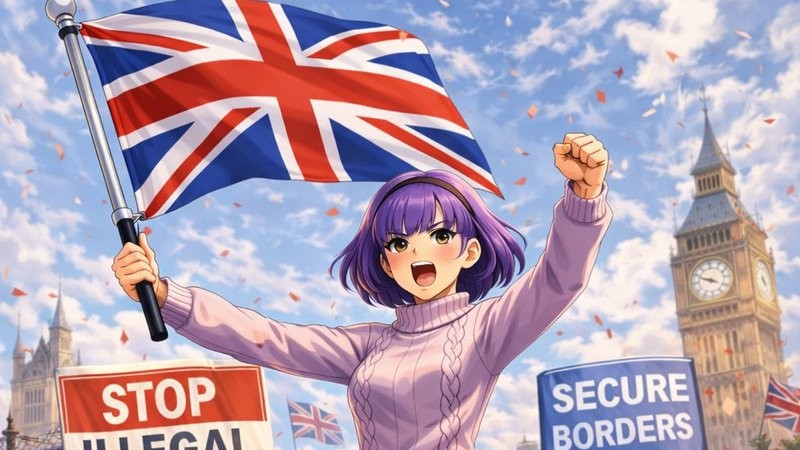
Right-wing internet and social media have been flooded in recent days with Amelia, the purple-haired goth ‘nationalist extremist’ from an online prevention game created by Hull City Council in England. The controversial game, which effectively treats every white young person as a potential extremist, has accidentally spawned a meme that is now used to spread the very ideology and messaging the council sought to prevent—and categorizes as ‘far-right extremism’ through the creation of the game.
The game, titled Pathways: Navigating the Internet and Extremism, allows players to choose between a young man or woman, both named Charlie, who has just started university and wants to socialize and make new friends. The player meets Amelia early in the story. She is introduced as a classmate and, according to the plot, is involved in political activism linked to right-wing movements. If the player selects the ‘wrong’ answers—joining Amelia and taking part in a protest against mass migration and in favour of traditional values—the game ends in a ‘Prevent referral’.
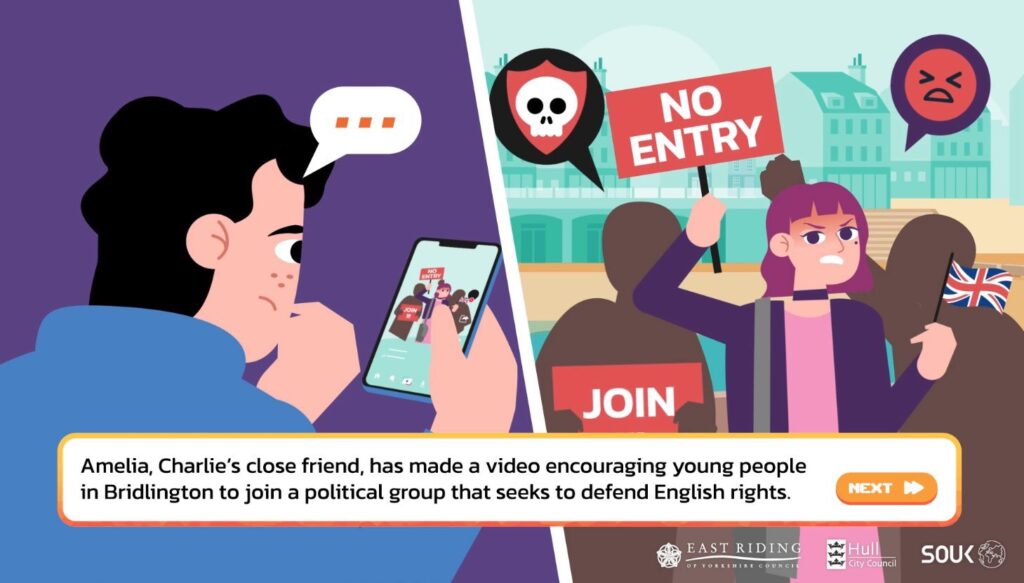
In fact, according to media and user reports, it does not really matter which decisions players make: the game reportedly ends with the same Prevent referral regardless. After the character is ‘cleansed’ of the ‘corrupted ideas’ of border protection, national unity, cohesion, and public safety through counsellors and workshops, they become popular again and, overall, more successful in life.
The message and purpose of the game are clear—and outrageous, though not entirely surprising: if you believe in preserving your nation’s culture and traditions, and want to protect it from mass migration by people who do not respect those same traditions, then you are cast as the villain and excluded by your peers.
‘Rather than being seen as a “dangerous nationalist extremist”, as the creators intended, she became an ironic hero’
However, the game’s developers and the progressive masterminds behind it made a glaring mistake. They turned Amelia, the game’s main antagonist, into an archetype that is widely popular in global meme culture among young people: the goth girl. As soon as the game escaped its ‘educational’ bubble, right-wing social media latched onto her. Suddenly, timelines were filled with Amelia fan art, edits, and screenshots. Rather than being seen as a ‘dangerous nationalist extremist’, as the creators intended, she became an ironic hero—a kind of mascot for resisting the very ideas the game was designed to promote.
So instead of making teens more wary of questioning mass migration or defending their country’s identity, Pathways did the opposite. They made their over-the-top villain a meme. Now, she’s spreading the ideas the council tried to stamp out, and honestly, the whole thing just makes the prevention programme look ridiculous for treating normal patriotic feelings like some slippery slope to extremism.
Finally, here are some of the best Amelia memes I have come across on X recently:

Related articles: