Migration and geopolitics take centre stage in Budapest on 27 March, as the second volume of Geostrategy of the Old World, written by Director General of the Migration Research Institute Tamás Dezső, was presented during a thought-provoking panel discussion at the Lónyay–Hatvany Villa.
Opening the event, Tamás Dezső described migration as a symptom of a wider crisis, calling for a shift towards long-term strategic analysis instead of short-term management. He argued that Hungary’s restrictive migration policy since 2015 has created the analytical space for such an approach. ‘We are in the fortunate position that, thanks to successful government policy, illegal migration does not shape everyday life in Hungary,’ he noted, contrasting this with Western European states where policy remains driven by immediate pressures.
The second volume of the publication shifts focus from broader East–West dynamics to the structural drivers of migration, arguing that current European responses remain almost exclusively reactive and fail to address deeper causes.
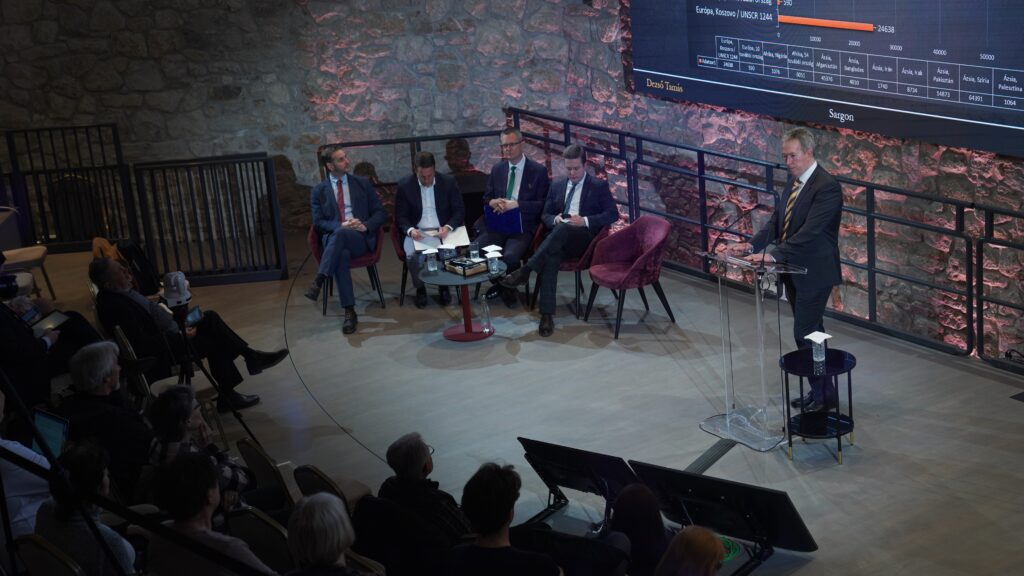
Dezső identified demographic expansion in Africa and parts of the Middle East as the central structural driver. Referencing UN data, he highlighted that the population of regions most relevant to migration towards Europe grew from 361 million in 1950 to 2.47 billion by 2025 and could reach 3.7 billion by 2050. This growth is coupled with a stark age imbalance: while Europe’s median age ranges between 40 and 50, in several African countries half the population is under 14.
This demographic pressure, he argued, is further compounded by resource scarcity, particularly water shortages, which could reach critical levels in some regions by 2070. ‘These trends will not reverse—they will intensify,’ he warned.
Dezső also pointed to what he described as an often intentionally suppressed fact: that the majority of arrivals to the EU are not fleeing war zones but are economic migrants. According to his assessment, 70–80 per cent are young men between the ages of 14 and 34.
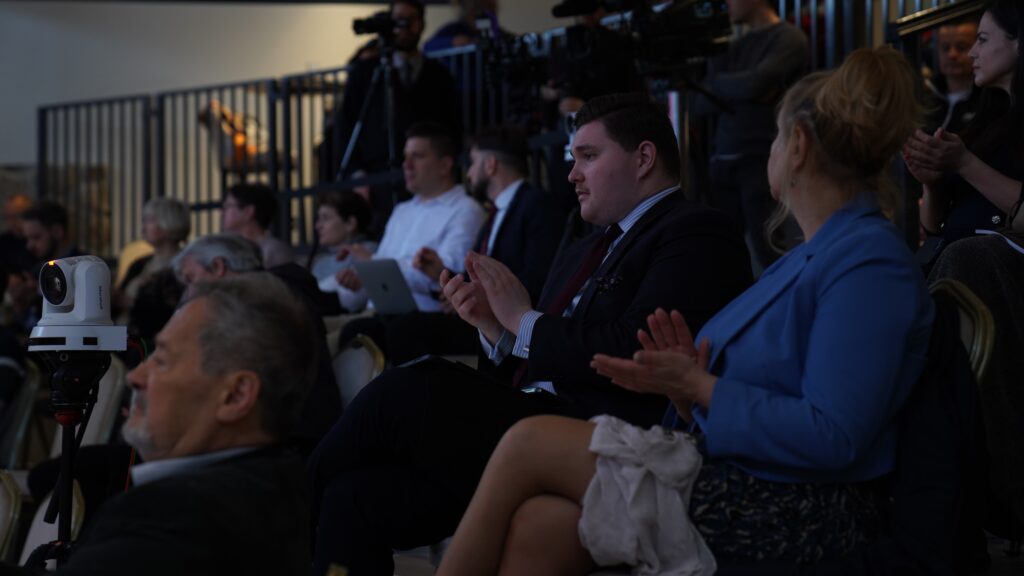
Security and policy implications were central to the remarks of Bence Rétvári, Parliamentary State Secretary at the Ministry of Interior, who warned that recent instability in the Middle East could trigger a new and prolonged migration crisis affecting Europe.
‘We must expect a drawn-out period of instability and chaos in Iran,’ he said, adding that such a scenario would place sustained pressure on European borders. At the same time, he criticized the European Commission for accelerating the implementation of the EU migration pact, arguing that current policy tools fuel further arrivals rather than deterring them.
‘Rétvári described mass and illegal migration as an increasingly organized and professionalized system’
Rétvári described mass and illegal migration as an increasingly organized and professionalized system, driven by well-established smuggling networks operating along fixed routes. ‘This is a functioning and profitable system,’ he said, calling for a decisive policy shift focused on external border protection and the suspension of mechanisms that act as pull factors.
He also pointed to systemic weaknesses in EU enforcement, noting that more than 80 per cent of illegal migrants cannot currently be returned, rendering many legal decisions ineffective in practice.
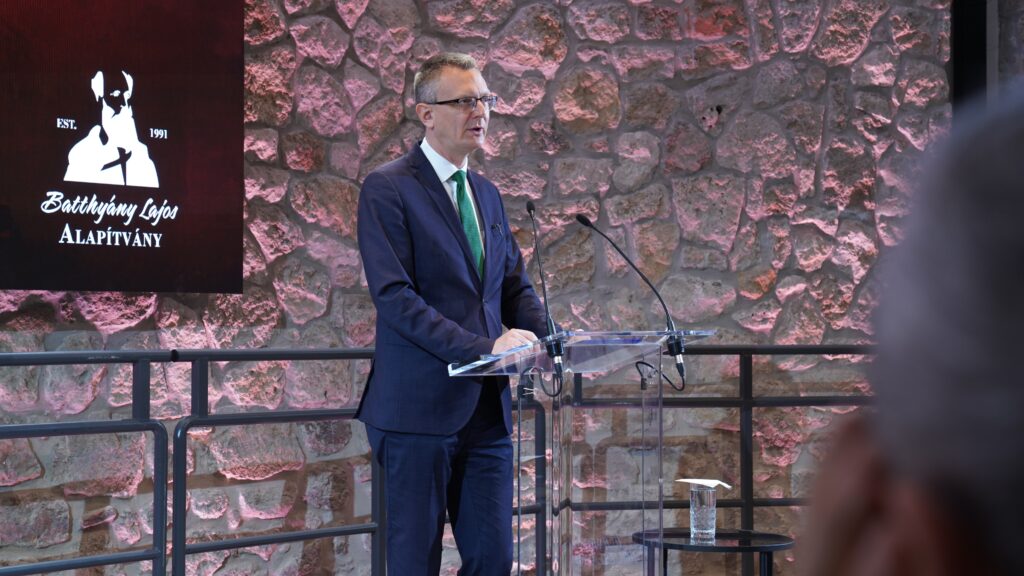
Speaking about his everyday experiences in Brussels, Csaba Dömötör, Member of the European Parliament of Fidesz–KDNP, argued that the Belgian capital is increasingly affected by the convergence of migration and organized crime, particularly in connection with drug trafficking through the port of Antwerp.
Dömötör also recounted anecdotal experiences suggesting a deterioration in public security, including an incident involving a Hungarian intern who was reportedly told on public transport: ‘You are no longer at home here.’
He extended this assessment to several Western European countries, arguing that migration-related challenges are no longer isolated phenomena but systemic trends. According to Dömötör, the policy debate in Europe continues to rest on three assumptions: that multiculturalism is inevitable, that migration will resolve labour shortages, and—less openly—that new arrivals may reshape electoral dynamics in favour of pro-migration political forces.
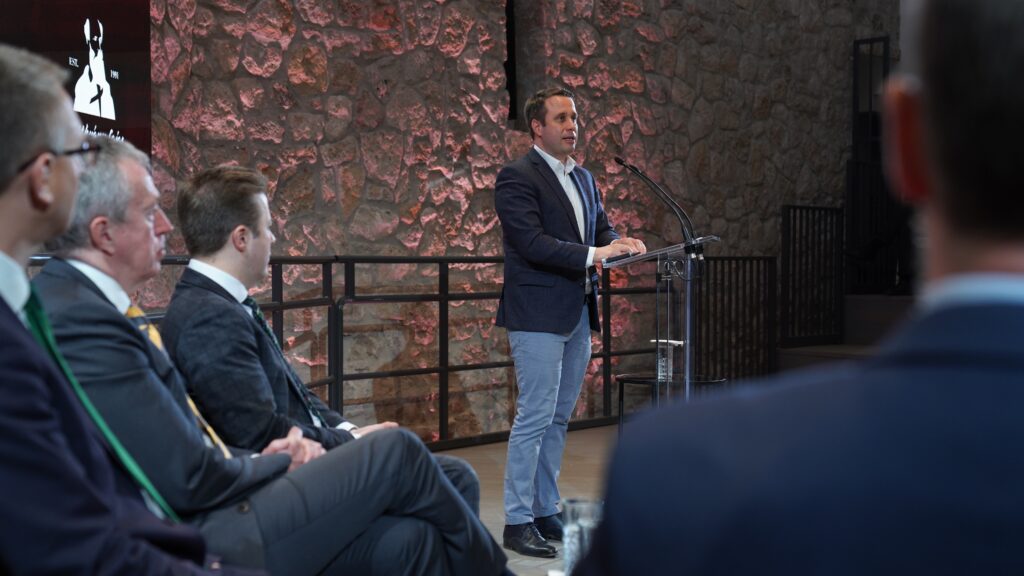
Closing the panel, Director of the Migration Research Institute Viktor Marsai emphasized the economic roots of migration, particularly in Sub-Saharan Africa. ‘Each year, 15 million young people enter a labour market that essentially does not exist,’ he said, highlighting structural unemployment as a key push factor.
He added that climate change and terrorism further destabilize these regions, reinforcing migration incentives. Despite this, Marsai argued that effective migration control remains achievable, pointing to examples of strict border enforcement in countries such as the United States, Russia, and China.
‘Illegal migration is not an uncontrollable phenomenon—it depends on political will,’ he said, stressing the importance of clear and enforceable policy signals.
Related articles:
At a time when public debate is increasingly polarized and superficial, Hungarian Conservative remains committed to depth, intellectual honesty, and independent conservative thought.
Producing high-quality journalism requires resources. Your contribution helps us expand our coverage, reach new audiences, and keep our content accessible.

Please consider supporting our mission.