The following is an adapted version of an article written by Emese Hulej, originally published in Hungarian in Magyar Krónika.
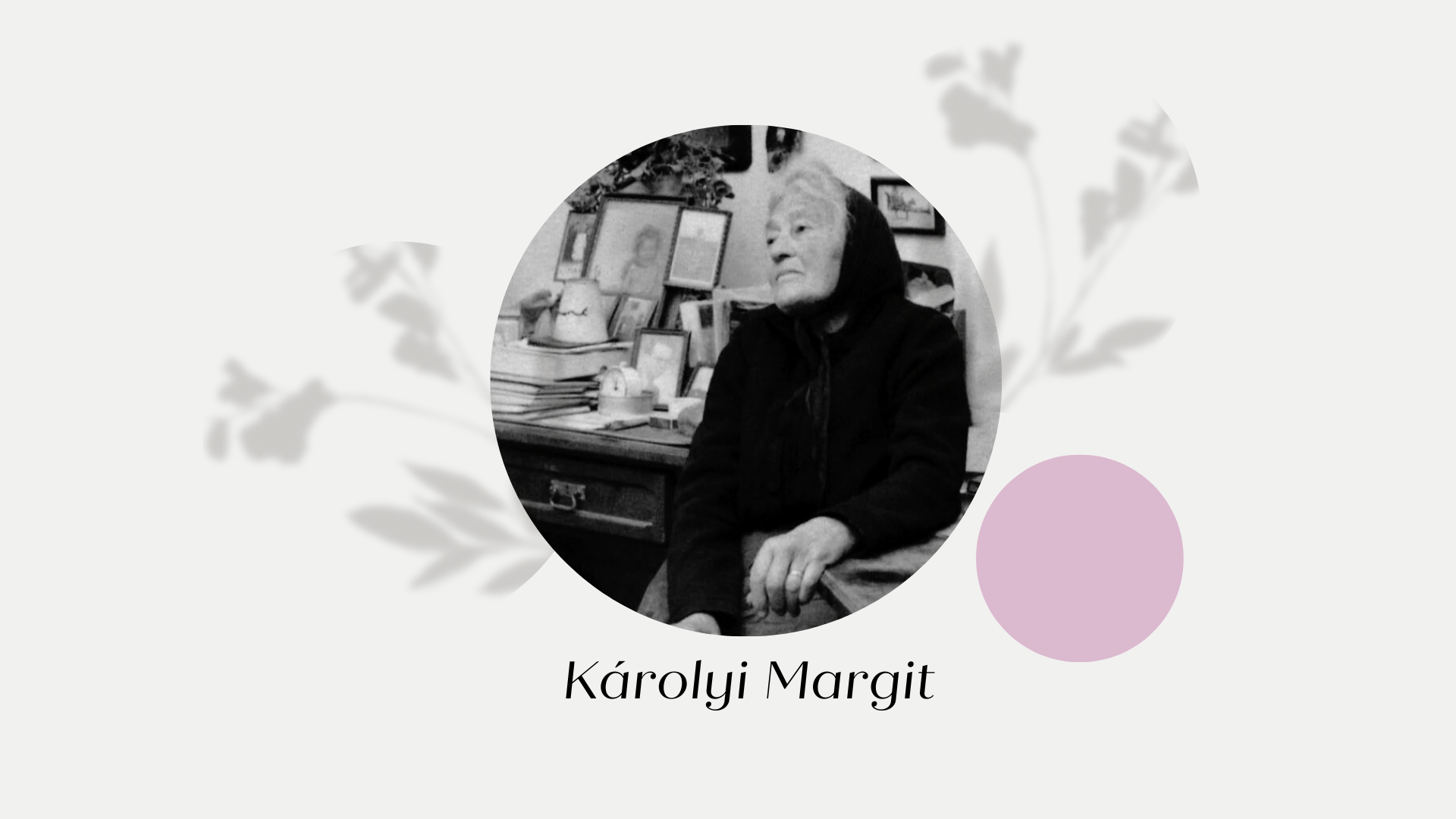
The 20th century in women’s reading. Artists, scientists, legendary educators, lifesavers, and society’s favourites. A countess who lost her home, her two sons died, and her husband and daughter fled abroad—Mrs Margit Károlyi Esterházy lived in a monastic cell next to the family castle during the last years of her life.
‘My grandmother was not a revolutionary; she was a lady of grace, but she treated everyone equally,’ Péter Esterházy wrote about his grandmother. Harmonia Caelestis blends reality and fiction, but Countess Margit Károlyi, a resident of one of the monastic houses next to the family castle in Majk, can be recognized, her description echoing the stories of those who remember her.
Countess Margit Emma Leona Karolina Paulina Károlyi was born into one of the most prominent historical families in the millennium. Both her father and her husband held the office of prime minister. Gyula Károlyi succeeded István Bethlen as head of government, and her husband, Móric Esterházy, was prime minister for a few months before their wedding.
The three Károlyi daughters, Margit, Gabriella, and Emma, were born on the family estate in Arad County. At the time, their father was not involved in politics, but rather in farming. The 22-year-old Countess Margit married Count Móric Esterházy in 1918. Their wedding was held during the Lenten season in a small circle in the chapel of the Károlyi Palace on Reviczky Street.
The new family lived in the castle in Majk, occasionally spending months on the estate in Csákvár, and in winter, they stayed in their palace in the castle. The countess, who was addressed as ‘Your Grace’, loved gardening and constantly kept an eye on the lives of the villagers. Whenever illness or other trouble struck, the count’s carriage would appear, bringing firewood or wheat, and before the holidays, every child received new shoes and a warm coat to fit their size. On Christmas Eve, the youngest children in the neighbourhood were invited to the castle, where a beautifully decorated Christmas tree and a pile of oranges, which were a rarity at the time, awaited them. The family also maintained the school, and none of the talented children were left without further education, because Countess Margit took care of that as well.
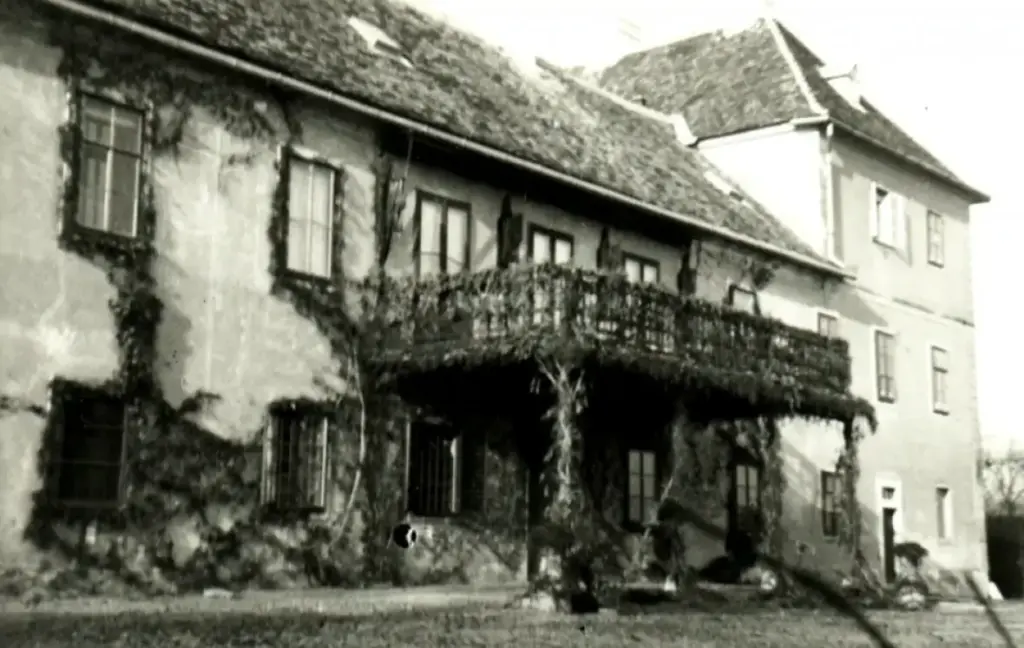
The couple had four children, their first son, Mátyás, being the father of writer Péter Esterházy. Their other son, Marcell, disappeared at the age of 25 during the Second World War, and it was never revealed exactly where and how he died. His mother hoped all her life that he would return one day, which is why, according to many, she did not move to Vienna with her husband and daughter. Their son Menyhért was paralyzed in the post-war polio epidemic and died of iron lung disease at the age of 32, which was another blow to his mother that she never recovered from. Their only daughter, Mónika, was imprisoned in Kistarcsa in the 1950s as a class enemy—she also appears in Tamás Almási’s documentary Ítéletlenül (Without Judgment).
‘She was so attached to the country, its historical past, and the environment that she could not imagine leaving’
After the 1956 Revolution, Móric and Mónika Esterházy left for Vienna, where they lived until the end of their lives. Margit Károlyi did not want to leave, but not only because she hoped her son would return. She was so attached to the country, its historical past, and the environment that she could not imagine leaving, even though the magnificent castle was just ancient history by then… It was still standing, but she was quickly evicted from it and deprived of her property, so she took refuge in one of the small houses of the Camaldolese monks. He lived with his sister, Emma, whom everyone called Timbi, and who went to work in the forestry to earn the money they needed to support themselves. Both women became familiar figures in village life, going to early morning mass, herding their cow, Kati, who was almost like a member of the family, gathering firewood in the forest, and going to the butcher for scraps to feed their cats. Margit Károlyi had always been referred to as a ‘peasant countess’; rural life, the proximity of animals, the garden, and nature were her true environment.
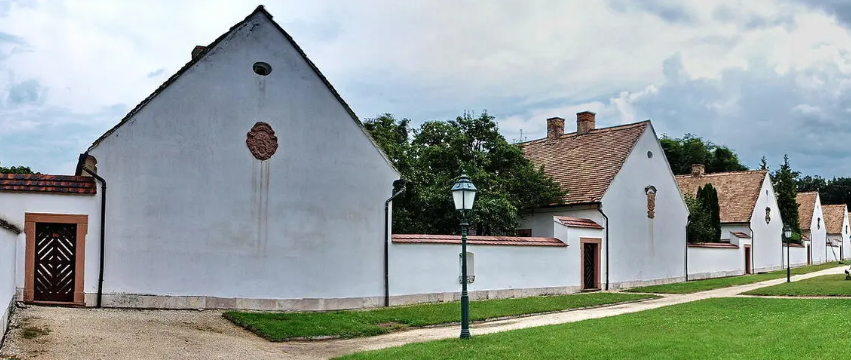
Her grandson described her as follows: ‘My grandmother lacked kindness. This made her harshness even harsher; her requests sounded like orders, although her orders never turned into bossiness. However, her consistency made her predictable and reliable, and this, along with her constant helpfulness, sometimes still gave her the appearance of kindness.’ Margit Károlyi was strict, fair, straightforward, and consistent. The villagers unanimously agreed that she was friendly and interested in others. In the 1970s radio staff approached her, asked her about her life, and then asked her what she would wish for if she could have three wishes. First, she wished good health for her entire family, then good health and success at work for her only remaining son, and joy in her grandchildren. Her third and most important wish was for Hungary to prosper and fulfil its historic destiny. All this in the 1970s!
Margit Károlyi died in 1975, one year after her sister, and was laid to rest in the crypt of the Károlyi family’s castle in Fót.
Read more about famous Hungarian women:
Click here to read the original article.