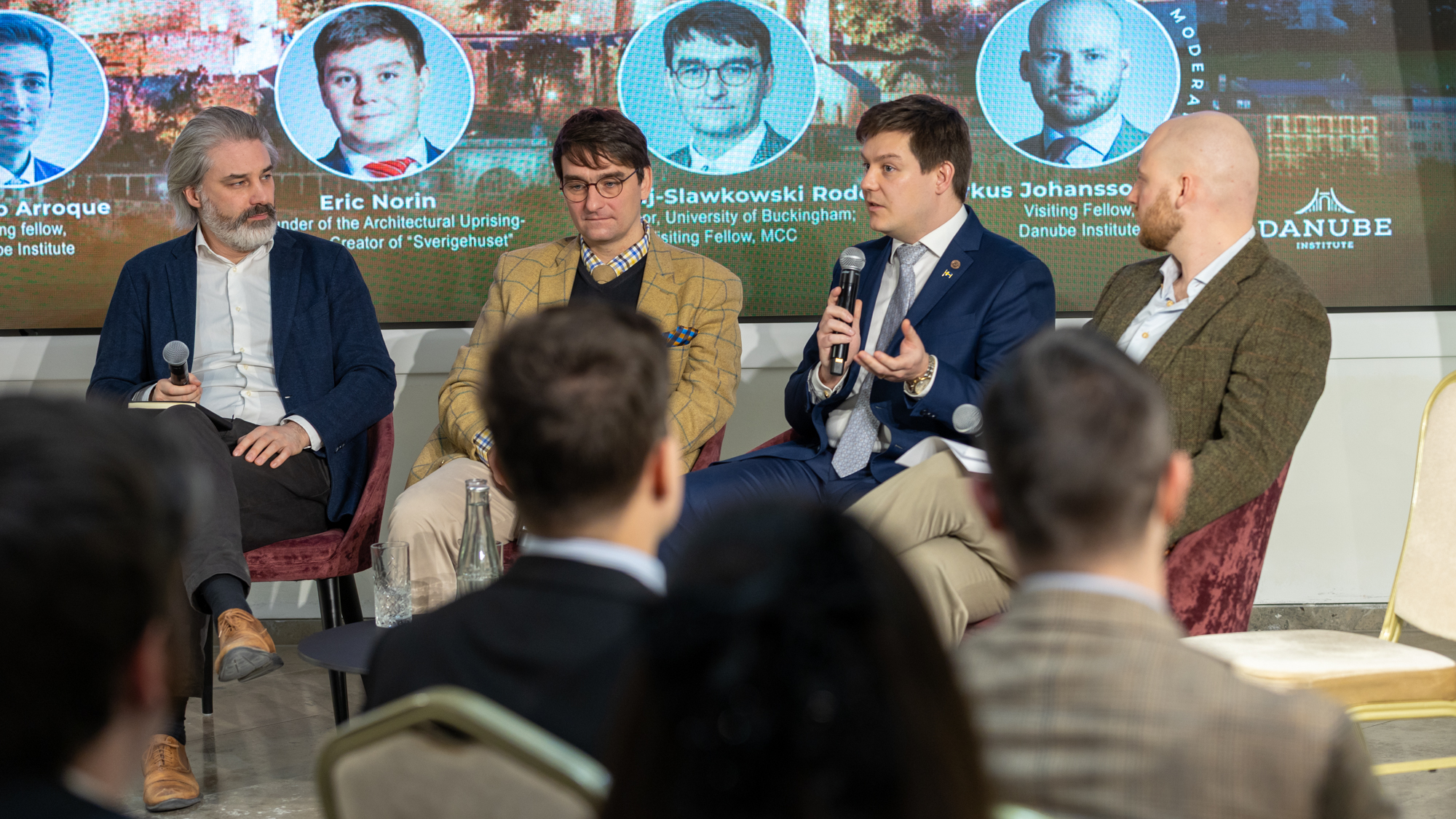
Europe’s emerging revival of traditional architecture is no longer a niche aesthetic debate but a question of identity, democratic legitimacy, and civic morale. That was the central argument on which panellists agreed during the event titled Why Beautiful Cities Matter, organized by the Danube Institute on Tuesday, 17 February, in Budapest.
The discussion brought together Eric Norin, co-founder of the Architectural Uprising movement and creator of the ‘Sverigehuset’ concept; Mikołaj-Sławkowski Rode, Professor at the University of Buckingham and Visiting Fellow at MCC; and Director of Research at the Danube Institute Calum T M Nicholson. The panel was moderated by Visiting Fellow at the Danube Institute Markus Johansson-Martis.
Architecture’s Political Impact
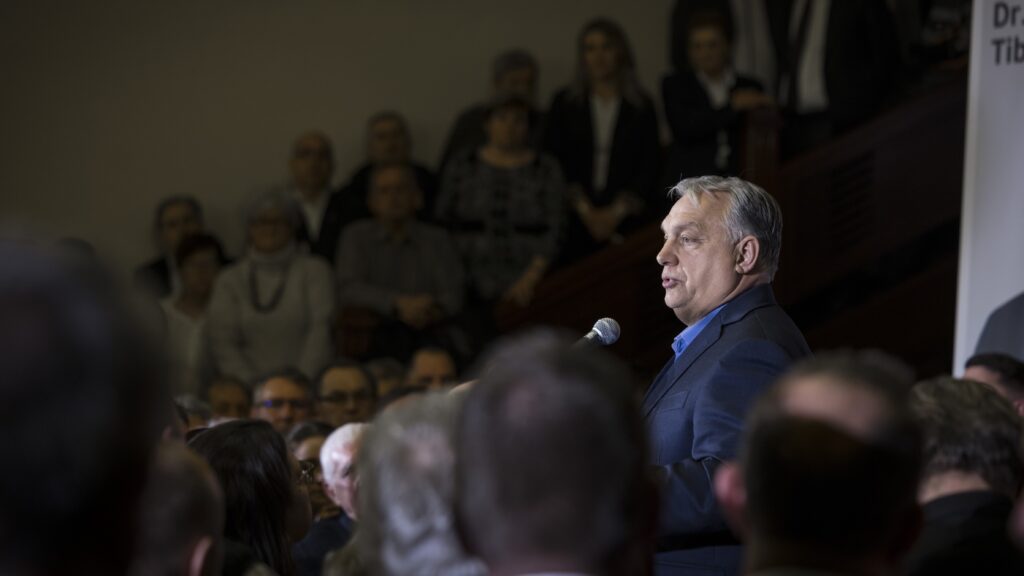
Delivering the keynote speech, Norin opened with a personal story from his hometown of Sundsvall, the site of ‘the largest fire catastrophe in Swedish history’ in the 19th century, where ‘11,000 people lost their homes in one day.’ Yet the city’s rebuilding became, for him, an early lesson in what architecture can transmit across generations. ‘The best thing about this phoenix-rising-from-the-ashes story is that it is still there,’ he said, recalling the streets he grew up on and the impact of ‘the ornaments and the decorations and how beautiful everything was.’
He contrasted that experience with his later training in Stockholm, where he said both the architecture school building and its curriculum embodied the modernist assumptions he would later oppose. ‘You could guess how disappointed I was with the building. But to be honest, I was even more disappointed with the education because it totally reflected the building,’ Norin said, describing a leaking, cold, flat-roofed campus that ultimately forced students to relocate. From that frustration, he explained, came the idea for Architectural Uprising, founded in 2014 and now numbering ‘280,000’ members. The movement, he said, operates through ‘the three Ds’: ‘We debate, defend, and develop.’
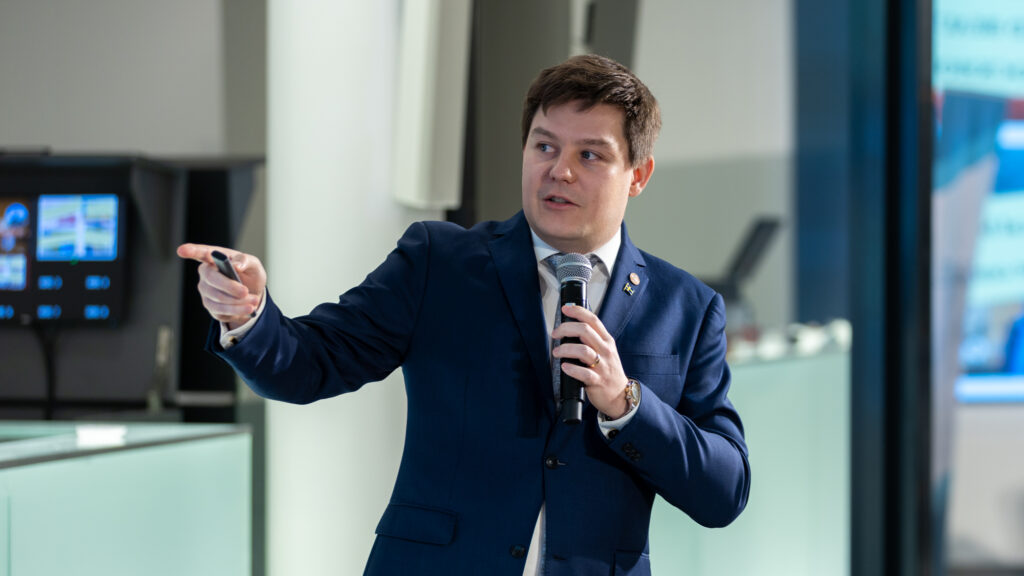
He argued that the struggle over architecture has become openly political in Sweden, citing protests that helped stop a proposed Nobel Prize building near Stockholm’s Royal Castle, after which political parties concluded that ‘architecture and city planning is something you could lose an election on, not win.’ Norin claimed public opinion consistently favours traditional design and said market behaviour points in the same direction, with traditional apartments commanding a clear premium. He also framed the preference for classical streetscapes as rooted in human perception: in traditional buildings, ‘you can find something human in the design’, whereas modernist forms prompt avoidance—‘the fastest way to get away from it.’
For Norin, the core issue is cultural continuity. Architecture has a ‘language’, he said, and historic streets function as a kind of inheritance and ‘time machine’ through which past generations still speak. Because ‘what we build persists’, preserving and extending that tradition is not nostalgia but a responsibility to future citizens.
Buda Castle District — An Example to Follow
During his remarks, Norin repeatedly returned to Budapest as an example of what European cities can still be. That sentiment was echoed by other panellists when moderator Johansson-Martis asked about restoration and reconstruction work in the Buda Castle district and whether it strengthens ‘Hungarian identity and social cohesion’.
Calum Nicholson, who moved to Budapest five years ago, admitted he had initially been ‘kind of sceptical’ about the project, concerned it might become a ‘Disneyland’—likening it to imitation landmarks sometimes built in China. ‘I was always worried whenever we try to recapture something from a previous era, because you can end up doing it in a way that feels like a caricature,’ he said. However, he argued, the results overturned that fear, and the new buildings can convincingly be read as historic.
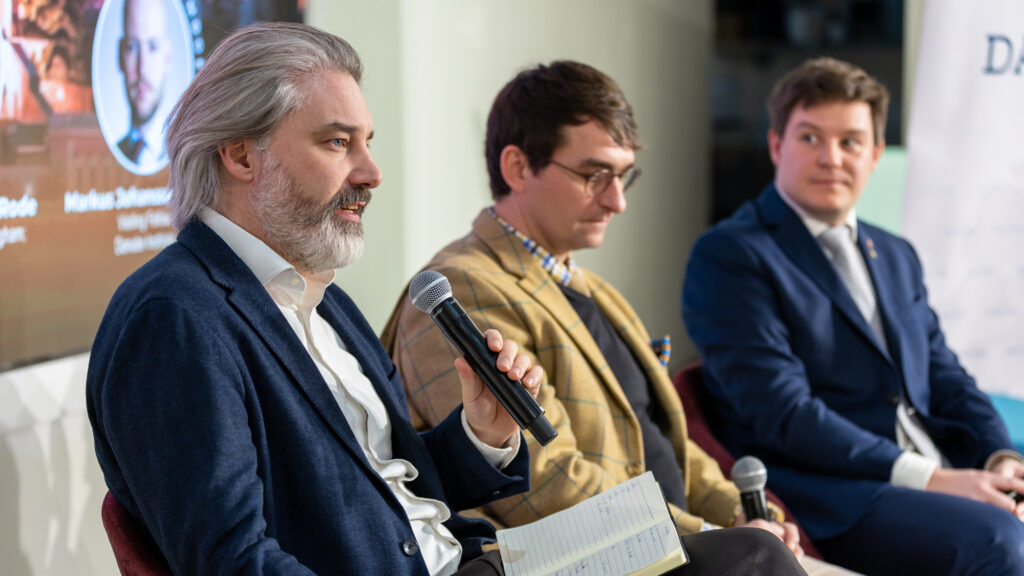
Rode connected Budapest’s approach to Central Europe’s own post-war experience, pointing to Warsaw’s reconstruction after the Second World War. He recalled how Poland’s first communist government considered abandoning the ruined capital altogether, but public attachment forced a rebuilding effort that made the Old Town and Royal Route sites of shared pride. The claim that such reconstructions are mere stage sets, he argued, collapses when confronted with lived reality. ‘The claim that these are pastiche in some way is completely undermined by the enthusiasm of the inhabitants of every city that has undertaken such a project,’ he said.
Norin, in turn, argued that Budapest’s castle district provides an unusually strong real-time counterexample to modernist criticism. ‘The question of pastiche or Disneyland is very often used as a hammer argument by modernist architects,’ he said, adding that the restoration project ‘proves them wrong.’
What Beauty Really Is
From there, the panel broadened to first principles. Rode argued that the so-called International Style is neither neutral nor genuinely modern. Modernism, he said, ‘is already a strange style’, and despite its self-image, ‘it is over a hundred years old’. Yet its advocates claim that looking back is morally forbidden: ‘they constantly claim that we cannot look back in architecture, because doing so would deny the moral, intellectual, and political progress made since the Second World War,’ he said, describing how the war is treated as a civilizational cut-off that renders earlier values ‘bankrupt’.
Panellists also challenged the idea that beauty can be reduced to engineering metrics or functional minimalism. Nicholson argued that the supposed opposition between beauty and utility is false: ‘there should be harmony between these things.’
The conversation turned as well to why modern glass-and-steel skylines often feel emotionally cold, even when technically impressive. Nicholson suggested the divide is less ‘beauty versus ugliness’ than ‘relatability versus alienation’: whether a building ‘speaks to us, or is it an alien monolith’. Norin offered a different vocabulary—‘fractality’ and ‘traces of other people’—arguing that humans respond to environments showing layered relationships and continuity rather than blank slates.
‘Eric Norin argued that restoration expresses respect for inherited craftsmanship and a commitment to continuity’
The discussion ended by returning to restoration as an ethical act as much as an aesthetic one, linking care for objects to care for communities. Drawing on an anthropological metaphor—‘the earliest proof of civilization is a healed femur’—Eric Norin argued that restoration expresses respect for inherited craftsmanship and a commitment to continuity.
Looking out over Budapest, he said the same principle applies at the scale of a capital city:
‘If you look at photographs from the 1940s looking out over this view and compare them with today, this is what the nation of this country has done to its capital. You have been gluing it back together—not because you had to, not because it was cheap, but because you respected the people who did it in the first place.’
Related articles: