Christmas is nothing without the excitement of the weeks before, spent preparing for the big day. Traditionally in Hungary, St Lucy’s Day (Luca-nap), observed on 13 December, is an important religious milestone shortly before Christmas. And while the day is named after a Christian saint, it is better known for its rich folk traditions and superstitions—many of them revolving around witches.
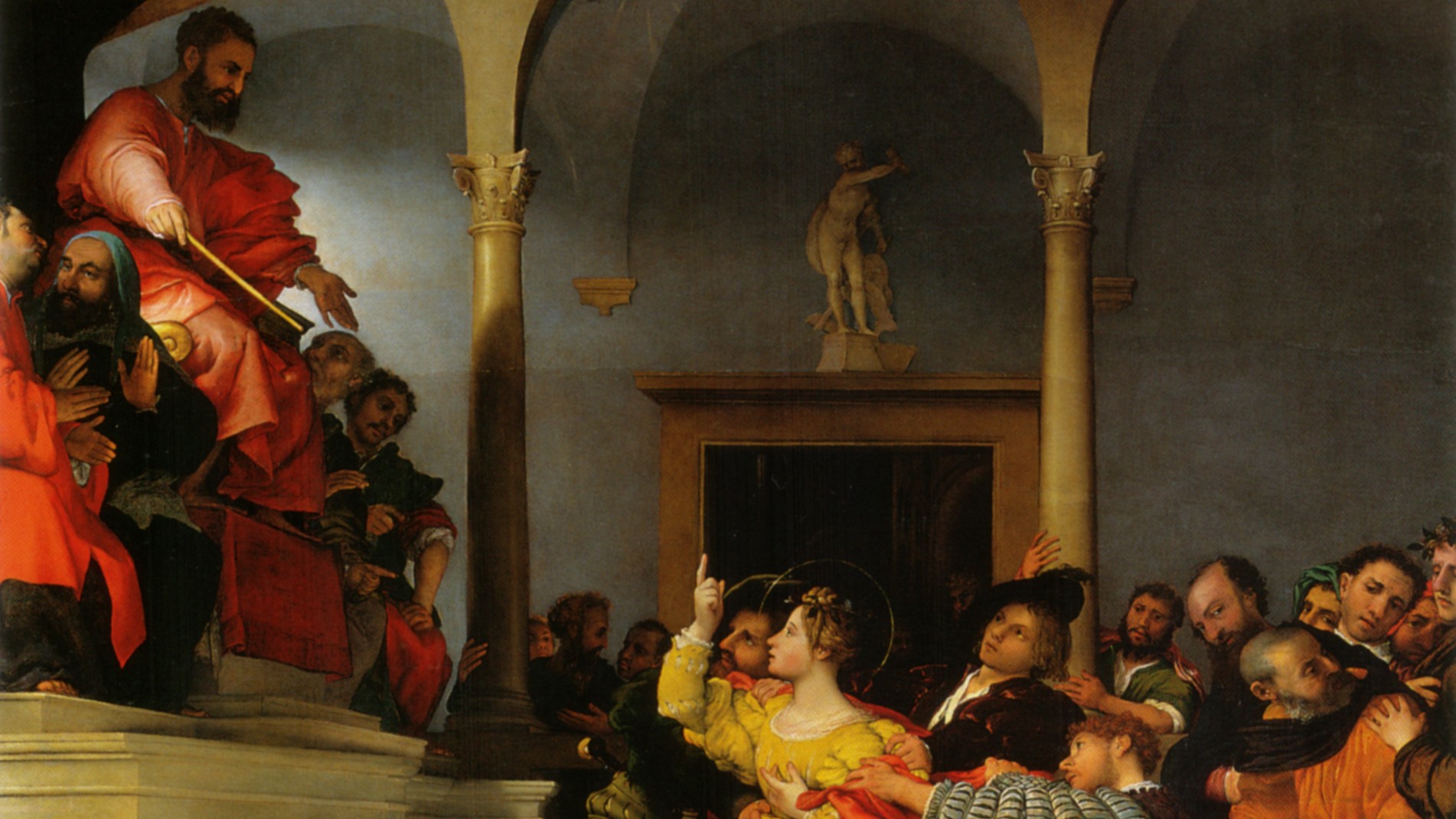
The day is named in honour of Saint Lucia, or Lucia of Syracuse. The young girl, brought up in Sicily, died as a martyr in the 3rd century. Lucy was born into a wealthy family, but after she was baptized into the Christian faith, she vowed to remain a virgin and serve God. Disappointed and angered by her rejection, her pagan suitor reported Lucy’s Christian beliefs to the local Roman governor, who sentenced her to death by fire. As the flames could not harm her, she was tortured and eventually stabbed to death for her faith.
Since her name is associated with the Latin word lux, meaning ‘light’, she later became the patron saint of those suffering from eye diseases. St Lucy’s connection with ‘light’ also explains why she is celebrated in mid-December—before the introduction of the Gregorian calendar, 13 December was the shortest day of the year (today it falls on 21 December), the day with the least natural sunlight. Celebrating St Lucy on that day reminded people of light and warmth.
While the saint who gave the mid-December celebration its name is known for her kindness and benevolence, in folklore the day is nevertheless more closely associated with evil—and with its female agents: witches.
In Hungary, on St Lucy’s Day it was forbidden to perform household tasks traditionally associated with women, such as baking or washing. Breaking these rules was believed to bring misfortune upon the household—for example, baking on this day was thought to risk setting the house on fire. Items sent to neighbours were feared to fall into the hands of witches and never be recovered.
While most household duties were forbidden on this day, one task was compulsory: working on Saint Lucy’s Stool (Luca-szék). The Stool had to be prepared according to strict instructions. It needed to be completed by Christmas Eve, but the family was allowed to perform only one step each day.
‘Stepping onto the chair inside the church granted the ability to recognize witches in the crowd’
Assembled without nails, the Stool consisted of nine parts, each made from a different type of wood. If the family completed it honestly and brought it into the church by Midnight Mass, they were rewarded: stepping onto the chair inside the church granted the ability to recognize witches in the crowd. Afterward, the Stool had to be burned—folk tradition says one could hear witches screaming as it caught fire.
Jack-o’-Lantern Hungary-Style: Protection from Evil Spirits
In the Western world the image of carved pumpkins is inseparable from Halloween. It is less known that in Hungary the same tradition was associated with St Lucy’s Day.
The tradition of carving pumpkins mostly characterized the Transdanubian region, where people carved scary pumpkins with eyes and mouth. The pumpkins were believed to ‘scare’ away evil spirits, while the candles put inside protected from darkness.
Forecasts and Predictions on St Lucy’s Day
St Lucy’s Day was also used to forecast the coming year’s weather. It was believed that January’s weather would mirror that of St Lucy’s Day, while February’s weather would resemble that of the day after the celebration.
Connected to the attempt of predicting the weather is the desire to foretell how rich next year’s harvest will be. Fortunately, Lucy’s Day was good to predict this too. On this day families planted wheat (Luca búza), placing the seeds in small pots close to the fireplace. Women kept the wheat warm and tried to make it grow. If the sprouts rooted and grew thick and tall by Christmas, it was believed the harvest would be abundant. On Christmas Day, the wheat was tied with a red ribbon and placed under the Christmas tree as decoration.
Related articles: