The following is a press release kindly provided to us by the European Network Remembrance and Solidarity (ENRS).
Established by the European Parliament in 2008, 23 August observes the European Day of Remembrance for Victims of All Totalitarian and Authoritarian Regimes. To mark the day, the European Network Remembrance and Solidarity (ENRS) is launching the 13th edition of its ‘Remember. August 23’ campaign—a public-education initiative that explores the crimes of Nazism and communism, and their lasting significance for contemporary Europeans.
The date recalls the Molotov–Ribbentrop Pact, signed on 23 August 1939.
On paper, it was a treaty of non-aggression; in practice, its secret protocol carved up Central and Eastern Europe between Nazi Germany and the Soviet Union, clearing the way for the Second World War. What followed—concentration camps, Soviet gulags, the Holocaust, decades of oppression— still shapes the region today, and continues to echo through the family histories the ENRS campaign sets out to tell.
Each edition puts a spotlight on one person who found the courage to resist, against the odds. Past campaigns have told the stories of Władysław Bartoszewski, Borys Romanchenko, Milada Horáková, Jaan Kross and Doina Cornea.
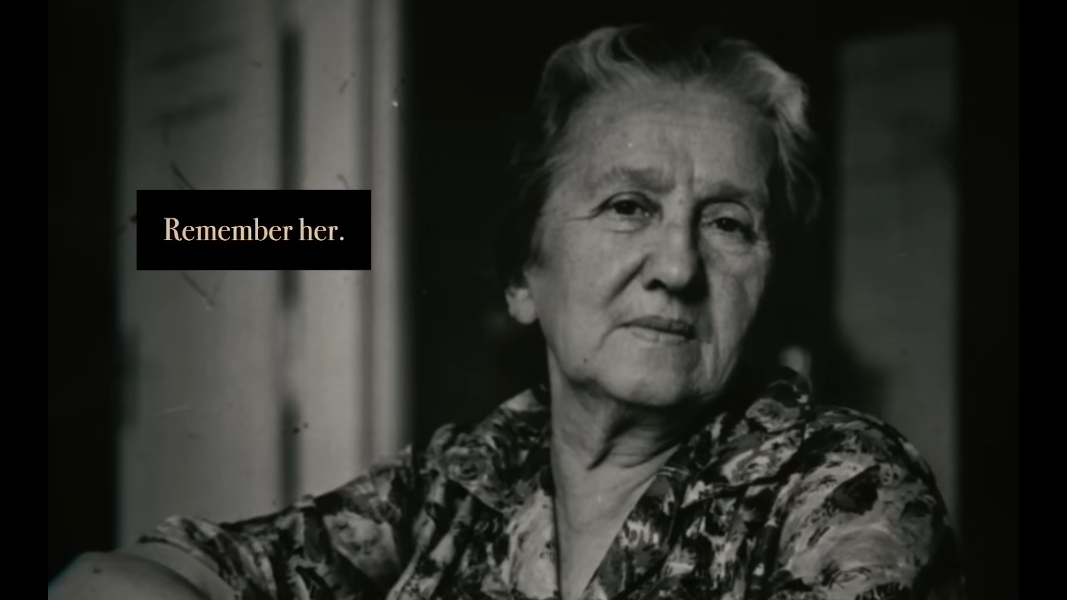
This year’s campaign centres on Dr Stefania Perzanowska, a physician who, in January 1943, established a hospital inside the German concentration camp at Majdanek, saving the lives of fellow prisoners despite having almost no medical equipment or medicines at her disposal. At the time, she had no idea that her husband, Dr Zygmunt Perzanowski, also a physician, had already been dead for nearly three years, murdered in Soviet captivity as one of the victims of the Katyn massacre.
‘The story of Stefania and Zygmunt Perzanowski reveals something often missed in accounts of the Second World War: that Nazi Germany and the Soviet Union, for all their different methods of terror, devastated the same
families—sometimes at once, from opposite directions. Without understanding what happened on 23 August 1939, and everything that followed from it, it’s hard to grasp not just the history of the 20th century, but why so many of these stories went untold for decades.
At a time of disinformation, and growing attempts to blur responsibility for those crimes, remembering lives like theirs is no longer only a duty to the past. In the shadow of the war in Ukraine, it has become part of how societies build resilience against the distortion of history,’ Director of the ENRS Rafał Rogulski says.
The campaign opens with a short film about Dr Perzanowska, alongside a set of accompanying materials: an article on her life and her husband’s fate, illustrations drawn from her letters, and an interview with her grandchildren that answers questions submitted by the campaign’s audience. Two further strands look at the everyday objects that, in her hands, became tools of survival, and at the wider world of medicine under totalitarian rule.
It’s a story that raises questions with no easy answers. Could anyone save lives inside a system built for extermination without confronting the burden of choosing who to save? Would Perzanowska have fought just as hard for others had she known her husband was already dead? At what point does hope become essential to survival? And how many more quiet family stories are still out there—stories where one date from a textbook once had very real, very personal consequences?
As in previous years, the campaign comes with a commemorative badge reading ‘Remember. August 23’, handed out by museums and memorial sites across Europe—a small gesture, but a meaningful one, in remembrance of the victims of totalitarian and authoritarian regimes.
We warmly invite you to take part—by sharing the film about Dr Perzanowska and helping spread the word, both ahead of 23 August and on the day itself. Broadcast files and additional materials are available on request.
More information about the campaign is available at: www.enrs.eu/August23.
Related articles:
At a time when public debate is increasingly polarized and superficial, Hungarian Conservative remains committed to depth, intellectual honesty, and independent conservative thought.
Producing high-quality journalism requires resources. Your contribution helps us expand our coverage, reach new audiences, and keep our content accessible.

Please consider supporting our mission.