A Mediterranean cruise ship carrying about 2,000 passengers, mainly homosexual men, on an LGBTQ-themed voyage has become an international story after being denied entry by two Muslim-majority states, Türkiye and Egypt, in the span of just a few days. The Scarlet Lady had been scheduled to visit Kuşadası and Istanbul on 7 July, before Turkish authorities said the trip conflicted with local ‘moral values’, ‘family values’, and social norms. After an unsuccessful appeal, the ship was rerouted towards Alexandria.
However, on 9 July, Egypt also denied the vessel entry into its ports. Passengers were told by Atlantis chief executive Rich Campbell that the ship would not call in Alexandria and was seeking alternatives. Campbell said Atlantis had sailed a similar itinerary last year ‘without issue’; Egypt has not publicly explained its decision.
The incident exploded on social media and made headlines, turning the story of the Scarlet Lady into a textbook example of how Western liberal assumptions collide with actual reality once they escape the Western information bubble.
Hostility Rooted in Islamic Teachings
Despite most mainstream media outlets and forums trying to downplay or even ignore it, Islam as a religion is traditionally and deeply hostile towards both LGBT issues and people. Its position is rooted in the Qur’anic story of Lot, which Muslim scholars have traditionally read as condemning male same-sex conduct. Over time, hadith reports and Islamic legal scholarship turned that moral condemnation into legal doctrine, treating same-sex acts as forbidden sexual behaviour outside lawful marriage.
The Qur’an itself, however, does not provide a detailed punishment for homosexuality; the penalties later imposed in some Islamic legal systems were developed by jurists and then incorporated into modern state laws.
Iran’s Islamic Penal Code, for example, criminalizes male and female same-sex acts, with punishments including flogging and death. In 2022, Amnesty reported that LGBT rights defender Zahra Sedighi-Hamadani and Elham Choubdar were sentenced to death for ‘corruption on earth’, saying they were targeted over real or perceived sexual orientation, gender identity, and LGBT activism. Iran Human Rights also reported the January 2022 execution of Farid Mohammadi and Mehrdad Karimpour on charges of ‘sodomy by force’, a sexual offence carrying capital punishment.
‘Houthi-run courts had sentenced more than 40 people to death, flogging, or prison on charges related to same-sex conduct’
Other cases are more recent still. In Yemen, Amnesty reported in February 2024 that Houthi-run courts had sentenced more than 40 people to death, flogging, or prison on charges related to same-sex conduct; nine were sentenced to death in Dhamar, and 13 students were sentenced to death in Ibb on charges of ‘spreading homosexuality’.
In Afghanistan, the Taliban’s revived Islamic regime has included public floggings for offences including sodomy. Saudi Arabia, operating under an uncodified Sharia-based system, criminalizes same-sex activity; in 2020, a Saudi court sentenced Yemeni blogger Mohamad al-Bokari to prison and deportation after he posted a video supporting equal rights, including for gay people.
Even though neither Türkiye nor Egypt explicitly outlaws same-sex conduct, both still refused the Scarlet Lady, showing that it is not only hardline Islamist countries, but also more secular Muslim-majority nations that view homosexuality and LGBT people negatively.
The Levander Vote and Suicidal Empathy
Despite that, Europe, known for its progressive social policies regarding sexual minority rights and LGBT inclusiveness, is inviting and accepting millions of immigrants from Muslim-majority countries. As a consequence of permissive and even encouraging migration policy, coupled with differing demographic trends between indigenous and immigrant populations, Muslims continue to increase their share in many European societies.
Pew estimated that Muslims in the then-EU plus Norway and Switzerland rose from 19.5 million in 2010 to 25.8 million in 2016, or 4.9 per cent, and projected a rise to between 7.4 and 14 per cent by 2050, depending on migration scenarios. Eurostat does not record religion, but says that on 1 January 2025 the EU population reached about 451 million; official 2025 migration material also records a growing non-EU-born and non-EU-citizen population.
Empirical research also indicates that Islamic values persist. FRA research found that 23 per cent of Muslim respondents felt uncomfortable with lesbian, gay, or bisexual neighbours, while European Social Survey data has long shown markedly lower acceptance of homosexuality among Muslim-origin groups than among native non-Muslim populations in Western Europe.
‘Studies of Western Europe show that sexual minorities still lean left, and that Green parties receive disproportionate LGBT support’
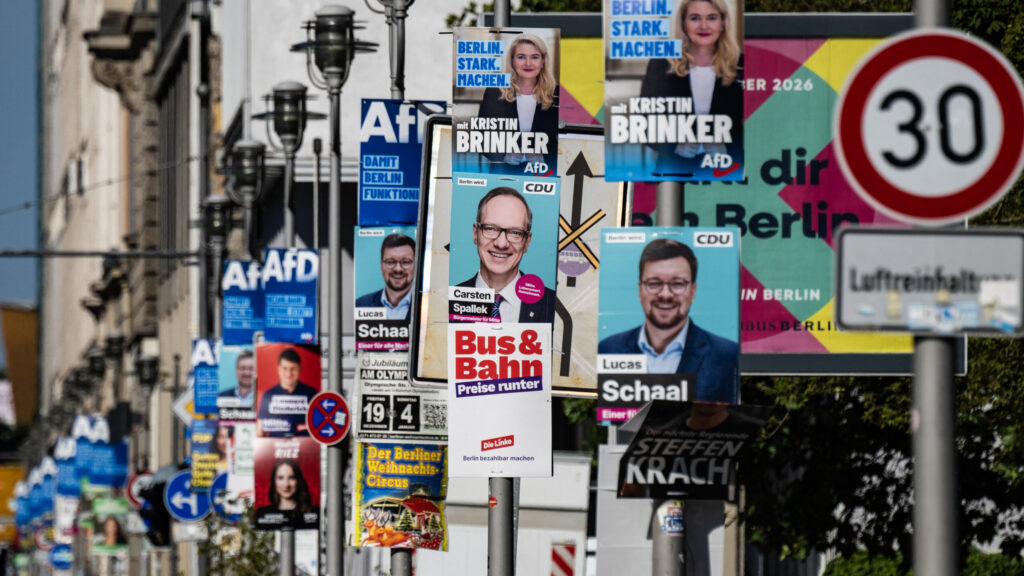
That creates the political contradiction related to the so-called ‘Lavender Vote’. Studies of Western Europe show that sexual minorities still lean left, and that Green parties receive disproportionate LGBT support. German LGBTIQ election studies similarly found strong support for the Greens and Die Linke—the parties still advocating open borders, opposing strict migration policies, and ranking among the most staunch protectors of Muslims.
The tension there is increasingly difficult to ignore, with many recognizing the pattern of ‘suicidal empathy’, a concept introduced by conservative Canadian philosopher Gad Saad, defined as a form of ‘maladaptively irrational altruism’ that hijacks moral judgement and produces a catastrophic miscalibration of priorities. In this case, it refers to gay voters backing parties that fundamentally encourage Muslim migration from societies where homosexual conduct is often morally condemned or legally punished.
The Rise of Homonationalism
However, the Lavender Vote is increasingly being challenged in many European countries by the rise of ‘homonationalism’—a concept first coined by American academic Jasbir Puar to describe how states use LGBT tolerance as a marker of national superiority. Scholars later applied it to right-wing parties that explicitly defend gay rights against Islam and from the perspective of mass migration.
Pim Fortuyn, an openly gay populist, set the template in the Netherlands, arguing that Muslim immigration threatened Dutch liberal achievements such as women’s emancipation and gay rights. Geert Wilders later made this civilizational argument central to the PVV, while the Danish People’s Party, Sweden Democrats, and AfD have all, in different ways, presented Islam or Muslim immigration as a threat to women, Jews, and homosexuals, even while generally highlighting opposition to the LGBTQ and gender agenda.
Alice Weidel embodies the contradiction. The AfD co-chair is raising two sons with her Sri Lankan-born female partner while leading a party accused by critics of social traditionalism and hostility to LGBT politics. Yet studies of right-wing LGBTQ voters in Berlin and Vienna suggest that anti-immigration and cultural-security concerns can outweigh older taboos.
Despite that, sexual minorities still overwhelmingly support Green and progressive parties. Yet incidents similar to the current Scarlet Lady controversy could further weaken the Lavender Vote alliance, potentially reshaping at least parts of Europe’s traditional LGBT voting coalitions and driving them towards anti-immigration parties.
Related articles:
At a time when public debate is increasingly polarized and superficial, Hungarian Conservative remains committed to depth, intellectual honesty, and independent conservative thought.
Producing high-quality journalism requires resources. Your contribution helps us expand our coverage, reach new audiences, and keep our content accessible.

Please consider supporting our mission.