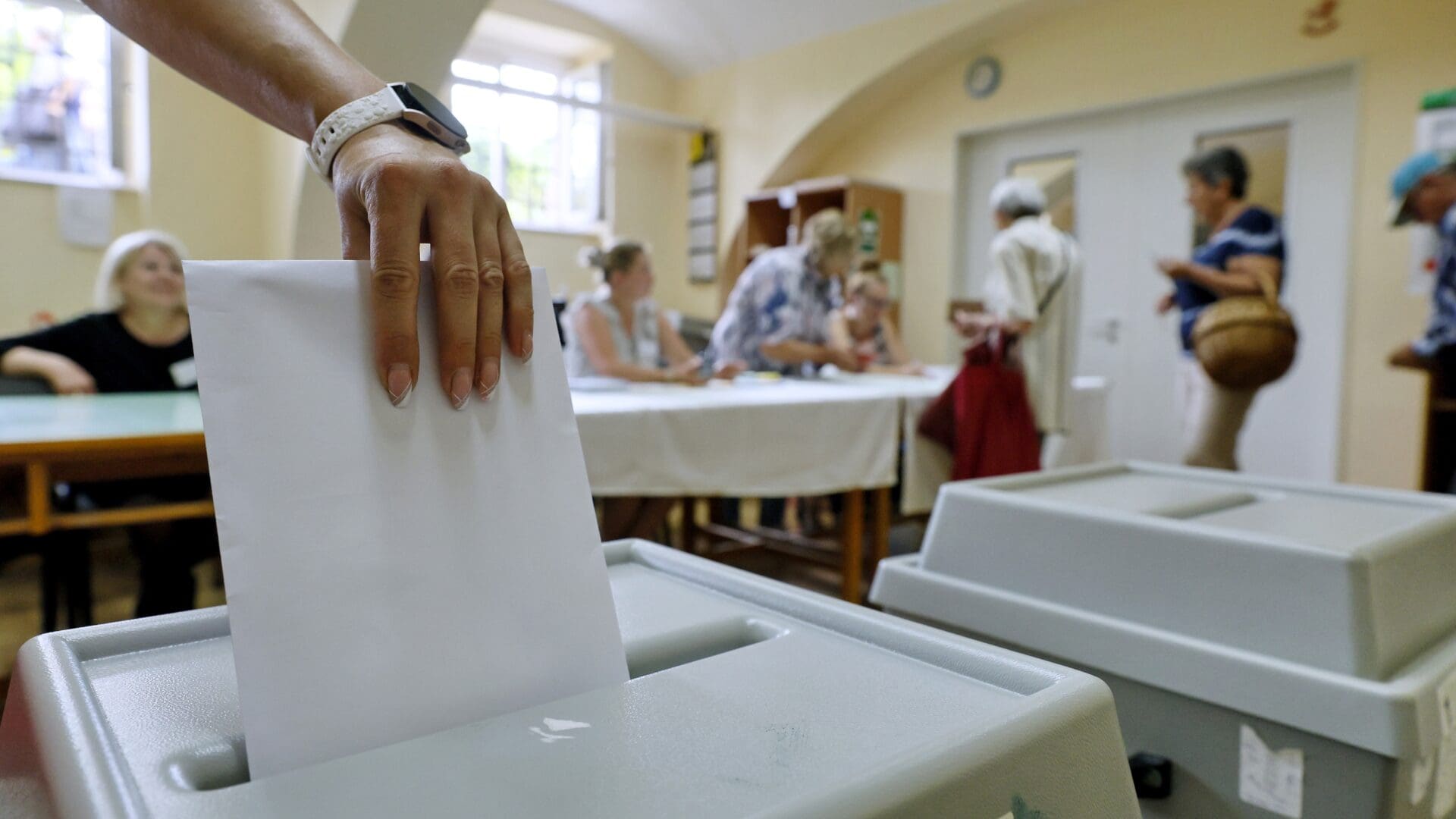
Hungarian governing alliance Fidesz–KDNP candidate Attila Kaló won the by-election in Kazincbarcika’s 7th individual electoral district on Sunday, 8 March, marking another important victory following a similar success earlier this year in Balmazújváros ahead of the April parliamentary election.
According to official results, Kaló received 283 votes, defeating independent candidate Ágnes Sütő, who secured 238 votes. Erzsébet Séllyei, representing a civil organization and a member of the local structure of Prime Minister Viktor Orbán’s main opposition Tisza party, finished third with 134 votes. The by-election was held after the sudden death of the district’s previous representative, Dr Gábor Pásztor, in December.
Orbán welcomed the result in a social media post shortly after the outcome became clear. ‘A huge victory in Kazincbarcika in the by-election. Reality vs. Tisza: 2–0,’ he wrote, referring to the second consecutive victory against political opponents linked to Tisza in 2026. Orbán also highlighted the symbolic importance of the outcome, noting that the governing parties had won an individual municipal district in the town for the first time in 16 years.
Sunday’s vote follows another politically significant by-election in Balmazújváros in early February, where the governing parties also secured victory. Fidesz–KDNP candidate Zoltán Nagy won 47 per cent of the vote, defeating Péter Molnár of the Together for Balmazújváros Association (KBE), who received 43 per cent, while independent candidate Erzsébet Béresné Lőrincz obtained 9 per cent. Turnout exceeded 50 per cent—an unusually high level for a by-election. For comparison, voter turnout was slightly above 20 per cent in Kazincbarcika.
Although formally a civil organization, KBE openly expressed sympathy toward Tisza and its leader Péter Magyar. Moreover, Molnár’s campaign was supported by several national opposition figures, including Péter Márki-Zay, the united opposition’s prime ministerial candidate in the 2022 parliamentary election and also a vocal supporter of Tisza.
Just a day ahead of the vote, KBE posted a video on social media with the caption ‘the local election will also have an impact on the national election!’ In the video, Molnár said that, with Tisza ‘strengthening nationwide’, change is coming; however, a Fidesz leadership in the town would use every means to ‘tackle’ that change.
Since the emergence of the Tisza party in 2024, Fidesz–KDNP has pointed to a series of by-election results as evidence that its support remains resilient despite the rise of a new opposition challenger. Orbán’s governing alliance has won eight by-elections since Tisza entered the political arena—seven local contests and one parliamentary seat—often with comfortable margins.
These results sharply contradict Tisza’s narrative, promoted by aligned pollsters and Western mainstream media, that Fidesz–KDNP is losing badly ahead of the April election. Some surveys place Péter Magyar’s party 20 percentage points ahead of the governing alliance, yet Tisza has formally skipped every by-election over the past two years. The party has argued that it is focusing all of its resources on the national election and, more importantly, that it lacks a sufficiently developed local organizational network.
‘Orbán’s governing alliance has won eight by-elections since Tisza entered the political arena’
The problem with this argument is that it is virtually impossible to win a national election in Hungary without securing dozens of individual constituencies in the countryside, many of which consist predominantly of rural districts. These constituencies form the real electoral battlefield, and winning them requires a functioning local organizational network. A party may enjoy strong national polling and significant support among younger urban voters—including in Budapest—yet still suffer defeat if it fails to secure these districts.
This is precisely where by-elections become relevant. They take place in the very constituencies that ultimately determine the outcome of parliamentary elections. Winning them, as Fidesz–KDNP has done eight times since 2024, demonstrates tangible and strategically crucial support. Losing them suggests the opposite, while avoiding them altogether raises questions about whether Péter Magyar and Tisza fear that their polling advantage may not translate into actual electoral victories—an outcome that could seriously demoralize their supporters ahead of the April vote.
Related articles: