This article was originally published in Vol. 5 No. 4 of our print edition.
The Western imagination has long been fascinated by the figure of the heroic rebel. Whether depicted in literature, music, film, or other media, these figures often stand at odds with authority and act outside the bounds of the law. Nevertheless, they possess a virtuous character and are counted on the side of the good, especially insofar as they fight to preserve a space in which human freedom can flourish. One thinks of Antigone, the heroine of Greek myth who defies the decrees of the tyrannical Creon in the name of family and tradition, or of the various medieval legends associated with figures such as Robin Hood and Wilhelm Tell. For more modern examples, one might consider Luke Jackson—the prison house hero memorably portrayed by Paul Newman in the 1967 film Cool Hand Luke—or San, the warrior princess who leads the forest creatures in their fight against the nature-destroying Irontown in Hayao Miyazaki’s Princess Mononoke.
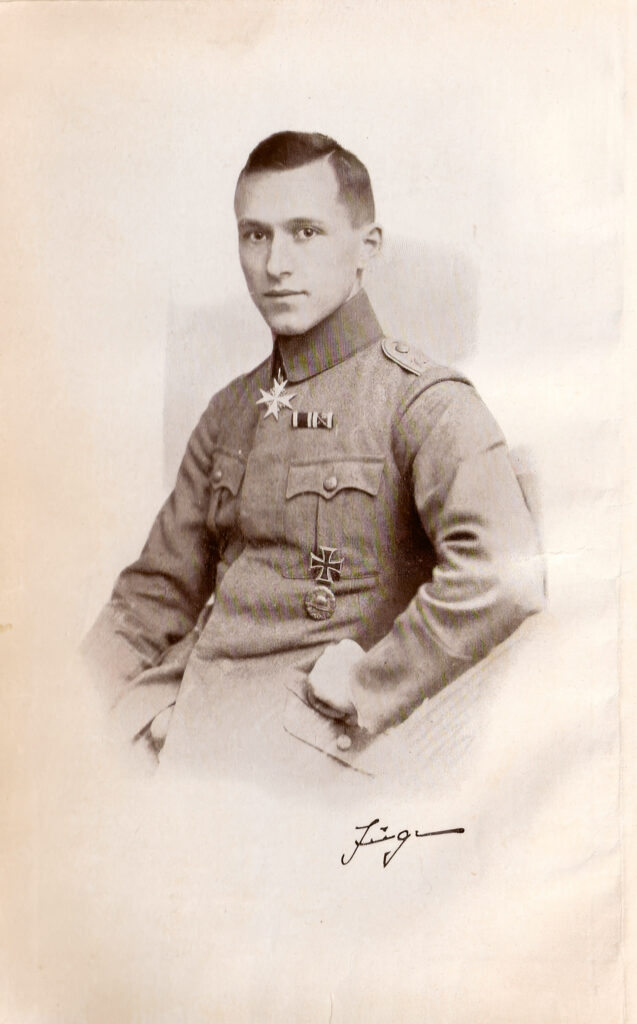
In the twentieth century, the German author and veteran soldier Ernst Jünger explored the theme of the heroic rebel in his poetic philosophical essay The Forest Passage (Der Waldgang in German). One of Jünger’s better-known works (at least in the English-speaking world), The Forest Passage seeks to chart a path to an authentic form of freedom in a world increasingly subject to various forms of tyranny by the ‘Leviathan’, Jünger’s term (no doubt an allusion to the eponymous work by English political philosopher Thomas Hobbes) for the all-encompassing totalitarian state. Although written in part as a reaction to Germany’s geopolitical situation following the Second World War, The Forest Passage also speaks to our contemporary experience in the twenty-first century, with human freedom threatened by political upheaval, rapid technological change, and the loss of shared cultural reference points. Inviting the reader to go ‘beyond the blazed trails’, Jünger cautions that the venture he has in mind is no mere intellectual exercise. Rather, the reader should be prepared for a ‘dangerous expedition’ that compels him to re-evaluate the ‘limits of his considerations’:
‘A new conception of power has emerged, a potent and direct concentration. Holding out against this force requires a new conception of freedom, one that can have nothing to do with the washed-out ideas associated with this word today. It presumes, for a start, that one does not want to merely save one’s own skin, but is also willing to risk it.’1
As a point of departure, Jünger discusses an anonymous individual who has resolved to follow his conscience and vote against a dictatorial regime in a rigged election. We are never given the name of a country or a specific time period, though Jünger’s descriptions are reminiscent of Cold War-era depictions of life behind the Iron Curtain. The anonymous voter, for example, ‘makes his entry on a table that may, perhaps, still have the remnants of a green curtain around it’, while ‘a giant portrait of the head of state, also uniformed, stares down at him with a frozen smile’.2 At the same time, the picture Jünger paints feels uncannily familiar given the widespread loss of confidence in the integrity of elections throughout the West in recent years. In one passage, Jünger even speaks of rumours circulating among the population that ‘a large number of nay votes were turned into yeas’. Jünger also foresaw how the fear that accompanies such rumours would be intensified by sophisticated forms of propaganda, especially mass news media: ‘The need to hear the news several times a day is already a sign of fear. The myriad antennae rising above our megacities resemble hairs standing on end—they provoke demonic contacts.’3
When the dissident Russian writer Alexander Solzhenitsyn was exiled to the West in 1974, he famously encouraged his countrymen to refrain from participating in the lies perpetuated by the Soviet authorities. If every person could have mustered the courage to resist the myriad falsehoods on which communist ideology depended, Solzhenitsyn argued, the Soviet regime would have been unable to sustain itself.4 Jünger’s argument follows much the same course. By refusing to play along with the theatrics of a faux election, the solitary voter ceases to participate in the lie. Even if he acts alone, his ‘nay’ still carries significance, for this act will ‘change the one who has decided to go through with it’. For Jünger, such an individual has the makings of a Waldgänger, or ‘forest rebel’—an archetypal figure who ‘possesses a primal relationship to freedom’ and is thus capable of resisting the degradation of the human person characteristic of totalitarian systems. Outwardly unassuming but inwardly martial and resolute, the forest rebel may live in the city and work a nine-to-five like anyone else. But he spares no effort to cultivate his mind, body, and soul. Indeed, these are the forest rebel’s greatest weapons in his struggle for freedom: ‘Here and now’ is the forest rebel’s motto—he is the spirit of free and independent action. As we saw, only a fraction of the mass populace can be counted among this type, and yet these few form a small elite able to resist the automatism, on whom the pure use of force must fail.’5
‘The connection Jünger draws between the cult of reason and tyranny is further reflected in his mistrust of technology’
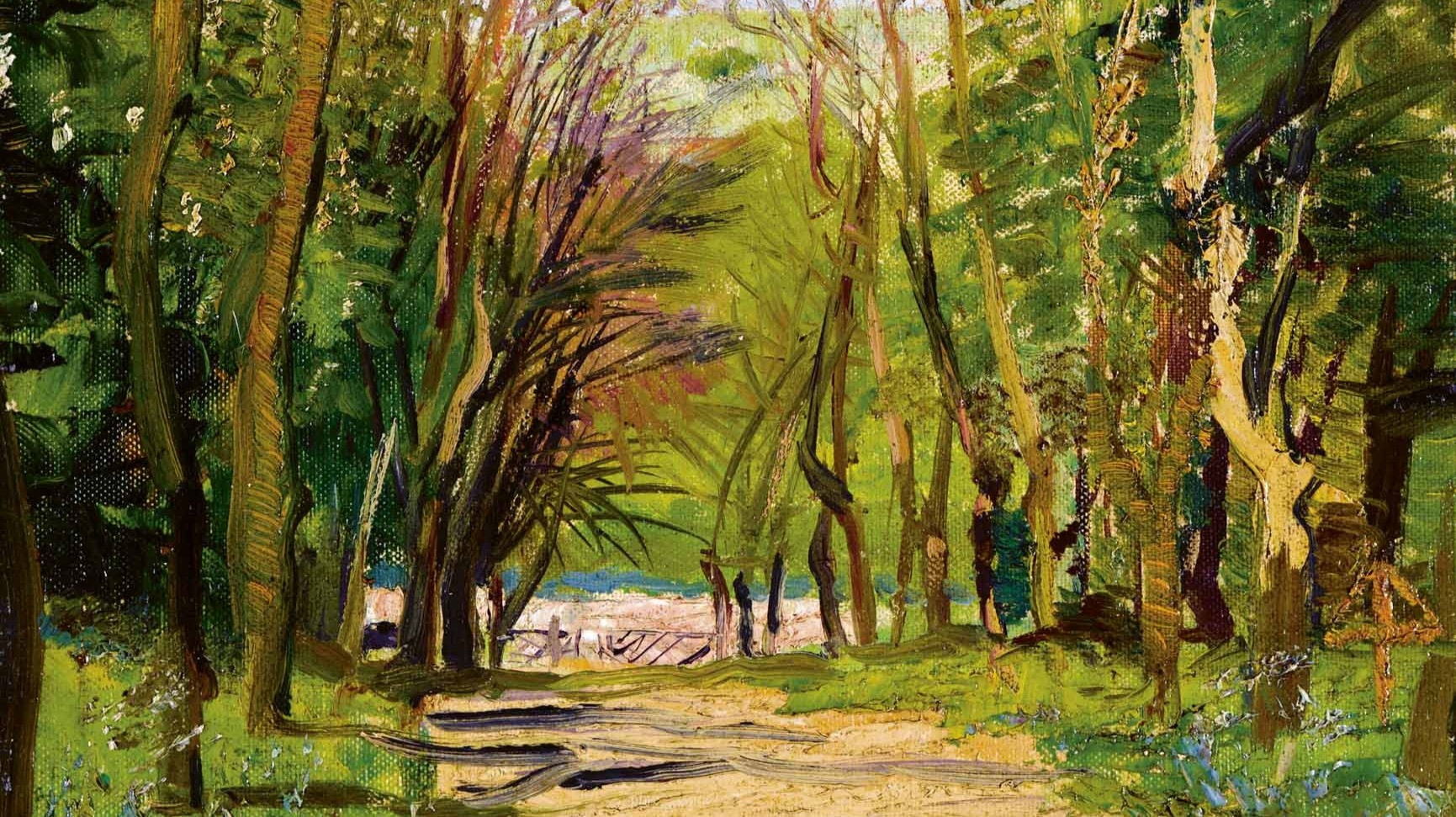
The ‘forest’ to which The Forest Passage alludes operates at both a literal and a symbolic level throughout Jünger’s work. While serving as an officer in the Wehrmacht during the Second World War, Jünger would no doubt have been familiar with stories of saboteurs and other freedom fighters who strategically used remote forests and woodland environments to carry out their resistance operations. The Baltic ‘Forest Brothers’ are a prominent example, as well as the Maquis of the French Resistance. German history is also not without significant precedents in this regard. Arminius, the Germanic prince who led a revolt against the Romans, used woodland to great advantage during the Battle of Teutoburg Forest. During the Napoleonic Wars, German Freikorps units such as the Lützow Free Corps and the Black Brunswickers also engaged in various forms of guerrilla warfare in an effort to free their homeland from the occupying forces of the French Empire. For Jünger, such tactics remain a viable method of resistance in our age of asymmetric warfare:
‘As far as location is concerned, the forest is everywhere—in the wastelands as much as in the cities, where a forest rebel may hide or live behind the mask of a profession. The forest is in the desert, and the forest is in the bush. The forest is in the fatherland, as in every territory in which resistance can be put into practice. But the forest is above all behind the enemy’s own lines, in his backcountry.’6
At the same time, Jünger also describes the forest as a mystical realm in which the powerful but suppressed ‘pre-rational’ dimensions of the psyche lie dormant, awaiting rediscovery by the individual who possesses the courage to seek them out. No mere metaphor or poetic conceit, Jünger maintains that such a realm exists side by side with the more immediate temporal world, always accessible yet hidden from the naked eye:
‘The teaching of the forest is as ancient as human history, and even older. It constitutes the great theme of fairy tales, of sagas, of the sacred texts and mysteries. If we assign the fairy tale to the stone age, myth to the bronze age, and history to the iron age, we will stumble everywhere across this teaching, assuming our eyes are open to it. We will rediscover it in our own uranian epoch, which we might also call the age of radiation.’7
Supposing the individual could recover an awareness of this more complete picture of reality, Jünger suggests he would gain access to latent powers and potentialities that flow through him like untapped veins of gold. The forest thus functions both as a potential combat zone where the ‘battle for a new freedom’ can be waged as well as an initiatory space that ‘leads people back to themselves’.
Jünger’s emphasis on myth and spirituality throughout The Forest Passage suggests a critical distance from the Enlightenment and its misguided faith in the omnipotence of human reason. Most contemporary accounts of history frame the Enlightenment as a turning point, with the forces of progress emerging triumphant over the supposedly ignorant, superstitious traditions of the past. But numerous twentieth-century thinkers argued that the Enlightenment had a much darker side than this narrative admits. In particular, these thinkers saw a connection between the Enlightenment repudiation of the values of the past and the emergence of nihilism in the West. Throughout the late nineteenth and early twentieth centuries, this spiritual vacuum paved the way for the rise of totalitarian ideologies of both the left and the right. The Bolsheviks, for example, framed their Marxist–Leninist ideology as an inexorable scientific truth destined to prevail over the ‘backwards’ customs and ideals of earlier ages. Despite their propagandistic references to a mythical German past, the National Socialists also destroyed much that was ancient and traditional in their efforts to transform the German state, a fact to which Jünger frequently alludes.
Jünger’s critique of rationalism also speaks to contemporary debates concerning the tyrannical potential of ‘scientism’, a term used to describe a situation wherein science ‘departs from its proper field and gains conventicle founding power’.8 In the ancient and medieval understanding, science sought to reconcile the innate human desire to know with the divine order of creation. During the Enlightenment, however, this traditional understanding of science was superseded by an instrumental approach primarily concerned with acquiring power over nature. As a consequence, science has gradually been transformed into a kind of ideology—a discourse of power that, followed through to its logical conclusion, precludes any intellectual openness to the mysteries and wonders of the universe. Given that man remains a spiritual being, however, Jünger predicts there will be many who ‘actively strive to leave the wasteland of rationalistic and materialistic systems’, thus giving rise to a ‘spiritual movement that seeks out the terrain of nihilism and places itself in opposition to it, as a mirror image in being’.9 Although inspired largely by a renewed engagement with art, philosophy, and theology, Jünger suggests that science itself could even play a significant role in such a movement, especially given that some sciences are advancing to a point where questions of a philosophical or theological nature have once again become relevant.
The connection Jünger draws between the cult of reason and tyranny is further reflected in his mistrust of technology, which ‘brings all manner of conveniences’, but also a corresponding loss of freedom insofar as modern man has been induced into ‘restricting his own power of decision in favour of technological expediencies’,10 an observation of particular relevance in our age of rapidly developing artificial intelligence. As a soldier during the First World War, Jünger experienced first-hand how industrial progress had transformed warfare from a chivalric contest between men into a ‘battle of material’ that pit man against machine. No mere revolution in military affairs, for Jünger the war was the fiery prelude to a cataclysmic new stage in human history. ‘War, the father of all things, is also our father’, a young Jünger wrote. Notwithstanding his harrowing experiences on the Western Front, Jünger’s writings from the Weimar period reflect a degree of optimism concerning the profound transformations made possible by modern technique. Inspired by the philosophy of Nietzsche and the intellectual currents that would later become known as the ‘Conservative Revolution’, Jünger argued that the destructive, nihilistic aspects of technology unleashed by the war could be given a positive value, as they laid bare the ground from which a new order, more attuned to the dynamic spirit of the age, might emerge.
By the end of the Second World War, however, Jünger’s view of technology appears to have undergone a stark reversal. Rather than a tool that would allow a heroic Übermensch to usher in a variant of the futurist utopia, technology is now complicit with the Leviathan in diminishing the human person and circumscribing human freedom. These technologies include the typical instruments of violence that we might associate with any tyrannical regime, past or present. In other contexts, however, they may possess a more subtle character, such as sophisticated algorithms that can predict our behaviour better than we can ourselves. In one passage that anticipates Foucault’s conception of ‘biopolitics’, Jünger even warns of the increasing bureaucratization of healthcare:
‘A dubious development to be wary of in the highest degree is the constantly increasing influence that the state is beginning to have on health services, usually under philanthropic pretexts. All these healthcare enterprises, with poorly paid doctors on salaries, whose treatments are supervised by bureaucracies, should be regarded with suspicion; overnight they can undergo alarming transformations, and not just in the event of war. It is not inconceivable that the flawlessly maintained files will then furnish the documents needed to intern, castrate, or liquidate.’11
Despite his more pessimistic view of technological progress, Jünger would have us remember that however threatening it may seem, technology ultimately originates from man’s hand. It is thus within man’s power to reclaim his sovereignty from his machines and apparatuses: ‘As man has constructed them, so he can break them down or integrate them into new orders of meaning. The chains of technology can be broken—and it is the individual that has this power.’ 12
Given that a central theme of The Forest Passage is the meaning of freedom in modernity, one might ask exactly what sort of freedom Jünger has in mind. On this point, he is somewhat vague, though it is clear that the freedom he describes differs in significant respects from the liberal conception bequeathed to us by the French Revolution. The storming of the Bastille, which stands for the ‘immortal principles’ of liberty, equality, and fraternity, is for Jünger a ‘Sunday walk in the park’. For an interpretation worthy of the forest passage, Jünger maintains that we must look to the more desperate scenes associated with the Huguenots or the Spanish Guerrillas as depicted by Goya in his Desastres. The contrast here is telling. Individual rights and liberties on the one hand, religious freedom and national sovereignty on the other. Jünger’s somewhat sceptical view of constitutionalism is also at odds with mainstream liberal political philosophy. Although he speaks favourably of lands blessed with a ‘venerable legal tradition’, the experience of the Weimar Republic showed that freedom cannot be guaranteed by a constitution alone. Rather, freedom is guaranteed by those willing to risk life and limb to preserve it: ‘Long periods of peace foster certain optical illusions: one is the conviction that the inviolability of the home is grounded in the constitution, which should guarantee it. In reality, it is grounded in the family father, who, sons at his side, fills the doorway with an axe in his hand.’ 13
‘The forest rebel must take pains to preserve the spiritual and moral values without which freedom becomes a hollow abstraction’
The form of freedom Jünger has in mind also diverges from progressive understandings of freedom informed by a kind of secular humanism, which Solzhenitsyn famously characterized as the ‘proclaimed and practiced autonomy of man from any higher force above him’.14 By contrast, the freedom to which the forest passage leads requires nothing short of a leap of faith ‘into darkness and the unknown’, a task that Jünger believes can be aided by churches and sects. Although he did not have an especially religious upbringing, his experiences during the Second World War gave him a newfound appreciation for the conviction of religious faith—especially the Christian tradition—and its capacity to inspire resistance to tyranny. Near the end of his life, he would even convert to Catholicism and begin receiving the sacraments. While not a work of apologetics, The Forest Passage certainly looks ahead to this later conversion. Concerning the crucifixion, for example, Jünger suggests that Christ set a timeless example for the forest rebel in overcoming the fear of death, which is the root of all fear—including the fear wielded by agents of the Leviathan: ‘With this blood, substance was infused into history, and it is with good reason that we still number our years from this epochal turning point. The full fertility of theogony reigns here, the mythical generative power. The sacrifice is replayed on countless altars.’ 15
A further distinction involves the perennial conflict between East and West. Given the context in which The Forest Passage was written, as well as the resurgence of geopolitical conflict between East and West in our own time, there is a temptation to equate the ‘Leviathan’ with the East and ‘freedom’ with the West. But Jünger was well aware that tyranny could come from either direction, and in a variety of forms. Since the end of the Cold War, the progressive West has been attempting to construct a modern version of Babel—a fully integrated, globalized world where genuine political diversity is subsumed by a universalized form of liberal democracy. For Francis Fukuyama, the triumph of liberalism over its competitors even pointed to the end of human history as such, in the sense that no viable alternative to the liberal-democratic political model would be likely to emerge.16 As the French political philosopher Chantal Delsol has recognized, however, a post-historical world—even one founded on the ideals of liberal democracy—would also implicitly mean the end of human freedom, as politics would be replaced by either a pure technocracy or an unchallenged ideology, which would become totalitarian by definition. The forest passage thus favours those who resist this trend toward homogenization today, whether it is advanced under the banner of liberal democracy or otherwise.
As a final consideration, Jünger also warns against the temptation to equate the forest rebel with the terrorist or criminal. In his day, as in our own, there was a tendency in some corners to celebrate such figures, which for Jünger indicated the extent to which the integrity of legal institutions and government authorities had become dubious in late modernity: ‘People have a sense of being under foreign occupation, and in this relation the criminal appears a kindred soul.’ Be that as it may, Jünger maintains that the forest rebel must hew to a clear moral path in order to push back against the nihilistic tendencies of the age:
‘[I]t is critical for the forest rebel to clearly differentiate himself from the criminal, not only in his morals, in how he does battle, and in his social relations, but also by keeping these differences alive and strong in his own heart. In a world where the existing legal and constitutional doctrines do not put the necessary tools in his hands, he can only find right within himself. We learn what needs to be defended much sooner from poets and philosophers.’17
In other words, to succeed in his quest for freedom, the forest rebel must take pains to preserve the spiritual and moral values without which freedom becomes a hollow abstraction. It follows that Jünger’s ‘new freedom’ is really an older conception of freedom, though restated in a way that the times demand. That is, a freedom attained through an acceptance of personal responsibility, the cultivation of intimate ties to persons and places, and an orientation toward the sacred dimension of human experience. Although Jünger conceived the forest rebel as an archetype that could encompass a variety of political persuasions, these are all qualities that will appeal to individuals of a conservative frame of mind in our disenchanted age. Indeed, as the modern world continues to race along its present destructive course, the forest passage—that ‘unexplored and yet inhabited land’ which no earthly power can ever destroy—remains open to us. We too are forest rebels.
NOTES
1 Ernst Jünger, The Forest Passage, trans. Thomas Friese (Telos Press Publishing, 2013), 26.
2 Jünger, The Forest Passage, 9.
3 Jünger, The Forest Passage, 33.
4 Aleksandr Solzhenitsyn, ‘Live Not by Lies (12 February 1974)’, The Aleksandr Solzhenitsyn Center, www.solzhenitsyncenter.org/live-not-by-lies, accessed 15 August 2025.
5 Jünger, The Forest Passage, 70.
6 Jünger, The Forest Passage, 81.
7 Jünger, The Forest Passage, 51.
8 Jünger, The Forest Passage, 65.
9 Jünger, The Forest Passage, 68.
10 Jünger, The Forest Passage, 31.
11 Jünger, The Forest Passage, 73.
12 Jünger, The Forest Passage, 36.
13 Jünger, The Forest Passage, 78.
14 Aleksandr Solzhenitsyn, ‘A World Split Apart’ (Commencement address delivered at Harvard University on 8 June 1978), The Aleksandr Solzhenitsyn Center, www.solzhenitsyncenter.org/a-world-split-apart, accessed 15 August 2025.
15 Jünger, The Forest Passage, 57.
16 Francis Fukuyama, The End of History and the Last Man (The Free Press, 1992).
17 Jünger, The Forest Passage, 91.
Related articles: