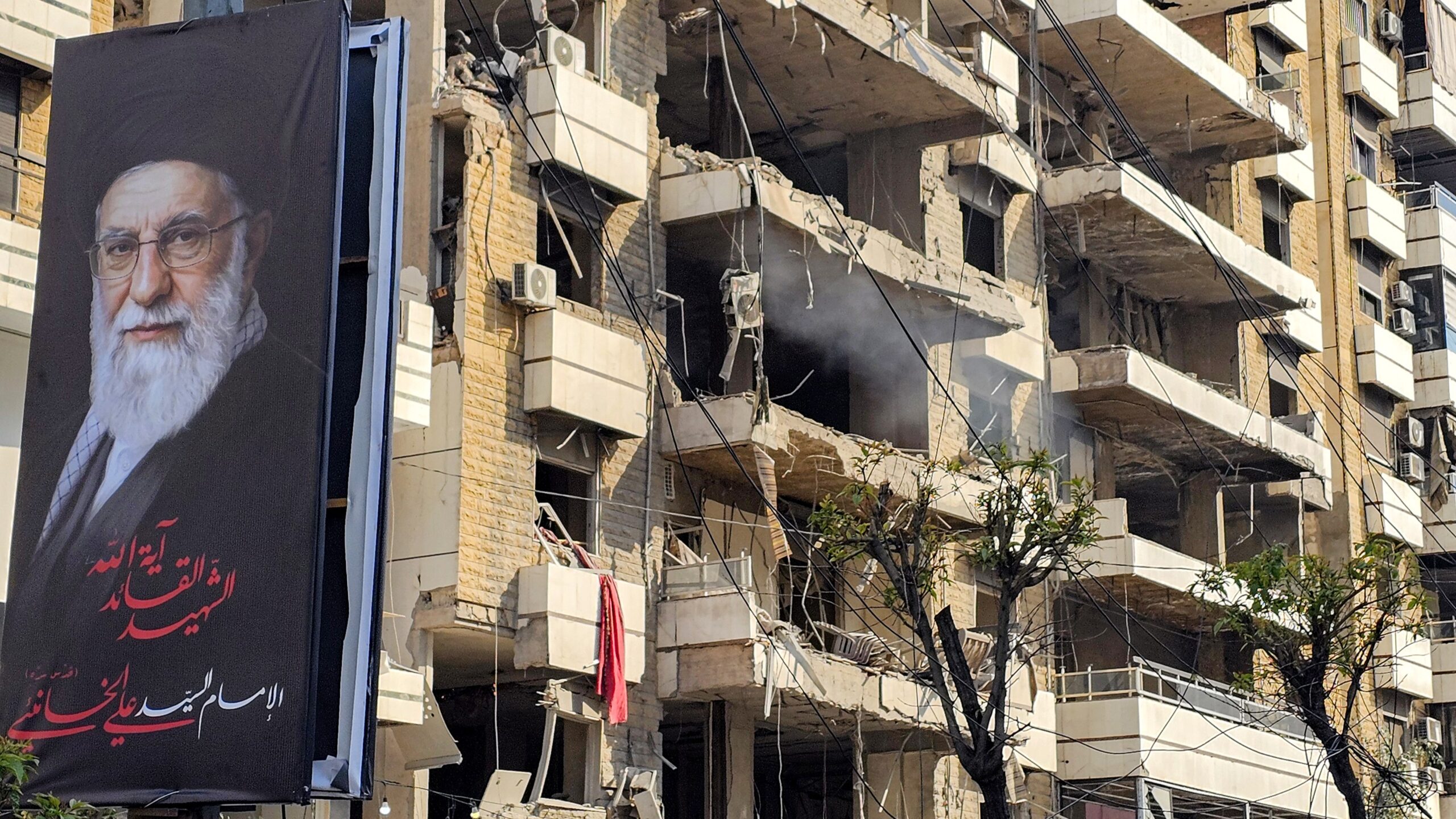
A historic strike has marked the opening of the American–Israeli campaign against Iran. Ayatollah Ali Khamenei, the country’s Supreme Leader, was reportedly killed alongside several high-ranking political and military figures. Israeli agents identified Khamenei’s body, after which Iran officially acknowledged the loss. While Khamenei’s death does not automatically mean the collapse of the regime, it is nevertheless a severe blow to the Islamic Revolution—one that must now choose a new leader in the midst of war.
Khamenei’s most frequently quoted and widely known phrase was: ‘Death to America, death to Israel.’ In many ways, the slogan encapsulated the essence of his political legacy. In 1989, he became Iran’s Supreme Leader as the successor to Ayatollah Ruhollah Khomeini, the architect of the Islamic Revolution. What his predecessor had only begun, Khamenei spent nearly four decades bringing to its full intensity. Not only did he consolidate his radical ideology at home—often by force—but he also successfully exported the revolution across the Middle East and beyond.
Iran’s network of proxy groups stretched from Iraq to Lebanon, from Syria through Gaza to Yemen, further destabilizing a region that had already endured turbulent decades. It is difficult to ignore the human cost: at the very least, tens of thousands of deaths across and beyond Iran’s borders have been linked to policies carried out under his leadership. Khamenei consistently sought to confront what he called the ‘little Satan’, Israel, and the ‘great Satan’, the United States, wherever possible. In the end, that confrontation appears to have led to his downfall.
The Details of a Special Operation
The Financial Timeshas shared remarkable details about the American–Israeli operation that led to Khamenei’s assassination. According to Israeli sources cited by the paper, Israel had been monitoring Khamenei and other Iranian leaders for years and was aware of their every move.
Israeli intelligence reportedly hacked Tehran’s surveillance camera network, allowing them to track the travel patterns of Iranian leaders and the movements of their security escorts. By closely monitoring Khamenei’s residence, they were able to build a precise picture of the Supreme Leader’s daily routine, as well as the identity of visitors arriving for meetings.
This surveillance revealed that on the day of the strike several senior figures in Iran’s leadership were heading toward Khamenei’s downtown residence. At the same time, Israeli operatives reportedly disrupted local phone lines, making it impossible to reach participants in the meeting. Calls would simply return a busy signal, preventing bodyguards and security staff from warning each other if something seemed suspicious.
In addition to surveillance footage, Israeli intelligence also received information directly from sources on the ground. Field operatives, local informants, and—according to reports—even a CIA agent who had infiltrated circles close to Khamenei all played a key role in confirming that the Ayatollah was indeed present at his residence on the morning of 28 February. It means the mission was a joint CIA–Mossad operation.
‘It remains difficult to understand how Iranian authorities could have made such a grave mistake’
Once Khamenei’s location was confirmed, Israeli forces dropped around 30 precision-guided bombs on the residence. The strike killed not only the Supreme Leader but also several key figures, including Iran’s Defence Minister Aziz Nasirzadeh and the commander-in-chief of the Iranian army, Abdolrahim Mousavi.
It remains difficult to understand how Iranian authorities could have made such a grave mistake—especially given that it was widely known that another war was looming against them, and considering Israel’s repeatedly demonstrated intelligence capabilities. If nothing else, the 2024 assassination of Hezbollah leader Hassan Nasrallah should have served as a warning to Iran’s leadership to avoid gatherings of senior officials that could present such a vulnerable target.
Historical Parallels
With Khamenei’s death, the Iranian Islamic Revolution—long committed to the destruction of Israel—has suffered a major symbolic blow. However, it is difficult to predict what will follow in Iran. For now, the expectation is that a new Supreme Leader will be chosen to preserve continuity within the system. The leading candidate is widely believed to be Mojtaba Khamenei, Ali Khamenei’s son.
Until now, Mojtaba has largely operated behind the scenes, supporting his father while maintaining strong ties with the Islamic Revolutionary Guard Corps (IRGC)—an organization whose primary mission is the preservation of the regime at any cost. If Mojtaba were chosen as Supreme Leader, it would likely signal that Iran intends to continue the war.
In Israel, Purim was celebrated on 3 March—a holiday commemorating the miraculous deliverance of the Jewish people described in the Bible. According to the story, around 2,500 years ago a Persian royal official named Haman plotted the destruction of the Jewish people who had been deported to the Persian Empire. In the end, however, his own conspiracy led to his downfall. The message of the story is simple: those who call for Israel’s destruction ultimately bring about their own fall. This Purim, many in Israel believe that the country has rid itself of another Haman.
Related articles:
At a time when public debate is increasingly polarized and superficial, Hungarian Conservative remains committed to depth, intellectual honesty, and independent conservative thought.
Producing high-quality journalism requires resources. Your contribution helps us expand our coverage, reach new audiences, and keep our content accessible.

Please consider supporting our mission.