The following is an adaptation of an article written by Bernadett Petri, a researcher at the University of Public Service Institute for Strategic Studies, originally published in Hungarian on the Five Minutes Europe blog of Ludovika.hu.
The creation of a new EU customs authority goes beyond an administrative reform: it establishes an institutional precedent and may significantly expand Union powers. Competition over its seat is not merely about prestige, but about internal power relations and geographical balance within the EU. The new decision-making mechanism strengthens the role of the European Parliament, even as any formal Treaty amendment remains absent. This raises a fundamental question about how far centralization and agency-based governance are reshaping the role of Member States. Customs reform, therefore, is not simply policy modernization—it is a debate about sovereignty. Ultimately, the key issue is who will control the new authority, and who will exercise this emerging EU competence.
Comprehensive Customs Reform and a New Institution on the Horizon
As part of the European Union’s comprehensive customs reform, a political agreement has recently been reached on establishing a new central EU customs authority. The reform aims to make the control of goods traffic at the EU’s external borders more uniform, digitized, and efficient, with particular regard to the explosive growth of e-commerce, the vulnerability of global supply chains, and the fight against customs fraud. The new authority would play a key role in data-driven risk analysis, the operation of a common IT infrastructure, and coordination between member states’ customs authorities.
‘It sets an institutional precedent and potentially expands its powers’
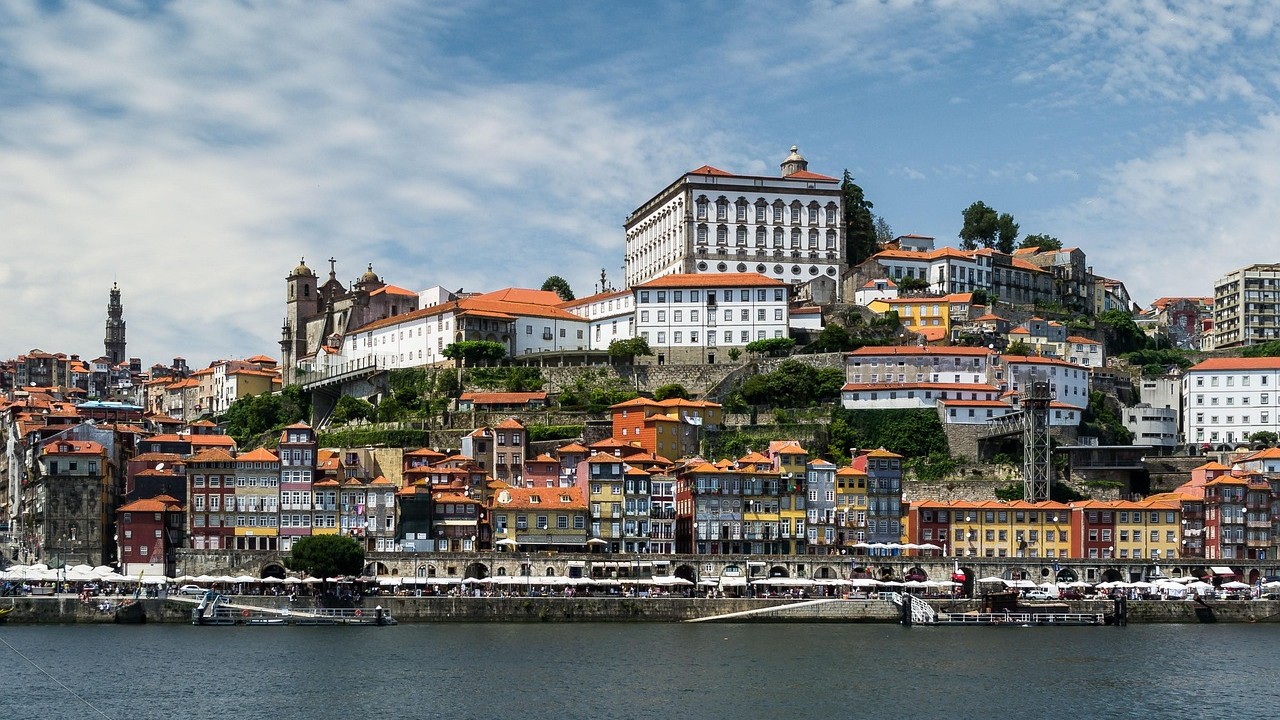
However, the establishment of the institution is not purely a policy issue. The location of its headquarters is a politically sensitive decision, as the location of EU agencies brings prestige, influence, and significant economic benefits to the member state concerned. High value-added jobs, expert networks, and related services mean that there is intense competition among member states and, within them, between cities to host such institutions. Nine cities are competing for the seat: Bucharest, The Hague, Liège, Lille, Málaga, Porto, Rome, Warsaw, and Zagreb. Formally, the issue is an administrative decision, but in reality, it concerns the balance of power within the EU institutions and the question of democratic legitimacy.
The debate centres on the selection of the seat of the Authority for Anti-Money Laundering (AMLA), established in 2024. In the case of the AMLA, the European Parliament was formally involved in the process, but the decision-making mechanism allowed the Council of the European Union, representing the member states, to push through its own preferred candidate. Frankfurt ultimately won by the narrowest of margins, while the background negotiations and details of the vote remained opaque, as the process was secret. This precedent drew serious criticism in Parliament. According to MEPs, the procedure did not reflect the true will of the parliamentary majority and disproportionately strengthened the position of the Council. The debate thus went beyond the specific city issue: it was about institutional balance and the enforcement of democratic legitimacy.
Similarly fierce competition arose over securing new headquarters for the European Medicines Agency (EMA) and the European Banking Authority (EBA) in connection with the United Kingdom’s withdrawal from the EU, as both agencies had previously operated in London. 18 cities applied to host the EMA, with Amsterdam ultimately being selected over Copenhagen, Bratislava, and Milan, while Zagreb and Dublin withdrew before voting began. Eight cities wanted to host the EBA, with Paris beating Frankfurt and Dublin to become the new headquarters.
However, another aspect of the competition for the headquarters emerged, namely that none of the candidates from the eastern member states made it past the first round. The EU set six criteria for evaluating the bids, one of which was geographical distribution, and it had previously promised to give priority to countries that did not have an EU agency. Nevertheless, Bulgaria, Romania, Croatia, Cyprus, and Slovakia, which were also in the running, lost out in the competition for the headquarters.
New Procedure — New Powers for the EP
In the case of the new customs authority, Parliament negotiators, led by Dutch People’s Party rapporteur Dirk Gotink, fought for a mechanism that would create a greater balance between the two institutions. Under the new system, both the Council and Parliament will nominate two cities each for the final list. If there is an overlap between the two lists, the city in question will automatically win; if not, several rounds of voting will decide on the final location. This procedure gives Parliament unprecedented and significant influence, as it is no longer merely a formal co-player, but is actually able to influence and, in some cases, even block the Council’s preference.
The compromise was reached in part because the Parliament indicated that it was prepared to act unanimously, even to block, that is, prevent the decision, if it did not have a real say in the designation of the seat of the new agency. Of course, no one objected to the EP’s action, as the threat of blocking is part of the dynamics of the EU institutions, except when it comes from individual member states, such as Hungary.
With regard to EU agencies, it is also worth examining how their operations are financed. The European Court of Auditors’ 2024 report on EU agencies reveals that the total budget for all EU agencies was €5.3 billion for the year, representing 4 per cent of the 2024 general budget. This is an impressive amount, but when we add to this the fact that EU agencies have received more than €40 billion from the EU’s direct programme budget over the past three years, the figure becomes even more staggering.
‘It is likely that this model will also serve as a reference for new bodies established in the future’
The competition for headquarters is therefore extremely intense. Member states are not only arguing based on professional considerations, such as logistical infrastructure, security capacities, and digital ecosystems, but are also emphasizing geopolitical and balance considerations. An important question, for example, is to what extent the geographical distribution of agencies reflects the east–west or north–south balance of the EU. The decision thus becomes a kind of ‘distribution policy’, with member states weighing up their previously acquired institutions and positions. The intensity of the lobbying is indicated by the fact that some prime ministers are personally involved in the campaign.
Although the mechanism now established formally applies only to the current customs authority, the precedent is of particular importance in EU institutional practice. The Council traditionally builds on previous procedures, so it is likely that this model will also serve as a reference for new bodies established in the future. According to the European Parliament’s interpretation, this procedure meets the need for the expansion of EU powers, namely the further centralization of customs control, to be accompanied by a strengthening of democratic control. Overall, however, this precedent has given the European Parliament new powers vis-à-vis the member states, without even requiring an amendment to the Treaties.
New EU Powers from Quiet Precedents
The question of the location of the EU customs authority therefore goes beyond itself. On the one hand, it highlights the fact that policy reforms in the EU are inseparable from institutional power relations. On the other hand, it shows that the European Parliament is capable of using political means to increase its influence over the Council and, more specifically, over the member states.
However, according to the logic of the Treaties, the expansion of EU powers cannot take place through ‘quiet precedents’. The Treaty on the Functioning of the European Union clearly establishes the principle of conferral of powers: the Union may only exercise the powers expressly conferred on it by the member states. The customs union is indeed an EU competence, but the issue of member state implementation and institutional structure has so far maintained a balance between centralization and national responsibility. However, the establishment of a new central customs authority, its operational powers, data management rights, and coordinating role represent a new quality in practice.
‘The procedural model…is therefore not simply about designating a seat, but about the Parliament gaining real decision-making influence’
The procedural model that has now been established is therefore not simply about designating a seat, but about the Parliament gaining real decision-making influence—through political pressure—on the key issue of establishing a new EU body. All this happened without any amendment to the Treaties. This is a precedent from an institutional point of view: the practical extension of powers is achieved not through a formal amendment to the Treaties, but through institutional practice.
The question is to what extent this is compatible with the principle of member state sovereignty and the clear, democratically confirmed logic of the transfer of powers. This is not the first time in the history of EU integration that we have seen structural changes taking place behind ‘technical’ reforms. Further centralization of customs control can be justified on the grounds of efficiency, but if this is accompanied by a concentration of enforcement capacities in Brussels and a shift in the institutional balance, we are talking about a political issue. The expansion of powers cannot take place without the explicit confirmation of member state consent—otherwise, integration will gradually become detached from national democratic legitimacy.
So, who will own the EU’s new customs authority? Formally, it will belong to the city that wins the seat. Politically, however, it will be a symbol of the institutional model that is now being reinforced: centralization or balance. Ultimately, the question is not about Lille, Warsaw, or Bucharest. It is about whether the European Union will remain a community of member states where powers are based on clear mandates, or whether it will move toward a system where precedents quietly create new competences.
Read more:
Click here to read the original article.