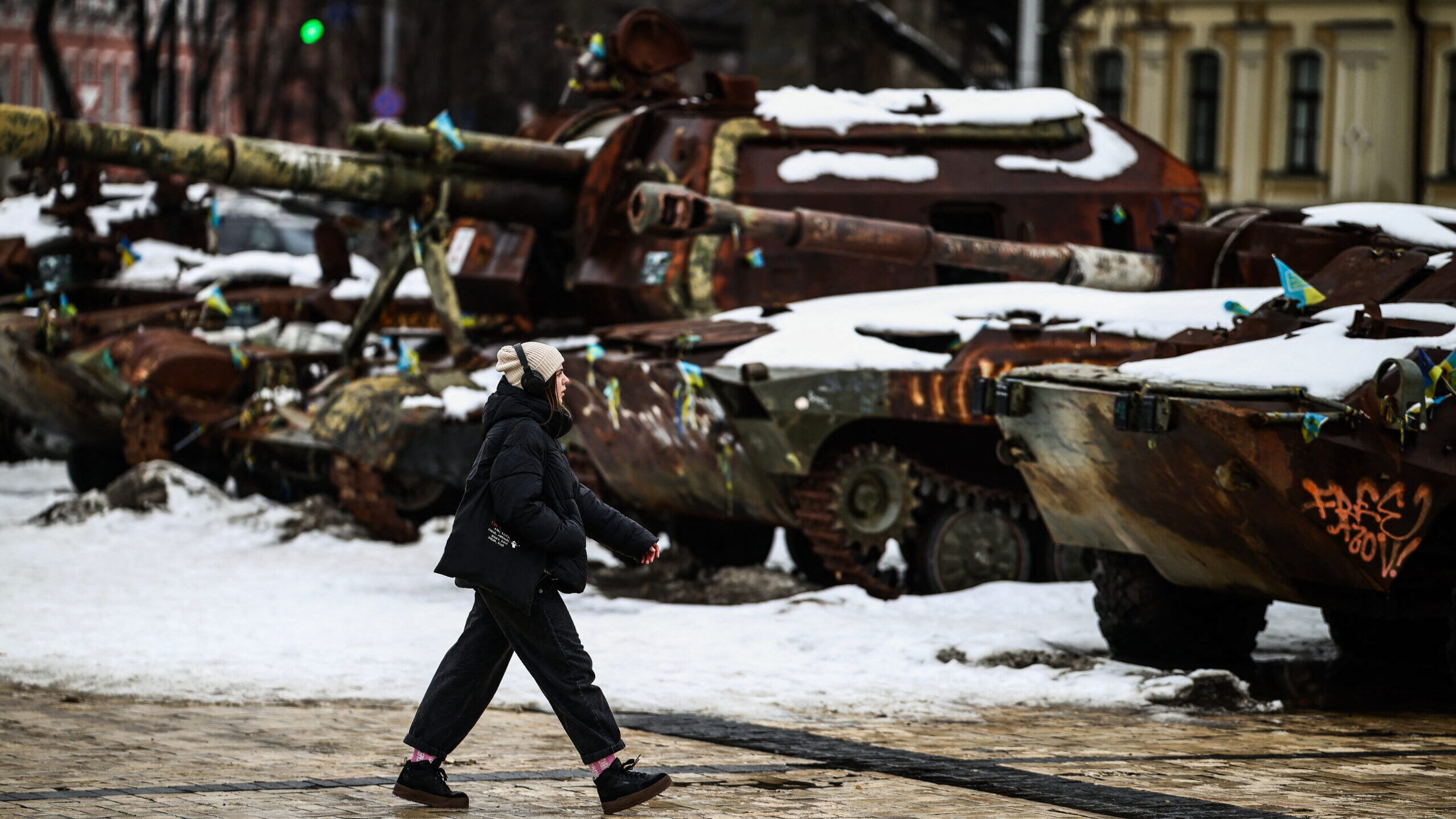
Four years ago, Russian forces invaded Ukraine, triggering a full-scale war between the two hostile neighbours. Since then, the conflict has fundamentally reshaped how we think about modern warfare, diplomacy, and even the notion of Western unity itself.
The past year has brought significant developments in diplomatic efforts to end the war; however, peace still feels distant. Hungarian Conservative asked four experts to assess the current state of the war and the prospects for peace after four years of fighting in Ukraine.
Ukraine Is Closer to Collapse
Jeffrey Sachs, world-renowned economics professor, bestselling author, Director, Center for Sustainable Development, Columbia University
We are entering the fifth year of the full-scale war between Russia and Ukraine, and almost exactly one year has passed since President Trump launched the still ongoing peace negotiations. Are we closer to peace now than we were in February 2025?
Ukraine is now closer to collapse. In that sense, we are closer to peace, but the hard way, rather than through diplomacy. Zelenskyy represents the interests of a tiny ruling elite without an electoral mandate, not of the people of Ukraine. He continues a hopeless war at dire cost to the people of Ukraine, and he refuses to understand or acknowledge the way out of this mess: Ukraine’s neutrality, which never should have changed.
The US wrecked Ukraine by pushing for NATO enlargement starting in the 1990s. Ukraine’s supposed friends in Europe are, in fact, Ukraine’s enemies, because Europe pushes Ukraine into a perpetual bloody war. All that would be required for peace is honest diplomacy in which Ukraine would accept neutrality, and Europe and Russia would set new conditions for collective security, as was once envisaged by the OSCE.
If only the US had not pushed for NATO enlargement starting in the 1990s, had not abandoned the Anti-Ballistic Missile Treaty (2002), had not committed NATO enlargement to Ukraine and Georgia (2008), had not backed the Maidan Coup (2014), and had not ignored the Minsk II agreement (2015 onward), this war would never have happened. And if only European leaders, other than Viktor Orbán and Robert Fico, who tell the truth, were honest today with the people of Europe, the war would end now.
From a military perspective, what has the past year brought? How have the front lines shifted, and how has the war evolved?
Ukraine has lost a large part of its ground forces and cannot replace them through new mobilization. Ukraine has also lost much of its energy infrastructure.
What is needed to achieve a diplomatic breakthrough? What are the biggest obstacles ahead of a ceasefire or peace agreement?
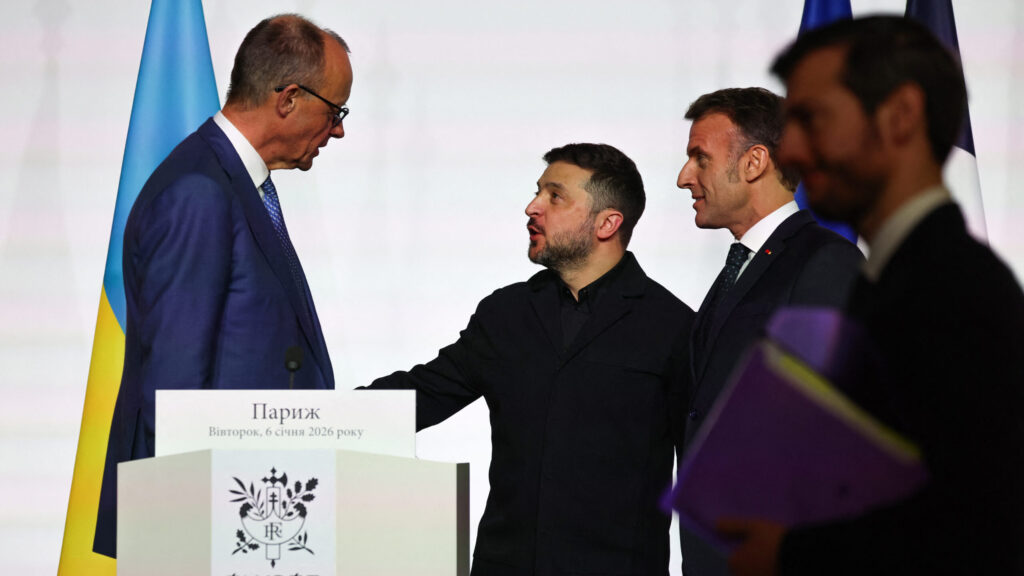
The biggest obstacle today is the European Union, with the triumvirate of Ursula von der Leyen, Friedrich Merz, and Manfred Weber. Merz should pick up the phone, call President Putin, and end this disaster. Germany should tell the truth. Germany promised Gorbachev and Yeltsin in 1990 that NATO would not move eastward. Germany promised Yanukovych on 21 February 2014 that he would remain in power during 2014 with a unity government, but then backed the coup the next day. Germany promised Russia in 2015 that it would enforce the Minsk II agreement, but failed to do so. Now, Germany, whose economy is in decline due to the self-imposed sanctions on Russian gas, should re-establish mutual security with Russia, agree on Ukraine’s neutrality (as envisaged back in 1990), and re-establish economic relations with Russia as well. Peace would return to Europe.
Europe Needs a Coherent Strategy
Anton Bendarjevskiy, security policy expert, Director, Oeconomus Economic Research Foundation
We are entering the fifth year of the full-scale war between Russia and Ukraine, and almost exactly one year has passed since President Trump launched the still ongoing peace negotiations. Are we closer to peace now than we were in February 2025?
We are moving forward in small steps, but over the past year, significant progress has been made. Most importantly, Russian and Ukrainian positions have moved closer. Compared to early 2025, Russia’s demands have narrowed largely to territorial issues—and even then to specific areas—whereas previously they included broader influence over Ukraine, limits on its armed forces, and involvement in domestic matters such as language and religion.
Ukraine’s position has also shifted. Earlier, its goal was to regain the 1991 borders or at least territories lost after 2022. Now, a freeze along current front lines is increasingly seen as an acceptable outcome.
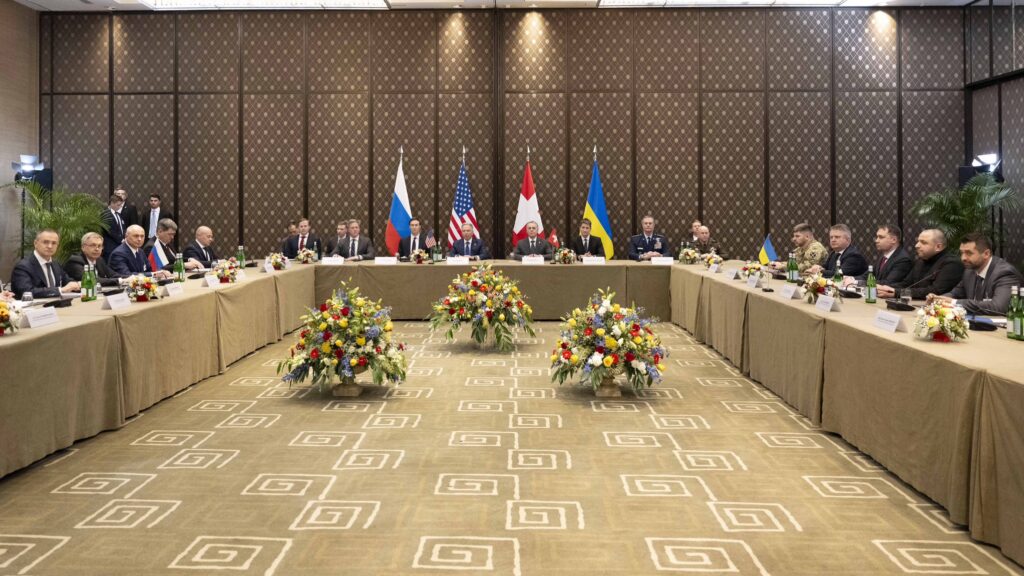
At the same time, communication channels have reopened. After a long pause since April 2022, negotiations have been ongoing since spring 2025, intensifying in recent months with near-continuous talks in multiple locations.
Finally, all key actors now have incentives to end the war. Russia faces growing economic strain, Ukraine is under pressure from manpower shortages, and for the United States, the war has become a political issue ahead of midterm elections.
From a military perspective, what has the past year brought? How have the front lines shifted, and how has the war evolved?
Two main trends stand out. First, the front lines have remained largely static. Russia captured roughly 4,400 square kilometres in 2025, similar to 2024—less than 1 per cent of Ukraine’s territory. This reflects a war of attrition rather than rapid advances. Despite sustained pressure, neither side has reached a breaking point, as both still retain economic and military reserves.
Russia continues to bear heavy economic costs, allocating over a third of its budget to the war, while Ukraine faces more acute manpower constraints. Still, there has been no decisive breakthrough. The pattern remains incremental gains—such as Avdiivka in 2024 and Pokrovsk in 2025—without strategic collapse.
‘All key actors now have incentives to end the war’
The major transformation is technological: the war has become a war of drones. In 2025, drones emerged as the primary weapon system, both on the front and deep in the rear. Ukraine has carried out strikes against Russian energy infrastructure, reportedly taking around 20 per cent of refining capacity offline. Russia has responded with large-scale drone attacks on Ukrainian infrastructure.
The scale has increased dramatically, with waves of hundreds of drones. On the battlefield, drones provide constant surveillance, making large troop movements difficult. This has led to high-intensity fighting with heavy losses but minimal territorial change.
What is needed to achieve a diplomatic breakthrough? What are the biggest obstacles ahead of a ceasefire or peace agreement?
A key uncertainty is Russia’s exact position, as it has not publicly responded to current peace proposals. Information has become scarce since late 2025, with both Washington and Moscow limiting disclosures.
Ukraine’s position is clearer, with negotiations centred on territorial concessions and security guarantees. Russia’s minimum demand may be control over Donbas, which it could present as a victory. However, this directly conflicts with Ukraine’s security concerns, as losing a fortified region raises fears of future Russian attack.
For Ukraine, the core issues are therefore territorial compromise and credible security guarantees, potentially backed by the United States. A referendum could help legitimize concessions domestically.
On the Russian side, there are signs, though unconfirmed, of greater flexibility, including possible openness to partial territorial outcomes and reduced emphasis on earlier political demands regarding a more Kremlin-friendly Ukrainian leadership.
What is notably lacking is a coherent European strategy. The United States is actively pushing both sides towards compromise, including through economic pressure on Russia, such as sanctions and oil price measures. Europe, by contrast, has largely reacted to US initiatives rather than advancing its own plan—something that, in my view, needs to change.
Peace Is Structurally Out of Reach
Sándor Seremet, Senior Research Fellow, Hungarian Institute of International Affairs
We are entering the fifth year of the full-scale war between Russia and Ukraine, and almost exactly one year has passed since President Trump launched the still ongoing peace negotiations. Are we closer to peace now than we were in February 2025?
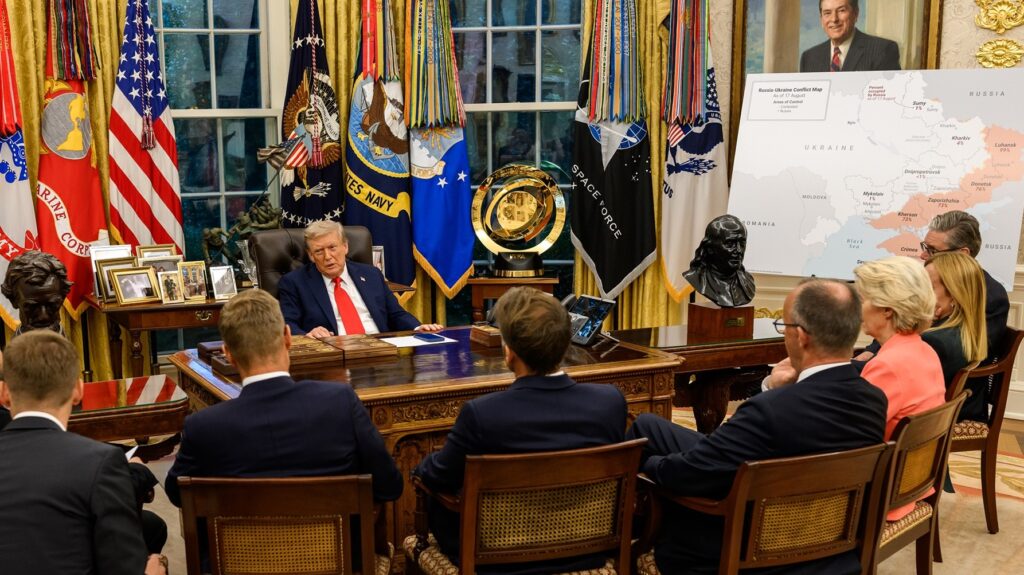
It remains difficult to assess whether a comprehensive peace agreement can be reached in the near term. The visions of peace are still fundamentally different—not only between Russia and Ukraine, but also among Ukraine’s closest allies. Since President Donald Trump entered office, several negotiation rounds have taken place, producing partial and tactical outcomes: limited ceasefires, such as mutual pauses in attacks on energy infrastructure, the Easter ceasefire, and continued exchanges of prisoners of war.
These developments demonstrate a genuine intention to manage escalation and reduce casualties. However, the core obstacles—territorial control and security guarantees—remain unresolved. Both Moscow and Kyiv appear committed to keeping the negotiation process alive, and the relative absence of major leaks suggests that the talks are being treated seriously. At the same time, both sides are actively attempting to shift responsibility for stalled progress onto the other and to persuade Washington to increase pressure accordingly. We are arguably closer to the end of the war than we were in early 2025, but a final settlement still remains structurally out of reach.
From a military perspective, what has the past year brought? How have the front lines shifted, and how has the war evolved?
The conflict has entered a phase best described as ‘negative stability’. Neither side is capable of achieving a decisive breakthrough, and the greater risks now lie in the political, social, and economic rear rather than along the frontline. Over the past year, it has become increasingly clear that internal destabilization and not battlefield collapse is the more plausible trigger for strategic change.
‘The conflict has entered a phase best described as “negative stability”’
Russia retains an advantage in manpower and resources. If current dynamics persist and the Kremlin avoids internal disruption, Moscow is better positioned to sustain a long-term war of attrition.
What is needed to achieve a diplomatic breakthrough? What are the biggest obstacles ahead of a ceasefire or peace agreement?
Neither side appears politically ready to settle. Neither Moscow nor Kyiv has achieved its declared objectives, and neither has accumulated sufficient gains to frame an agreement as victory. A draw remains politically unattractive. At present, the continuation of the war carries fewer immediate risks than an unfavourable peace. The current dynamics, while costly, are predictable, and political elites on both sides have adapted to operating within them.
A negotiated settlement, by contrast, would immediately unleash a complex set of unresolved legal, territorial, security, and domestic political challenges for which neither side seems fully prepared. Even the concept of a ceasefire remains contested. Ukraine views a ceasefire as a necessary precondition for negotiating major political issues. Russia considers it a red line unless tied to substantive concessions, arguing that a pause would allow Ukraine to regroup. Ultimately, there is still no shared understanding of what an acceptable or achievable peace would look like.
The Most Realistic Outcome Is a Frozen Conflict
Norbert Szári, security policy expert, Senior Research Fellow, Danube Institute
We are entering the fifth year of the full-scale war between Russia and Ukraine, and almost exactly one year has passed since President Trump launched the still ongoing peace negotiations. Are we closer to peace now than we were in February 2025?
The answer is paradoxical: technically, we are closer to negotiations, but structurally further from peace. Trump’s return in 2025 created momentum—signalling that American strategic patience had run out—but his process is closer to freezing the conflict than achieving a sustainable settlement. Procedurally, there has been progress: talks from Doha to Rome established communication channels and a basic peace infrastructure. Yet substantively, little has changed. Russia still demands recognition of annexed territories and Ukraine’s neutrality, while Kyiv insists on 1991 borders and NATO membership—positions with no natural compromise. The deeper issue is that the war has not ‘ripened’ for peace: neither side believes it has exhausted military options.
From a Central European perspective, this is not a moral but a geopolitical reality. Escalatory dynamics, such as Ukrainian strikes on the Druzhba pipeline and the Hungarian and Slovak responses to that, further internationalize the conflict. The EU, having invested heavily in Ukraine, cannot afford defeat but cannot secure victory either. Thus, while negotiations exist, the structural conditions for peace remain absent. Peace will not come because we want it—only when both sides realize they cannot achieve more
From a military perspective, what has the past year brought? How have the front lines shifted, and how has the war evolved?
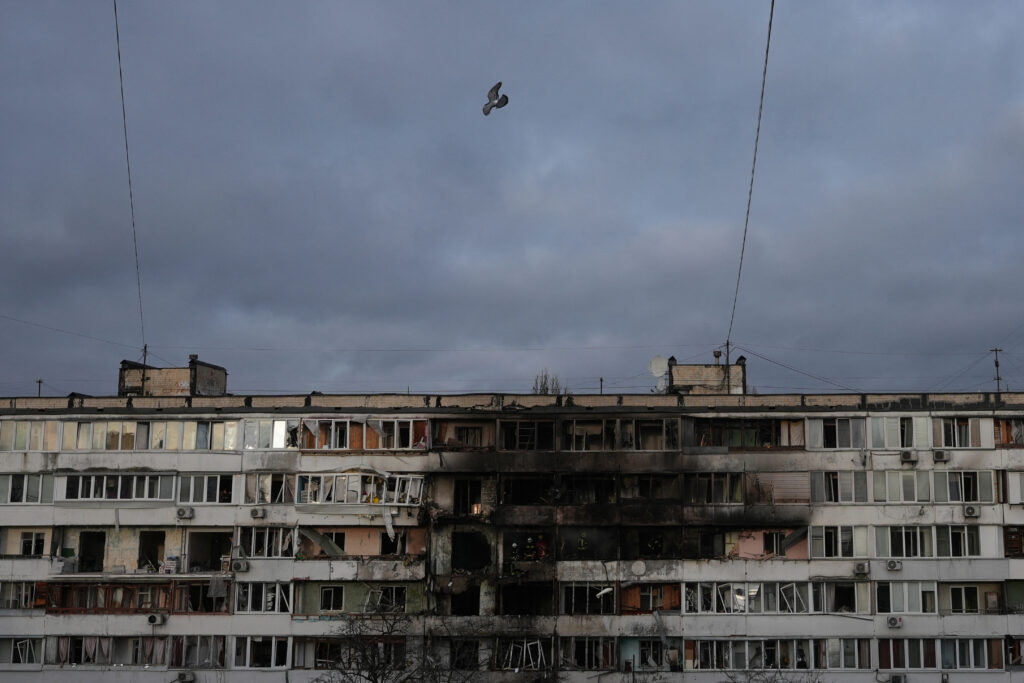
The past year confirmed the war’s transformation into a high-intensity war of attrition rather than manoeuvre. Front lines shifted only marginally, with Russia making slow gains in Donbas—around Bakhmut, Avdiivka, and Vuhledar—while Ukraine remained on the defensive after the failed 2023 counter-offensive. The key development is qualitative: warfare is now defined by depletion—manpower, artillery, drones, and logistics—rather than territorial breakthroughs.
Drone-centric warfare has become systemic, compressing reaction times and making large-scale manoeuvres extremely costly. Ukraine shows resilience and innovation but faces structural constraints: demographic exhaustion, mobilization fatigue, and dependence on Western support.
‘Neither side can escalate decisively or disengage politically’
Russia, despite heavy losses, has maintained operational tempo through a strategy of sustained pressure and industrial depth. The result is a self-locking stalemate: neither side can escalate decisively or disengage politically. At the same time, both frame the war in existential terms—Russia as a struggle against ‘absolute Evil’, Ukraine as national survival—making compromise politically impossible until military realities impose it.
What is needed to achieve a diplomatic breakthrough? What are the biggest obstacles ahead of a ceasefire or peace agreement?
The main obstacle is structural: incompatible security interests and identity-based narratives. The territorial issue remains central—Russia controls large areas it considers integral, while Ukraine constitutionally demands full restoration. For both Putin and Zelenskyy, compromise risks political survival. The most realistic outcome is a ceasefire along current lines with unresolved status, similar to Korea. Security guarantees form the second barrier: Ukraine seeks NATO-backed protection, while Russia demands neutrality. Only strategic ambiguity—limited guarantees without NATO membership—offers a path forward.
A key divergence lies between the US and the EU: Washington increasingly pushes for a settlement, while Europe cannot politically afford Ukraine’s defeat. Zelenskyy’s position is also constrained by domestic legitimacy tied to maximalist goals. A breakthrough may require political change in Kyiv or a new consensus. Ultimately, peace is blocked not by lack of diplomacy but by missing preconditions—military exhaustion and political readiness. The most likely outcome remains a frozen conflict, which, while imperfect, aligns with Central Europe’s interest in stability.
Related articles: