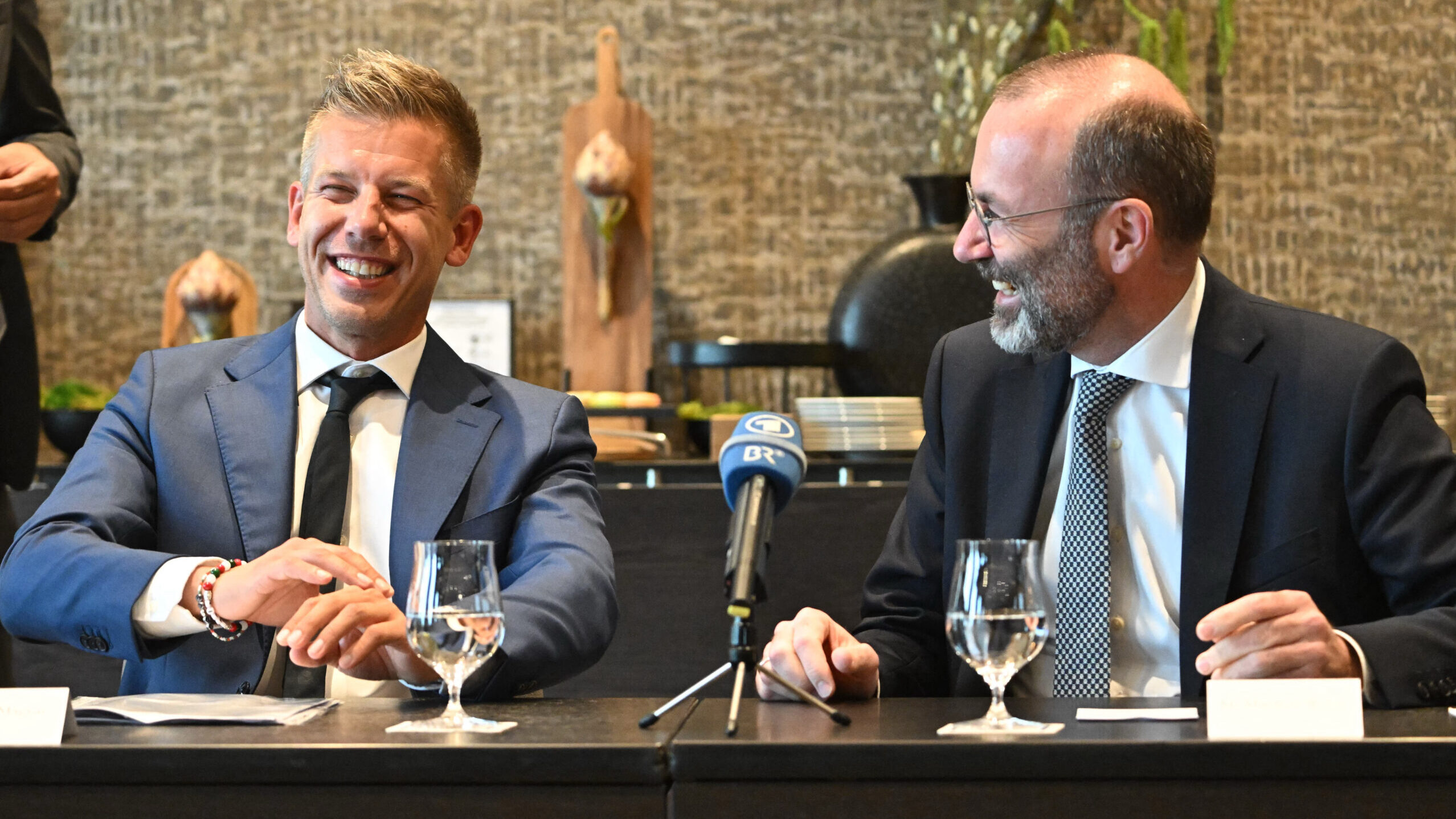
Hungarian opposition leader Péter Magyar has recently conducted several high-level meetings with German Chancellor Friedrich Merz and Polish Prime Minister Donald Tusk, posing for PR selfies with some of the most enthusiastic supporters of Ukraine both militarily and financially.
After these meetings, Magyar said in an interview that he told Tusk and Merz that, if elected to government, the Tisza party would not support Ukraine’s accelerated EU accession. According to Magyar, both leaders acknowledged this, as they hold similar positions on the issue. Even in its recently published manifesto, Tisza proposes putting the question of Kyiv’s EU membership bid to a binding national referendum.
If everything Magyar said is true—highly unlikely, considering the several contradictory statements from his very short political career—it would seem that even if there were a change of government in Hungary as a result of the upcoming parliamentary election in April, the country’s veto on Ukraine’s EU accession would not be lifted.
Why Magyar Must Support Ukraine’s EU Bid
However, there are signals suggesting that it nevertheless would be. Just before Magyar met with Tusk and Merz, POLITICO Brussels published a five-point roadmap outlining how to admit Kyiv into the bloc as soon as 2027. Three of the five points focused specifically on Hungarian Prime Minister Viktor Orbán and how to lift his veto. One of them was explicitly titled ‘waiting for Orbán’s departure’, referring to an electoral defeat that would pave the way for a government led by Péter Magyar.
The report by POLITICO was based on conversations with EU officials and member state diplomats, indicating that they are familiar with the Hungarian opposition leader’s real position on EU accession—which, according to the article, is clearly not to continue Orbán’s veto.
Like Merz and Tusk, Péter Magyar’s party also sits in the European People’s Party (EPP), the strongest institutional supporter of Ukraine’s EU accession. The party and its leader Manfred Weber consistently frame Kyiv’s future EU membership as politically and civilizationally crucial. In its 2025 leaders’ declaration, the EPP stressed that negotiations should ‘progress rapidly’, with the first negotiation chapters fully addressed by the end of 2025. EPP MEPs have consistently urged the Commission to open negotiation clusters ‘at the fastest pace possible’, linking Ukraine’s membership to Europe’s long-term security. The party has also stressed that military support for Kyiv must continue—while Tisza and Péter Magyar claim they oppose sending weapons to Ukraine.
‘If Magyar were truly continuing Orbán’s policy—including vetoing Ukraine’s EU accession—why would EU elites root for him so enthusiastically?’
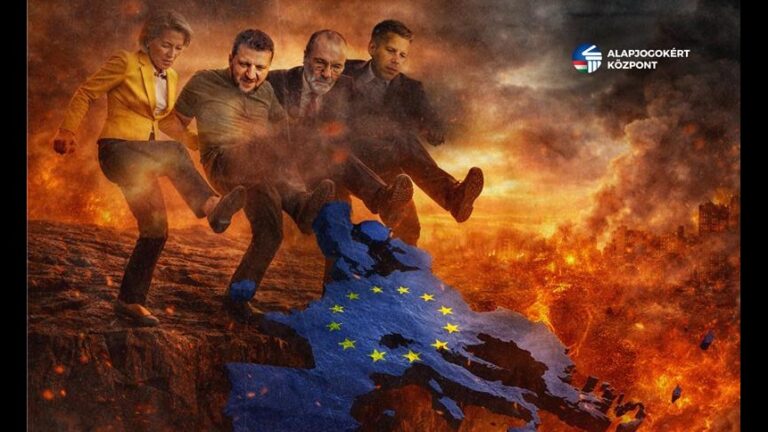
Right after the 2024 European elections, Manfred Weber and the EPP rushed to accept Tisza into their ranks. Weber visited Hungary to meet Magyar, stating that the party’s door was ‘open’ for Tisza MEPs to join—and they gladly did so. Weber, in addition to their contradictory political positions on most major issues, holds a long-standing grudge against Viktor Orbán since 2019, when the Hungarian prime minister was one of the key figures preventing the German politician from becoming head of the Commission. That was also one of the main reasons—alongside the EPP’s increasing alignment with progressives—why Fidesz left the EPP in 2021. Since then, Weber’s declared goal has been to remove Orbán from power, and the most convenient tool for that currently is Péter Magyar.
As POLITICO Brussels wrote back in January, the EPP ‘quickly welcomed’ Tisza into their political family ‘to secure influence over Budapest’ and to ‘give them resources’ to defeat Orbán. The article also stated that the whole ‘Brussels establishment is praying for Magyar to win’. If Magyar were truly continuing Orbán’s policy—including vetoing Ukraine’s EU accession—why would EU elites root for him so enthusiastically? More importantly, why would they give him ‘resources’ if not in exchange for serving their interests?
It’s All Just a Sham
These realities, of course, cannot be stated openly—neither by Magyar nor by the EPP or Weber. To obscure their real intentions, Tisza MEPs and the EPP have staged an entertaining façade, creating the impression that Magyar can and will stand up to both the EPP and Brussels—just as Viktor Orbán does.
This is most clearly reflected in Tisza’s voting behaviour, as highlighted in a recent analysis published by the European Policy Centre. According to the EPC, Tisza MEPs engage in tactical alignment with Fidesz on politically sensitive issues such as Ukraine, agriculture, and migration. Since the start of the current parliamentary term, Tisza has aligned with Orbán’s Patriots for Europe (PfE) in 44 per cent of votes—well above the EPP average. The analysis explicitly states that this convergence is ‘strongest on issues where Magyar is vulnerable to Orbán’s central campaign narrative portraying him as Brussels’ “puppet”’. On Ukraine, Tisza MEPs repeatedly voted against amendments that strengthened language on support for Kyiv and condemnation of Russia.
The staged drama between Tisza and the EPP reached a particularly absurd point in January, following a motion of censure against European Commission President Ursula von der Leyen. Tisza MEPs, including Magyar, abstained in the vote, prompting the EPP to sanction all seven of them for failing to protect their ‘political ally’. In doing so, the EPP handed Magyar a perfect opportunity to counter the ‘Brussels’ puppet’ accusation. ‘Tisza MEPs take note of the decision,’ he said, adding that ‘at the same time, we are thankful for the confirmation from Brussels that Tisza politicians have no owners’.
‘Once in government, Magyar and Tisza would no longer need to play the tough outsider standing up to Brussels’
Let there be no doubt: if Tisza wins the election, the roleplay will be over. Weber, who is known for his authoritarian-style leadership, strict enforcement of party discipline and demanding voting cohesion within the EPP, will not allow Tisza MEPs to drift from party lines. In reality, no pressure would even be required to align their votes with the EU mainstream. Once in government, Magyar and Tisza would no longer need to play the tough outsider standing up to Brussels.
The same applies in the European Council, where EPP leaders such as Tusk and Merz cannot wait to replace Orbán—and his veto—with a more compliant partner willing to vote in line with their interests on every major issue, including Ukraine’s fast-track accession.
These matters were likely discussed over the weekend between Tusk, Merz, and Magyar as well. As a sidenote, Magyar has chosen fitting mentors: both Merz and Tusk have demonstrated how easily campaign promises can be discarded once in power. Tusk won office pledging to restore the so-called rule of law in Poland, only to persecute opposition politicians, civil servants, media figures, priests, and others once in government. Merz campaigned on stricter migration policies to counter the rise of Alternative für Deutschland (AfD), yet none of his major promises materialized a year into his tenure.
Let us hope Hungary does not make the same mistake in April.
Related articles: