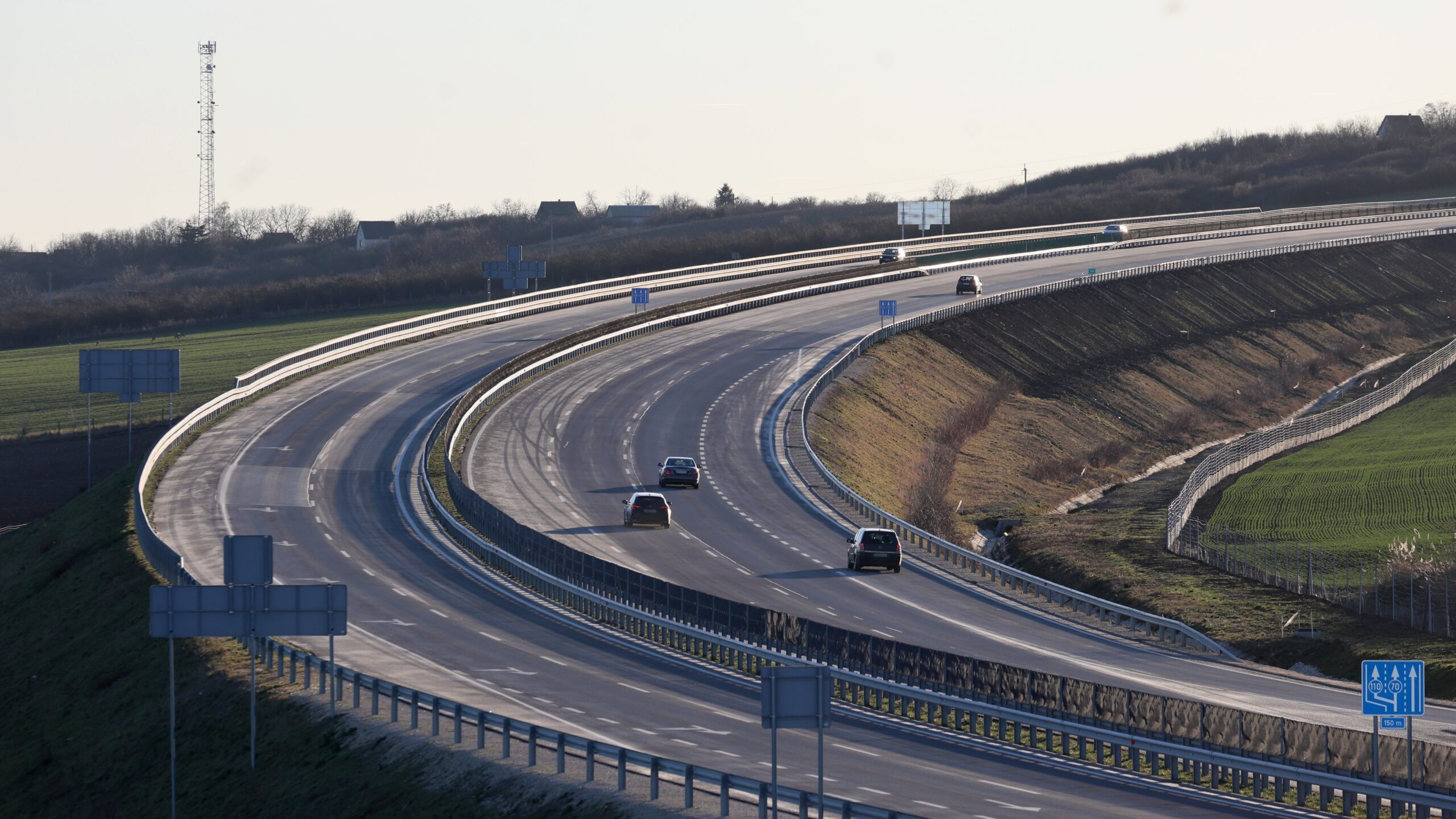
Hungary has made its most significant progress in recent years in developing its expressway network and has caught up with Austria in this area, State Secretary at the Ministry of Construction and Transport Nándor Csepreghy said on Tuesday in Jászberény.
Csepreghy spoke at the inauguration of the Necső Road junction on the eastern access road to Jászberény. He said that for Hungary to fully exploit its economic and geographical position at the crossroads of East and West, and at the intersection of northern and southern trade routes linked to the Budapest–Belgrade railway upgrade, its infrastructure must reach the level of the most developed European countries.
He identified three pillars of this catch-up process: the expressway network, the so-called feeder road network and the rail network.
Regarding rail developments, Csepreghy said progress had been significantly hindered in the current cycle by what he described as the politically motivated and unlawful withholding of European Union funds, although projects had not been made impossible.
He added that the government would not remain idle while seeking to recover what he called Hungary’s rightful funds from Brussels. Alternative financing solutions were being applied, including leasing and rental arrangements for rolling stock and loans for infrastructure projects, alongside large-scale track construction works.
Around 1,000 kilometres of railway track are being modernized, which he said would bring tangible improvements from this year on the most sensitive and important sections of the Hungarian rail network, serving both passenger and freight traffic.
Csepreghy said Hungary had become a mid-sized European power in terms of motorways relative to its size and population. He added that the government would continue developing the feeder road network behind the expressways, as these roads connect businesses to the national transport system.
In Jász-Nagykun-Szolnok County alone, more than 500 kilometres of roads have been renovated by Magyar Közút over the past 15 years, he said. The Necső junction forms part of that programme and was supported by nearly 500 million forints in government funding.
Good quality roads are essential to link job-creating businesses with workers, suppliers with factories, small and medium-sized enterprises with major clients, and goods with markets and consumers, Csepreghy said, adding that the government is pursuing such infrastructure development at national, regional and local levels.
Related articles:
At a time when public debate is increasingly polarized and superficial, Hungarian Conservative remains committed to depth, intellectual honesty, and independent conservative thought.
Producing high-quality journalism requires resources. Your contribution helps us expand our coverage, reach new audiences, and keep our content accessible.

Please consider supporting our mission.