This article was originally published in Vol. 5 No. 4 of our print edition.
It is by no means a recent phenomenon that Hungary and Germany—or more broadly, the German-speaking world—have been bound together by numerous ties, most clearly attested by their long history of interactions. Hungary has always, albeit sometimes only indirectly, fallen to one degree or another under the influence of the German cultural sphere. This continues to exert its effects today in many domains, including politics.
From the past centuries, one could list countless examples that demonstrate the steadfast endurance of German–Hungarian cooperation. The foundation of this has undoubtedly been mutual respect and understanding, something quite special and rare. One need only think of the relationship that Hungarians, in this ‘Slavic sea’, developed with their German-speaking allies, a relationship of an entirely different character from that which, for instance, the Czechs or Poles have had with Germany. From this perspective, it is therefore no surprise that in Hungary there exists a general image of Germans based to a large extent on respect. This is further complemented by an image of Germany as an ideal—almost perfect—place where practically everything functions very well, making it a model to be followed. Yet this view is not entirely borne out by reality.
Let there be no misunderstanding: the purpose of this article is by no means to demolish this positive image of Germany, but rather to enrich and nuance it with some critical reflections. There are, after all, many trends—and misconceptions—that in the end do not hold true, whereas a correct interpretation of these is vital for understanding Hungarian–German interactions.
In 2024, Prime Minister Viktor Orbán remarked: ‘Taken as a whole, this Germany isn’t the Germany that our grandparents and our parents used to set before us as an example, saying, “Son, if you want to see a hard-working person, go to Germany, if you want to see well-organized work, go to Germany.” If you want to see order, go there, where there’s order.’1 For decades, this truly summed up Hungarian thinking, encapsulating the prevailing perception of Germany. Yet that era now seems to be passing.
According to the notions that once prevailed, German society was a work-based society, with one of its central and most successful sectors being engineering. Alongside this, the education system was stable and strong, and German students were regarded as intelligent and highly trained. Taken together, this gave rise to a perception of Germany as a prosperous country: its streets were clean and orderly, its public security outstanding. The nation was characterized by functioning systems and superbly designed infrastructure, not to mention the renowned German automotive industry, with brands such as Mercedes and BMW garnering prestige. Efficiency, effectiveness, and a systematic approach. Somehow, everything seemed a little friendlier, more balanced, and safer. Moreover, in general, there was greater trust in state institutions, in society, and above all between citizens. Today, however, this can no longer be said. Germany has changed, and no longer exists in the form described above.
It is also widely believed that Hungarians are the ‘last Prussians’, precisely because they hold to an idealized vision of Germany in which the Germans themselves no longer believe. And in this often contradictory discourse, what better basis could there be for drawing conclusions than statistical data?
Starting with the idea of a work-based society, Germany actually ranks last in Europe when it comes to the average number of working hours per year. For comparison: while this figure stands at 1,350 hours for Germans,2 in Hungary, it is roughly 1,700.3 Moreover, Germany has the highest proportion of home office work in all of Europe. On average, this means that a German employee works from home about 80 days a year.4
To this, one may add that the number of public holidays in Germany is also higher, at between 10 and 14, depending on the federal state.5 Despite this, Germany also has the highest rate of sick leave, with an average of 15 days per employee per year, compared with 9 in Hungary.6 In the past years, this figure sometimes reached even as high as 25 days. However, since COVID, a positive trend has been observable.7 In addition, a so-called ‘citizens’ allowance’ also exists in Germany, which in many cases can fairly be described as a social benefit that rewards inactivity, while costing some 52 billion euros annually.8 An amount of that magnitude is scarcely conceivable when converted into Hungarian forints.
In light of all this, the notion of a work-based society does not quite mean what one might imagine. Of course, it is equally untrue to claim that there are no Germans who work hard and possess outstanding expertise, knowledge, and experience. Yet the general trend in the labour market is towards Germans working fewer and fewer hours, while the ideal of a work-based society slips ever further out of reach—precisely at a time when it is needed more than ever.
If we turn to the question of education and prosperity, the PISA results are worth examining, for they clearly show a declining trend in recent years, particularly in mathematics, reading, and comprehension. Since the organization of the education system in Germany falls under the jurisdiction of the federal states, enormous regional disparities can be observed, which, on the whole, do little to strengthen educational quality.
As for prosperity, one need only recall the days when German relatives or friends would visit Hungary in a brand-new Mercedes every couple of years. Those times, too, are over. In fact, Germany ranks among the worst in Europe in terms of per capita wealth. The reason is, of course, not that suddenly no one owns a Mercedes, but rather, for example, that—alongside Switzerland—Germany has the lowest rate of home ownership, with only about 42 per cent of people living in their own property.9 By comparison, the rate in Hungary is relatively high, standing at over 90 per cent, almost double the German figure.10 The current housing and energy crises also contribute significantly to the decline in overall prosperity.
‘The Germany in which Hungarians still believe—or try to believe—long drew its strength from the “economic miracle” built by earlier, hard-working generations’
The area where decline is perhaps the most self-evident concerns the notion of orderliness. Even from a Hungarian perspective, the first thing to strike the eye—especially when visiting Germany with students—is the state of the streets, which are far from clean. It must be added, of course, that this observation applies primarily to the big cities. Naturally, one could not make such a categorical claim about a small town in Bavaria, or a village in the Black Forest. But at the urban level, the effects of migration, and the problems it has brought, are strongly felt—and in turn affect public security and the state of education. Also, the use of drugs has to be mentioned. As is well known, Germany legalized soft drugs a few years ago, and since then, it has become almost impossible to walk down a busy pedestrian street in any large German city without some associated olfactory experience.
What can be said about cleanliness—or rather, the lack of it—applies equally to punctuality. Explicit lateness has become the norm, a phenomenon known as the ‘new German style’. There is in this a pronounced desire to make a point, the chief aim of which is to demonstrate that the old German stereotypes no longer apply, and in fact demonstrate almost reprehensible, quasi-Nazi traits.
The era of the once excellently built and functioning German systems of the 1960s, 1970s, and 1980s also seems to be drawing to a close. One striking challenge, for example, arose only a few years ago, when cafés began offering public Wi-Fi. This sparked a nearly decade-long debate over whether such access should even be permitted, since it had been prohibited lest someone downloads some harmful content. The effects of this hesitation are still visible in the infrastructure today. And speaking of outdated infrastructure, one cannot ignore the record number of delays in rail services.
The worsening state of public security is equally indisputable, since in 2024 alone there were 5.8 million criminal offences in Germany—amounting to 70 per 1,000 inhabitants.11 In Hungary, meanwhile, only a quarter of that figure was recorded. As for knife attacks, there were 29,000 such cases in Germany last year, averaging 79 per day.12 Each summer, meanwhile, the issue of safety at public swimming areas resurfaces—as was the case this year as well—making even leisure and recreation more complicated than before. The situation of the automotive industry also speaks volumes: at present it is undergoing a significant crisis, with large-scale layoffs, only a few years after the diesel scandal erupted—to mention just one example—while the future of electromobility is unlikely to be written in Germany.
Another fundamental issue is COVID. From a Hungarian perspective, the pandemic has, for all intents and purposes, passed into history. In Germany, however, the pandemic not only triggered a series of social crises but also slowed down decision-making processes. All this deepened pre-existing social divisions, one consequence of which was that people practically began reporting on one another, were afraid to go out into the streets, and endured prolonged closures—including, among other things, the closing of schools. Naturally, this had an extremely negative impact on the German psyche. In Hungary, by contrast, such a scenario is today almost unimaginable. In terms of digitalization, meanwhile, one needs only to think of the ‘e-Hungary Portal’, which has even been praised in Germany. The creation of something similar there would be virtually impossible under present circumstances.
Finally, let us turn to the state of public life, including democracy, the media, and the freedom of expression. In recent years, there have been repeated discussions in Germany about banning one of the opposition parties—something that may even have a real chance of happening now that the Social Democrats have once again placed the issue on the agenda.13 There have also been reports of the publishing of a newspaper being banned, a decision later overturned by the Constitutional Court.14 At the same time, it has become almost routine for raids to be conducted on individuals who post a critical tweet or comment about particular politicians. A well-known case involved a social media user criticizing Robert Habeck (of the Greens), then Minister for Economic Affairs, as a ‘dimwit’—only to find the police knocking at his door at six o’clock the next morning.15 This is further underscored by a survey published last year, in which 70 per cent of respondents stated that the state is incapable of carrying out its functions.16 In addition, roughly 50 per cent of those surveyed held that there is no genuine freedom of expression in Germany. While it formally exists, one must always be careful about the potential consequences of what one says.17
The Germany in which Hungarians still believe—or try to believe—long drew its strength from the ‘economic miracle’ built by earlier, hard-working generations. The prosperity stemming from that achievement still endures, but its nature has changed. There is no question of outright impoverishment, yet this prosperity now seems to have stalled, and little real progress is being made. It rather gives the impression that Germany has grown a little too comfortable and has taken its eye off the ball. At the same time, it conveys the sense that Germans cannot easily imagine others catching up with them, still less surpassing them. In the 1990s, for instance, when South Korean companies like Samsung entered the market, it was considered inconceivable in Germany that they would ever compete with German enterprises: their products were dismissed as cheap and unsellable, unlike those that Germans regarded as representatives of true quality—brands like Grundig, Telefunken, or Blaupunkt. Today, however, one need only look at where those firms stand, and where Samsung does.
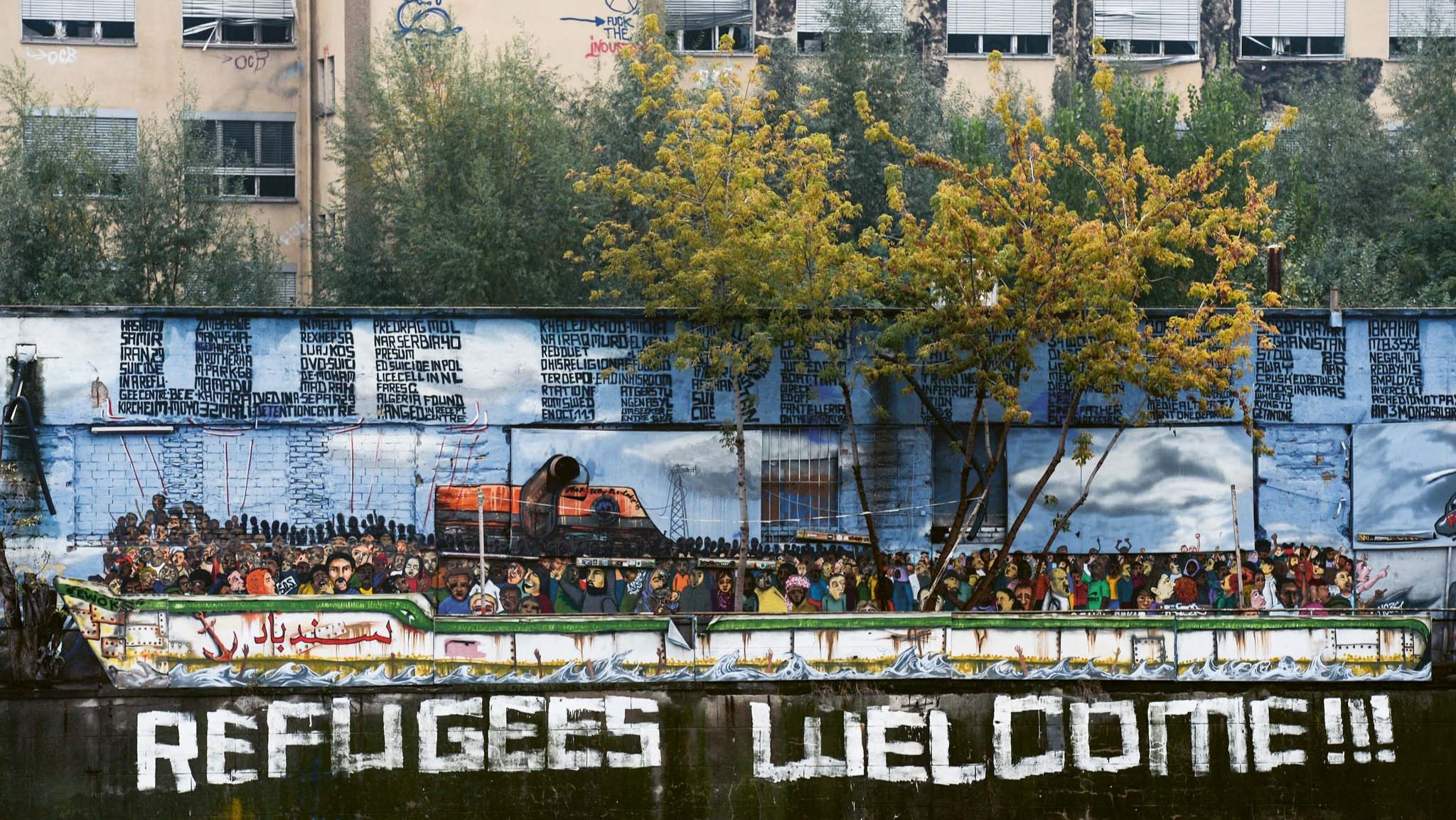
Many, however—especially within the political, media, and cultural elite—still cling to the view that Germany is a wealthy country, and that as a welfare state it must serve as an example to both Europe and the wider international community. Germans believe that what they have done so far represents the right formula, and that this formula should be presented and carried forward everywhere else. This also explains their insistence on migration: as a rich country, they felt it was their duty to support the poor and vulnerable, and to facilitate migration by welcoming all those arriving in Germany.18 Into this same category fall the support offered to Ukrainians, the energy policy shift, and the green transition. Unfortunately, however, it is clear that these policies were not fully thought through and have steered the public sphere in the wrong direction. Energy has become more expensive, and migration has not made Germany better. With hindsight—ten years on—this can now be stated with confidence.
These crises are already clearly felt in everyday life. When Horst Seehofer (CSU), former Federal Minister of the Interior, declared that ‘migration is the mother of all problems’,19 Hungarians could rightly feel that such problems do not manifest themselves in the same way in their own country. Of course, Hungary has its own difficulties, but the sense—widespread in Germany—that issues of public security, education, housing, or crime can all be traced back to a single misguided political decision is not experienced to the same degree.
‘More and more people are leaving Germany’
The energy crisis and migration crisis, together with deepening social tensions and fault lines, have all seeped so deeply into everyday life in Germany that they now shape public affairs as well—particularly along the East–West divide. The rise of the AfD also fits into this process: the party seeks to offer answers to questions that genuinely concern German society. Whether those are the right answers is for each individual to decide. But the phenomenon itself is clear: as a consequence of misguided migration policies and other political errors, voices critical of the system have grown louder.
Yet there is also a hopeful aspect to all this, for the ‘centre’ of German society—the quiet majority—closely resembles the middle strata of Hungarian society. People want to work and to live in peace and security. They want to create value, to build property, to see their children attend good schools, to advance in life, and to envision a secure future ahead of them. Most do not want ideology or politics to intrude into their lives; rather, they long for simple, functioning systems. They want state services—administration, police, justice—to operate reliably and predictably. Yet this is something they have ever less confidence in. Public discourse, the media, NGOs, most political parties, and the trade unions are dominated by a political orientation that often feels alien to the average German citizen. Increasingly, people struggle to recognize their own country in the discourse of public life.
The role of the churches has also changed: this is particularly true of the Lutheran Church, which often takes ideological positions rather than conveying the teachings of Jesus. Many people experience a sense of bewilderment when they follow the media: they see vast sums devoted to various subsidies, the energy transition, and supporting Ukraine, while at the same time, education fails to function properly, trains are delayed, and violent street crime—knife attacks in particular—has increased. According to official data, as many as eight such incidents occur each day, a figure that is by no means negligible.
As a consequence of all this, more and more people are leaving Germany. Last year, 1.3 million people departed the country, around 300,000 of them German citizens.20 The majority of the latter were working people or retired ‘ethnic Germans’ who no longer see their quality of life in Germany as secure in the long term. Within the German population, meanwhile, the proportion of those with a migration background now exceeds 25 per cent—a significant change in the composition of society.21
This raises a related question: how do Germans view Hungary today? The answer is far from uniform. In the eyes of the political and media elite, Hungary often appears as a cautionary tale—whether for its insistence on a work-based society, its restrictive stance on migration, or its firm positions on gender issues. In left-wing identity-political circles, Hungary is perceived as a kind of ‘counter- example’, as the German historian Andreas Rödder has put it.
At the same time, many Germans look on Hungary with sympathy, feeling that it upholds values and a quality of life that in Germany have already become part of the past. It is no coincidence that over 25,000 German citizens officially reside in Hungary, with the real figure likely much higher.22 For them, Hungary is a place with an indigenous population, where the state does not impose one-sided ideological programmes on gender issues, where public security is guaranteed, where energy is affordable, and where mass migration is not an issue. This sense of affinity is particularly strong among East Germans—many of whom already felt friendly toward Hungary in 1989, and it seems that since 2015, this sympathy has only deepened. Thus, it is not simply a matter of left–right political division: in the Eastern federal states, a Green or Social Democratic politician may more readily express sympathy for Hungary than a CDU politician in the West. This East–West dichotomy has become a defining feature of German social attitudes.
In conclusion, it is worth examining the German media’s portrayal of Hungary: what appears in the German press is often the very opposite of the truth. Anyone genuinely curious about reality would do well to reflect carefully on what they read. Hungarians, in this respect, are more experienced: they have learned to read between the lines and to interpret the news from multiple sources. Yet there is certainly hope. Many in Germany view Hungary positively, seeing in its current trajectory a mirror image of the Germany they once loved, and whose values are now reflected back from Hungary.
Translated by Thomas Sneddon
NOTES
1 ‘Prime Minister Viktor Orbán on the Kossuth Radio programme “Good Morning Hungary”’, About Hungary (21 June 2024), https://abouthungary.hu/speeches-and-remarks/prime-minister-viktor-orban-on-the-kossuth-radio-programme-good-morning-hungary-667a7d63635bf.
2 Steven Beardsley, ‘Europäer arbeiten immer weniger – muss das sein?’ (Europeans Work Ever Less—Is That Inevitable?), Deutsche Welle (17 February 2024), www.dw.com/de/europäer-arbeiten-immer-weniger-muss-das-sein/a-68254472.
3 ‘Hungary: Hours Worked’, OECDdata (2023), The Global Economy, www.theglobaleconomy.com/Hungary/hours_worked/?, accessed 15 August 2025.
4 ‘Arbeiten von zu Hause: Deutschland beim Homeoffice EU-weit auf Platz zwei’ (Working from Home: Germany Takes Second Place in EU Home Office Figures), Tagesschau (2 May 2025), www.tagesschau.de/wirtschaft/arbeitsmarkt/deutsche-homeoffice-100.html#:~:text=Hierzulande%20wird%20im%20Schnitt%20besonders,pro%20Woche%20von%20zu%20Hause.
5 Elisa Jebelean, ‘Welches Bundesland hat die meisten Feiertage?’ (Which Federal State Has the Most Public Holidays?), Augsburger Allgemeine (15 January 2024), www.augsburger-allgemeine.de/panorama/feiertage/welches-bundesland-hat-die-meisten-feiertage-102228709.
6 Statistisches Bundesamt (Destatis), ‘Krankenstand der Arbeitnehmerinnen und Arbeitnehmer in Deutschland’ (Sick Days of Workers in Germany), Destatis.de (2 October 2024), www.destatis.de/DE/Themen/Arbeit/Arbeitsmarkt/Qualitaet-Arbeit/Dimension-2/krankenstand.html.
7 Susanne Hildebrandt, and Thuy Ha Nguyen, ‘Krankheitsbedingte Fehlzeiten im europäischen Vergleich: Sonderanalyse zur Datenlage’ (Comparison of Sick Leave Rates in Europe: Special Analysis of the Data Situation), IGES Institut im Auftrag der DAK-Gesundheit (January 2025), https://caas.content.dak.de/caas/v1/media/88938/data/e97f6edd56500bf7009e421662f5d401/250127-download-studie-krankenstand-2024.pdf.
8 Max Schäfer, ‘Bürgergeld-Kosten erreichen Rekordwert – trotz Sparplänen der Merz-Regierung’ (Citizen’s Benefit Costs Reach Record High—Despite the Merz Government’s Savings Plans), Frankfurter Rundschau (26 June 2025), www.fr.de/wirtschaft/buergergeld-kosten-erreichen-rekordwert-trotz- sparplaenen-der-merz-regierung-zr-93800150.html.
9 Statistisches Bundesamt (Destatis), ‘Eigentumsquote’ (Property Ownership Rates), Destatis.de (19 February 2024), www.destatis.de/DE/Themen/Querschnitt/Grundgesetz/eigentumsquote.html.
10 ‘Verteilung der Bevölkerung in Ungarn von 2005 bis 2023 nach Mieter und Eigentümer’, Chart 3, Statista (December 2024), https://de.statista.com/statistik/daten/studie/601696/umfrage/bevoelkerung-in-ungarn-nach-mieter-und-eigentuemer/#statisticContainer.
11 Bundeskriminalamt (BKA), ‘Polizeiliche Kriminalstatistik 2024’ (Police Criminal Statistics 2024), S. 10, BKA.de (2025), www.bka.de/…/Polizeiliche_Kriminalstatistik_2024.
12 BKA, ‘Polizeiliche Kriminalstatistik 2024’.
13 Anja Keinath, ‘SPD beschließt Vorbereitung von AfD-Verbotsverfahren’ (SPD Resolves to Prepare Proceedings for Banning the AfD), Die Zeit (29 June 2025), www.zeit.de/politik/deutschland/2025-06/spd-delegierte-stimmen-fuer-vorbereitung-eines-afd-verbotsverfahrens.
14 ‘CompactMagazin: Bundesverwaltungsgericht hebt Verbot des rechtsextremen Blattes auf’ (Compact Magazine: Federal Administrative Court Overturns Ban on Far-Right Paper), Welt (24 June 2025), www.welt.de/politik/deutschland/article256297132/Compact-MagazinBundesverwaltungsgerichthebtVerbotdesrechtsextremenBlattesauf.html.
15 Jan Sternberg, ‘Hausdurchsuchung nach Beleidigung 64-Jähriger nennt Habeck “Schwachkopf”, dann stehen Polizisten vor seiner Tür’ (House Search After Insult: 64-Year-Old Calls Habeck a ‘Dimwit,’ Then Police Are at His Door), RedaktionsnetzwerkDeutschland (15 November 2024), www.rnd.de/politik/robert-habeck-hausdurchsuchung-bei-mann-nach-schwachkopf-beleidigung-2A5QCCVH2JC65I5XROYSSFYYZE.html.
16 Deutscher Beamtenbund (DBB), ‘Bürgerbefragung Öffentlicher Dienst 2024’ (Citizen Survey: Public Service 2024), S. 2. 6, DBB.de (June 2024), www.dbb.de/fileadmin/user_upload/globale_elemente/pdfs/2024/240626_130624_Buergerbefragung_Oeffentlicher_Dienst_2024.pdf.
17 David Rech, ‘Meinungsfreiheit: Nur 40 Prozent der Deutschen glauben, Meinung frei äußern zu können’ (Freedom of Expression: Only 40 Per Cent of Germans Believe They Can Speak Their Mind Freely), Die Zeit (19 December 2023), www.zeit.de/politik/deutschland/2023-12/meinungsfreiheit-zensur-studie-freiheitsindex-deutschland-2023.
18 ‘Auswanderung’ (Emigration), Mediendienst Integration, https://mediendienst-integration.de/migration/auswanderung.html, accessed 2 September 2025.
19 Nicole Goebel, ‘German Minister: Migration “Mother of all problems”’, DW (9 June 2018), www.dw.com/en/migration-mother-of-all-political-problems-says-german-interior-minister-horst-seehofer/a-45378092.
20 Bundesinstitut für Bevölkerungsforschung (BiB), ‘Potenziale & Herausforderungen: Neue Publikation veranschaulicht die Vielfalt der Bevölkerung mit Migrationshintergrund in Deutschland’ (Potentials and Challenges: New Publication Illustrates the Diversity of Germany’s Population with a Migration Background), bib.bund.de (14 February 2024), www.bib.bund.de/DE/Presse/Mitteilungen/2024/2024-02-14-Potenziale-undHerausforderungenVielfaltderBevoelkerungmitMigrationshintergrundinDeutschland.html.
21 BiB, ‘Potenziale & Herausforderungen.’
22 Bodo Bost, ‘Viele Deutsche zieht’s zu den Magyaren’ (Many Germans Are Heading to Hungary), Preußische Allgemeine (4 May 2025), https://paz.de/artikel/viele-deutsche-zieht-s-zu-den-magyaren-a14325.html; for the latest numbers see Központi Statisztikai Hivatal (24 September 2025), www.ksh.hu/stadat_files/nep/hu/nep0023.html.
Related articles:
At a time when public debate is increasingly polarized and superficial, Hungarian Conservative remains committed to depth, intellectual honesty, and independent conservative thought.
Producing high-quality journalism requires resources. Your contribution helps us expand our coverage, reach new audiences, and keep our content accessible.

Please consider supporting our mission.