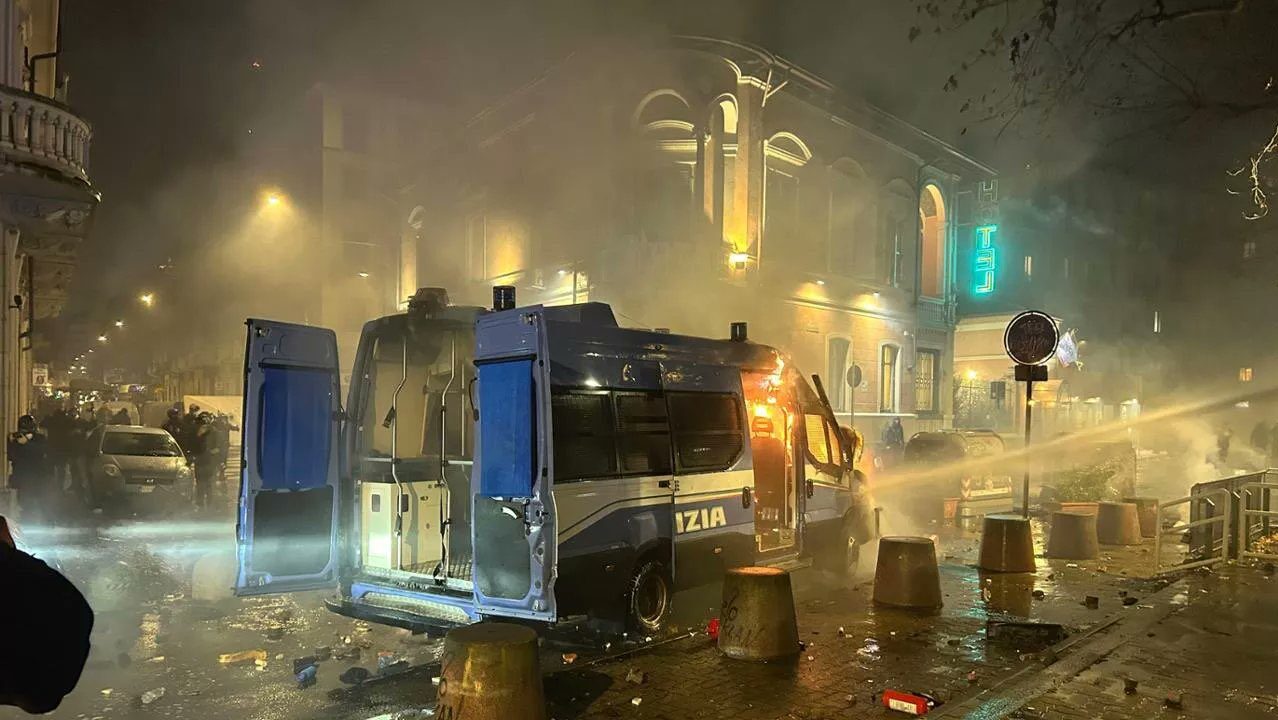
Antifa-linked extremists clashed with Italian police on Saturday, 31 January, during what began as a march in support of the controversial Askatasuna social centre in Turin. Far-left protesters—many of them masked and armed with improvised weapons—threw firecrackers, bottles, and explosive devices at officers, set rubbish bins and a police armoured vehicle on fire, and carried out coordinated attacks on police units. Senior Italian officials described the events as an ‘orchestrated attack on public order’.
The march was originally organized to oppose the lawful eviction of the Askatasuna centre, a building occupied by left-wing autonomists who had controlled the site since the 1990s and which was formally cleared by police on 18 December 2025. The eviction followed concerns raised by authorities about illegal occupation and links between the activists and a network of Antifa-linked groups behind various protest movements, including several pro-Palestinian rallies that had already led to clashes and property damage in the city. In December 2025, similar marches took place in support of the social centre, likewise resulting in violence.
Matteo Salvini on X (formerly Twitter): “Delinquenti quelli di Askatasuna: peggio di loro c’è solo chi li difende, coccola, giustifica o protegge.Solidarietà alle donne e agli uomini delle Forze dell’Ordine, avanti tutta con arresti, sgomberi e nuovo pacchetto sicurezza. pic.twitter.com/xh9y38KsFk / X”
Delinquenti quelli di Askatasuna: peggio di loro c’è solo chi li difende, coccola, giustifica o protegge.Solidarietà alle donne e agli uomini delle Forze dell’Ordine, avanti tutta con arresti, sgomberi e nuovo pacchetto sicurezza. pic.twitter.com/xh9y38KsFk
As the rally drew to a close, Antifa extremists launched their operation. Masked groups broke away from the planned route and targeted police in the university district of Turin. Reports said extremists hurled homemade bombs, fireworks, and chunks of metal, while using chairs and street furniture as weapons or barricades. Police responded with tear gas and water cannon, struggling to regain control of the situation.
Footage that quickly spread online—including particularly disturbing clips—showed a police officer surrounded and beaten by hooded attackers. Colleagues managed to break through, but not before the officer sustained several blows. Dozens of officers were injured, ten people were arrested, and a police vehicle was set ablaze as smoke blanketed parts of the city centre. Journalists were also targeted: a crew from RAI was attacked while attempting to report from the scene.
Giorgia Meloni on X (formerly Twitter): “Quanto accaduto oggi a Torino, durante il corteo degli antagonisti contro lo sgombero dello stabile Askatasuna, è grave e inaccettabile.Uno sgombero legittimo di un immobile occupato illegalmente è stato usato come pretesto per scatenare violenze, incendi, lanci di bombe carta… pic.twitter.com/AtVLzMVxfD / X”
Quanto accaduto oggi a Torino, durante il corteo degli antagonisti contro lo sgombero dello stabile Askatasuna, è grave e inaccettabile.Uno sgombero legittimo di un immobile occupato illegalmente è stato usato come pretesto per scatenare violenze, incendi, lanci di bombe carta… pic.twitter.com/AtVLzMVxfD
Italian Prime Minister Giorgia Meloni publicly condemned the violence, calling it ‘grave and unacceptable’. She stressed that the eviction had been lawful and said the attacks on police crossed every boundary of legitimate dissent, urging the courts to hold the perpetrators fully accountable.
Interior Minister Matteo Piantedosi described the rioters as violent extremists and warned that they posed a threat to democratic order. He said the use of a protest as cover for an organized assault on police would not be tolerated, promising tougher public-order measures.
Deputy Prime Minister Matteo Salvini went further, declaring that ‘for this gentaglia prison is not enough’, and pledged unwavering support for law enforcement.
President Sergio Mattarella personally contacted Interior Minister Piantedosi to express solidarity with the police and to condemn the attacks. Turin’s mayor also said the city would pursue legal action against those responsible for the violence and destruction.
The scenes of political violence and organized far-left unrest bear striking similarities to events in Minneapolis, United States, in recent weeks, where protesters have attacked and obstructed federal ICE agents carrying out lawful deportations of illegal migrants. In Minnesota, violent clashes between protesters and ICE have resulted in two deaths so far, pushing the country to brink of civil war. According to media reports, a campaign strategist for Democrat Governor Tim Walz is an administrator of a Signal chat group organizing resistance against ICE, heightening concerns about coordinated insurgency. Kyle Wagner, a self-described Antifa member involved in the resistance, recently called for ‘armed action’ against immigration officials.
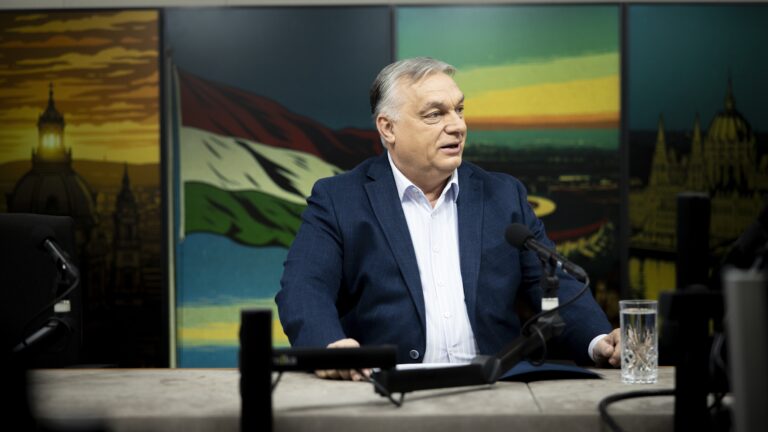
Confronting increasingly aggressive far-left extremists and Antifa groups through legal means has become a challenge for many right-wing leaders across the Western world. President Donald Trump designated Antifa a domestic terrorist organization in 2025, a move later followed by Hungarian Prime Minister Viktor Orbán. Hungary has direct experience of the ‘militant tactics’ associated with such groups: in February 2023, Italian and German Antifa militants attacked pedestrians in Budapest, brutally beating one man with an iron bar. Among the perpetrators was Ilaria Salis, who has since become a Member of the European Parliament for an Italian far-left party and continues to evade accountability under parliamentary immunity.
Related articles: