The following line of reasoning took shape while I was studying the life’s work of István (Stephen D) Kertész (1904–1986). As First Secretary of the Hungarian Legation in Bucharest, Romania, Kertész played a vital role in the diplomatic orientation of a Hungarian government seeking an exit from World War II between 1942 and 1943.
After surviving the Siege of Budapest in a cellar, he served in 1946 as Secretary General and Legal Adviser to the Hungarian Peace Delegation at the Paris Peace Conference. By 1947, he was heading the Hungarian Legation in Rome with the rank of Minister. Sensing the direction of political shifts at home, he resigned and moved his family to the United States. There, he joined the faculty of the University of Notre Dame in Indiana, where he specialized in international relations for over two decades while serving as a high-level adviser to the US State Department. His mission—beginning as early as 1942—was the pursuit of peace through diplomacy. This quest was rooted in his Christian faith, leading him to develop a framework for peace as the fundamental basis of human coexistence—a goal he believed could be achieved through a strategic partnership between the United States and the Soviet Union.
The Shift of European Power Centres
Since the Napoleonic Wars, Europe has been influenced by three main power blocs: the global power of the United Kingdom, the Central European states (primarily Germany and the Habsburg Monarchy), and Russia. The 19th century was defined by the shifting relations between these three centres. Russia, an ally against Napoleon, became an adversary four decades after the Congress of Vienna and was pushed out of the power-sharing arrangement following the Crimean War. Its place was taken by a unifying Italy, whose anti-Habsburg stance and Franco–British orientation threatened the previous Central European balance.
This balance was briefly restored with German unification, the defeat of the Monarchy, and the proclamation of the German Empire, creating a short-lived Anglo–German–Russian tripartite structure. World War I shattered this arrangement: the defeat of Germany and the Monarchy, coupled with the collapse of Russia, secured a monopoly for Atlanticist forces.
‘The defeat of Germany and the Monarchy, coupled with the collapse of Russia, secured a monopoly for Atlanticist forces’
However, the resurgent Russian Empire—now the Soviet Union—emerged from its civil war as an aggressive power centre. Its goal was not merely to restore the Tsarist Empire but to surpass it through ‘world revolution’. To counter this threat, the Anglo–French alliance sought to partially re-strengthen Germany, joined by Italy—a move that peripherally included the partial territorial restoration of the Kingdom of Hungary in 1942. In this context, the Italians sided with the German Reich, hoping this central bloc could defeat expanding Soviet power, counterbalance British influence, and establish a new world order.
This vision famously collapsed in World War II, largely because the Anglo–Saxon powers overrode their tacit acceptance of Germany with open military action, aligning themselves with the very power they had previously deemed the greatest threat. Consequently, the Soviet Union rose to become a European superpower, Central Europe ceased to be a geopolitical factor, and the Western half of the continent was occupied by the Anglo–Americans, with France relegated to a subordinate role.
The Modern Geopolitical Reordering
The 1990 collapse of the Soviet Union expanded Anglo-Saxon hegemony across the continent. Theoretically, this made it possible to realize the dream shared by Napoleon, Hitler, and Churchill: the military penetration of Western Europe into the continent’s eastern territories. The objective became the partitioning of Russia and the restoration of Europe’s global power (naturally, citing the target as a source of danger). The current Russo–Ukrainian war is the practical application of this concept, though it is proceeding fitfully at best. Because Ukraine alone is insufficient to achieve this goal, the Anglo–Saxon-led European community—stepping beyond the bounds of legality and political rationality—has entered the conflict to force Russia’s disintegration and revive European Great Power status. For decades, the United States was not just a supporter of these efforts, but their primary initiator and actor.
The Trump administration brought a significant shift to this approach, driven by the following factors:
Global Primacy: The chief goal is maintaining US global power, which requires controlling the rising powers of Asia and the Americas. The greatest challenge comes from China, which has become the primary rival to the US through its massive population and rapid technological development.
Geopolitical Realignment: Faced with this challenge, the current US leadership is executing a total geopolitical pivot. It seeks to consolidate dominance in the Americas, limit China’s influence, and prevent the re-emergence of Europe as a rival global power.
‘The Russo–Ukrainian war has no place in these objectives because any theoretical outcome poses a risk’
The Ukrainian Dilemma: The Russo–Ukrainian war has no place in these objectives because any theoretical outcome poses a risk. If Russia collapses, it would lead to a European resurgence that would upset global positions even if Europe remained ‘allied’ with the US. Furthermore, a Russian collapse would only further empower China. Conversely, if Russia wins decisively and Ukraine falls, an overly dominant Russian Empire would present a similar challenge.
The Optimal Solution: For the Americans, the ideal outcome is a compromised end to the war, ensuring neither side emerges too strong.
A Trans-Pacific Alliance: Simultaneously, a strategic and tactical alliance with Russia is becoming a priority to counterbalance China. This would create a US–Russia Trans-Pacific partnership capable of constraining both Asian and European power ambitions.
The Role of Central Europe: A key element for Europe would be the strengthening of the old Central Europe—bringing Italy, Hungary, Czechia, and Slovakia (and later Poland and Romania) into a power hub capable of counterbalancing the Anglo–French dominance to which Germany has submissively yielded. Supporting this new centre keeps Europe in a controlled position and acts as a counterweight to both Russia and Ukraine.
A New Equilibrium
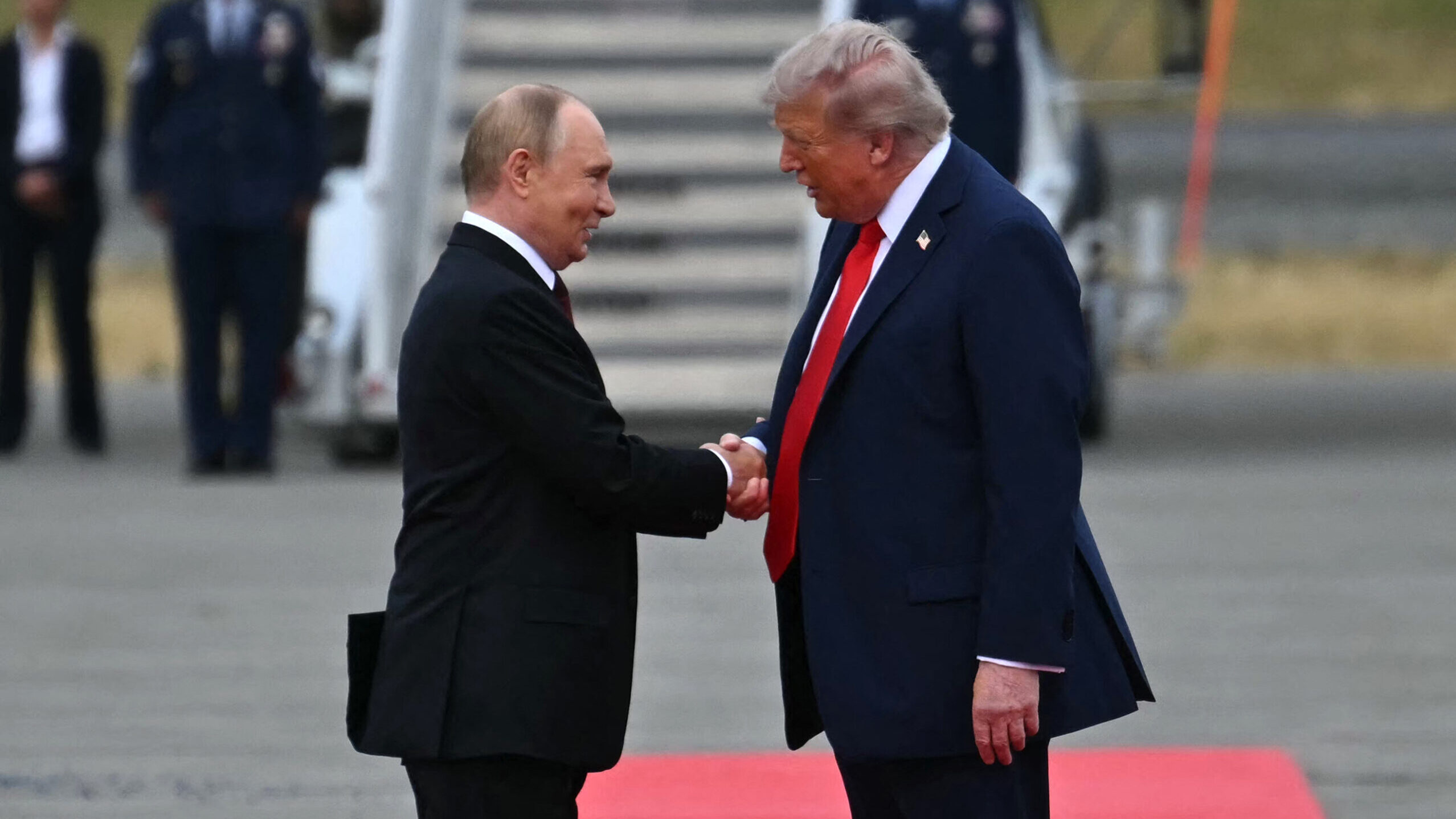
The ultimate goal of this strategy is to create a new balance of power between Europe, Asia, and the Americas—under US dominance. This is no longer a world of unilateral dictates, but a multipolar system of alliances defined by agreements, intensive trade, and technological competition. A US–Russian alliance is central to this, symbolized by the meeting of Presidents Trump and Putin in Alaska—a place that was once Russian territory, is now a US state, and may become the symbolic cornerstone of a historic strategic partnership.
‘The ultimate goal of this strategy is to create a new balance of power between Europe, Asia, and the Americas—under US dominance’
Can we hope for world peace from this new strategy? In my view, it is our only hope. The alternatives—either the collapse of Russia or the disappearance of Ukraine—would lead to unpredictable changes and raise the spectre of a globally destructive war. If this new American strategy succeeds, humanity may move away from the chaos following the Soviet Union’s suicide toward a period of ordered cooperation.
This would be a move toward the world peace that Stephen D Kertész once envisioned: a peace resting on the cooperation of the great northern empires, the United States and Russia. It is Hungary’s historical destiny that, despite its small population and territory, it may play a significant, even pioneering role in shaping these overarching structures of the great powers.
Related articles: