The European Parliament held a debate on Tuesday over the European Commission’s decision to greenlight €16 billion under the EU Security Action for Europe (SAFE) defence funding plan for Hungary. The initiative was raised by two of Prime Minister Viktor Orbán’s most vocal critics in the Parliament, Daniel Freund and Tineke Strik of the Greens/EFA group, who argued that the SAFE funds ‘could be used to support the ruling Fidesz party’s campaign ahead of the national election in April.’
According to Freund and Strik—who is currently leading the rule-of-law lawfare against Hungary in the European Parliament—the funds ‘could easily end up in the pockets of Orbán’, as he has ‘already ensured that Hungary’s defence industry is largely in the hands of one of his business allies.’ ‘This completely undermines the Commission’s commitment that EU funding should always be dependent on accordance with EU values,’ the Greens stated. Freund and Strik called on the European Commission to delay payment of the SAFE funds until after the elections in Hungary.
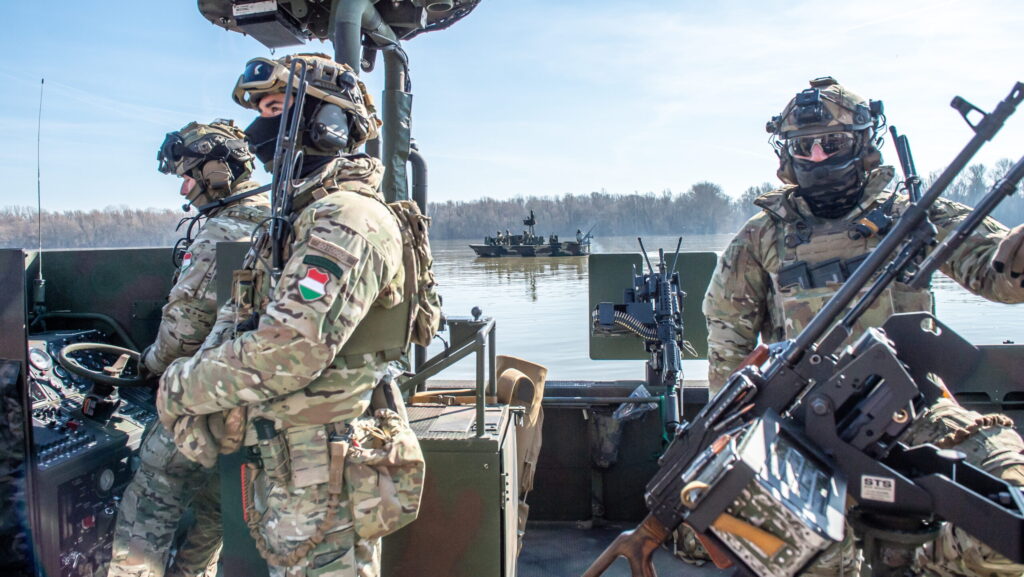
The SAFE programme is a €150 billion loan scheme that enables member states to finance the purchase of defence equipment. Hungary has requested €17.4 billion in SAFE funding to boost its armed forces. This would be the third-largest SAFE allocation among member states, which is unsurprising given that the Hungarian government has pursued a wide-ranging military modernization programme over the past decade, which is still ongoing.
According to EU Budget Commissioner Piotr Serafin, the allocation of SAFE funds may be tied to the same rule-of-law conditions under which the Commission is withholding €17 billion of the €27 billion previously earmarked for Hungary. However, a 15 per cent down payment could be allocated without conditions. This is the main concern of the Greens, who want all funds tied to the same rule-of-law conditions, which Brussels has used as a political weapon against Orbán’s government.
Kallas Told MEPs Not to Worry about SAFE
Opening the debate on Tuesday, Cypriot Deputy Minister for European Affairs Marilena Raouna—representing the Council’s rotating presidency—pledged that national plans submitted by participating countries would be processed quickly so that financial support could begin flowing as soon as possible, adding that SAFE includes strict safeguards.
She underlined that disbursements will be made in line with EU financial regulations and the conditionality framework, meaning funds will only be paid out if transparency and rule-of-law requirements are met—measures she said are sufficient to protect the EU budget.
Speaking on behalf of the European Commission, EU foreign policy chief Kaja Kallas called SAFE a ‘European success story’, noting that 19 member states are participating with around 700 projects worth €150 billion, two-thirds of which involve joint procurement or multi-country initiatives.
‘Kallas also warned that oversight would continue throughout the entire programme, not only during the approval stage’
‘Every euro, every eurocent will reach its target in a targeted way. Every euro must be spent on defence,’ Kallas said, adding that national plans are being reviewed carefully but swiftly due to the urgency of Europe’s security environment.
While she did not address Hungary’s national plan directly, Kallas said compliance would be strictly enforced. ‘We only approve national plans that comply with the regulation,’ she said.
Kallas also warned that oversight would continue throughout the entire programme, not only during the approval stage. If audits reveal that a member state fails to meet the criteria, she said the Commission would initiate a suspension procedure through the Council—and, where necessary, demand repayment.
The Fifth Column of Putin
Following the remarks by Raouna and Kallas, MEPs from the European People’s Party (EPP) and the Socialists and Democrats (S&D) groups launched their usual political attacks on Hungary. Socialist MEP Jean-Marc Germain accused Hungary of violating EU principles and warned against providing funds to the country while the government is blocking support for Ukraine.
Germain argued that Budapest is using its Ukraine-related veto power to pressure EU institutions into unfreezing withheld funds, and concluded by calling for continued progress under the Article 7 procedure against Hungary—which could ultimately result in the country losing its voting rights in EU decision-making.
Austrian MEP Helmut Brandstätter of the liberal–progressive Renew group echoed corruption allegations, weirdly bragging about how he allegedly told Orbán ‘to his face’ that he was corrupt. Brandstätter also accused the Hungarian government of intending to misuse SAFE funds, arguing that this was widely understood. He criticized Hungary’s rhetoric on peace, claiming Budapest’s actions do not match its messaging as Ukrainians face hardship and require support. He concluded by urging Hungary not to obstruct pro-EU forces seeking to build a ‘strong, united European Union’.
‘The Hungarian plan cannot be approved, because every single penny given to Orbán could go directly to Putin’
German Green MEP Daniel Freund—who made it into our own top five list of the most Hungarophobic politicians in the European Parliament—argued that Hungary should not receive SAFE funding at all, describing it as both a corruption risk and a security threat. ‘Hungary is the most corrupt country in the EU, and its foreign policy is a security risk for the EU,’ Freund said.
He cited Orbán’s meetings with Russian President Vladimir Putin and Hungary’s repeated vetoes of European defence-related decisions, questioning how Hungary could be eligible for the third-largest SAFE allocation. ‘The Hungarian plan cannot be approved, because every single penny given to Orbán could go directly to Putin. How does that create European security?’ Freund made the absurd claim.
Swedish MEP Jonas Sjöstedt, speaking for the far-left group The Left, argued that Hungary should receive no EU funds at all—SAFE included—because of corruption and alleged breaches of democracy and the rule of law. He also criticized Hungary’s stance on Ukraine and its frequent vetoes, and referenced reports suggesting Hungary may have spied on EU institutions. Sjöstedt claimed Hungary could ‘even be called Putin’s fifth column’.
Undermining Orbán’s Government
Responding to the allegations, Fidesz MEP Kinga Gál of the Patriots for Europe (PfE) group accused the liberal–progressive mainstream of seeking to interfere in Hungary’s election and undermine Orbán’s government. ‘They would sacrifice Europe’s security in the hope of toppling the government,’ she said, adding that the continent’s security is ‘unified and indivisible’ and should not be subject to ideological exclusion. She argued that Hungary is being targeted because it refuses to follow what she called ‘the Brussels dictate’ on war, migration, and Ukraine.
Joining Gál, MEP Zsuzsanna Borvendég of the hard-right Our Homeland (Mi Hazánk) party highlighted what she described as Brussels’ double standards towards Hungary. ‘It does not bother you that the Ukrainian leadership is corrupt, and you also turn a blind eye to abuses affecting the European Commission,’ she said.
‘They would sacrifice Europe’s security in the hope of toppling the government’
Borvendég argued that the debate was part of a broader power struggle aimed at influencing Hungary’s elections, adding that Hungary has defended Europe’s borders for over a decade without receiving adequate support, while EU funds are being withheld as a political weapon.
Italian MEP Elena Donazzan of the right-wing conservative European Conservatives and Reformists (ECR) group emphasized that the EU treaties require respect for national identity, including national security. She said this principle applies to Hungary as well, warning that sovereignty cannot be surrendered—especially on defence issues.
Related articles: