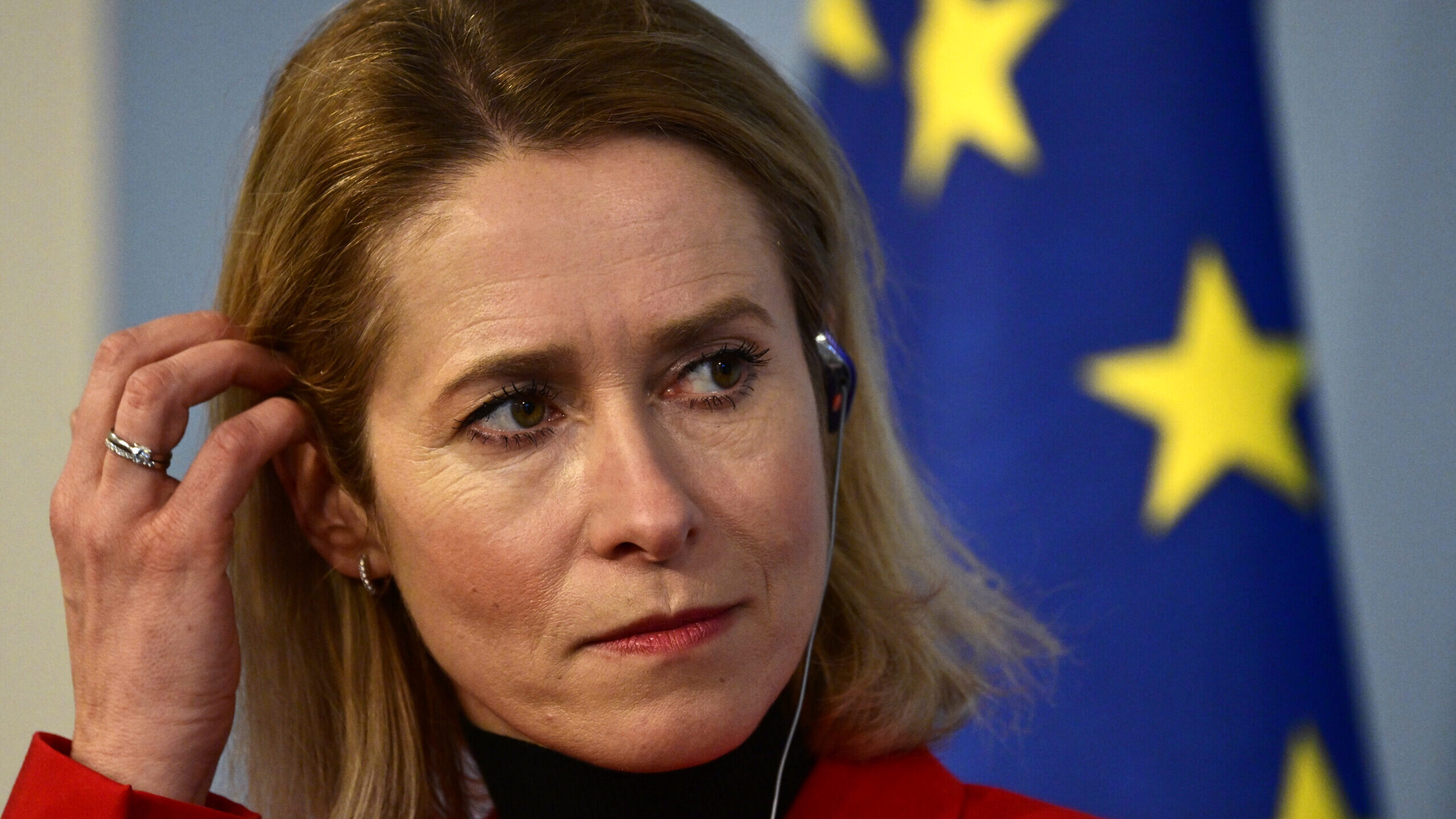
While our world is transforming at an enormous pace and in a chaotic manner, with US President Donald Trump increasing pressure on Denmark over the purchase of Greenland, and the European Union lagging behind major powers in its struggle to remain relevant in the emerging world order, EU foreign policy chief Kaja Kallas offered a strange recommendation to European lawmakers—one that also says a great deal about why Brussels is losing influence in international affairs at an incredible speed.
According to POLITICO Brussels, Kallas told leaders of the political groups in the European Parliament that while she is ‘not much of a drinker’, now may be the time to ‘start drinking’, given events unfolding around the globe. The outlet cited two people who were in the room during the private meeting of the Conference of Presidents. Her remarks reportedly came after senior MEPs began wishing each other a happy new year—before adding that, in light of global developments, it did not feel particularly happy, according to those present.
Stuck in the Past
The meeting took place around the same time as foreign ministers from Greenland and Denmark were meeting with US Vice President JD Vance and Secretary of State Marco Rubio over Washington’s interest in acquiring the Arctic island. Following the talks, working groups are expected to be established between Washington and Copenhagen for technical dialogue aimed at resolving the issue.
While the US operation to capture Venezuelan President Nicolás Maduro signalled that the rule-based, international law-governed liberal world order no longer exists—and that a more interest-based, transactional system is taking shape—the European Union continues to cling to the old order, reacting to recent events with the same flawed moralizing and virtue signalling instead of pragmatic action and concrete proposals for resolution.
Despite the establishment of US–Denmark working groups, France, the United Kingdom, Norway, Sweden and Germany reportedly sent around 30–40 troops to Greenland to help ‘boost the island’s security’—hardly a strong deterrent, to put it mildly. If anything, it underlines how Western European countries and the EU appear uncertain about how to respond.
The Hungarian Path
Unlike Brussels, Budapest has welcomed the collapse of the liberal world order, as Hungarian Prime Minister Viktor Orbán has long warned that such a moment would come. In recent years, Hungary has been preparing for it and shaping its foreign policy accordingly. It has established pragmatic economic, political, and energy relations with some of the strongest players globally, including the United States, China, Russia, and Türkiye.
Instead of joining the other 26 EU member states in calling on Washington to ‘respect international law’ after the Venezuelan operation, Orbán welcomed the fall of a ‘narco-state’ and pointed to the positive impact it could have on the global energy market. Orbán proposed a similarly pragmatic approach towards Greenland, emphasizing that it is more of a NATO issue than a deep international crisis and should therefore be resolved within the alliance. He also praised Polish President Karol Nawrocki’s comments on Greenland, stating that the future of the island should primarily be addressed directly between American and Danish leaders, while warning European states not to escalate tensions further.
Kallas has long been seen as one of the reasons why the European Union has been unable to adopt a more pragmatic foreign policy. While Budapest opted out of the joint EU conclusion on Venezuela, it argued that the statement was a ‘sign of weakness and a misunderstanding of international relations’, adding that the EU under Kallas had failed to become a meaningful global actor.
Reacting to Kallas’ odd recommendation that MEPs should start drinking as the world burns down, political director of the Hungarian prime minister Balázs Orbán called for her to step down. ‘Neither drinking, nor driving, resign,’ he said sarcastically in a video—in Hungarian, the word for ‘driving’ is also used to mean ‘leading’.
Related articles:
At a time when public debate is increasingly polarized and superficial, Hungarian Conservative remains committed to depth, intellectual honesty, and independent conservative thought.
Producing high-quality journalism requires resources. Your contribution helps us expand our coverage, reach new audiences, and keep our content accessible.

Please consider supporting our mission.