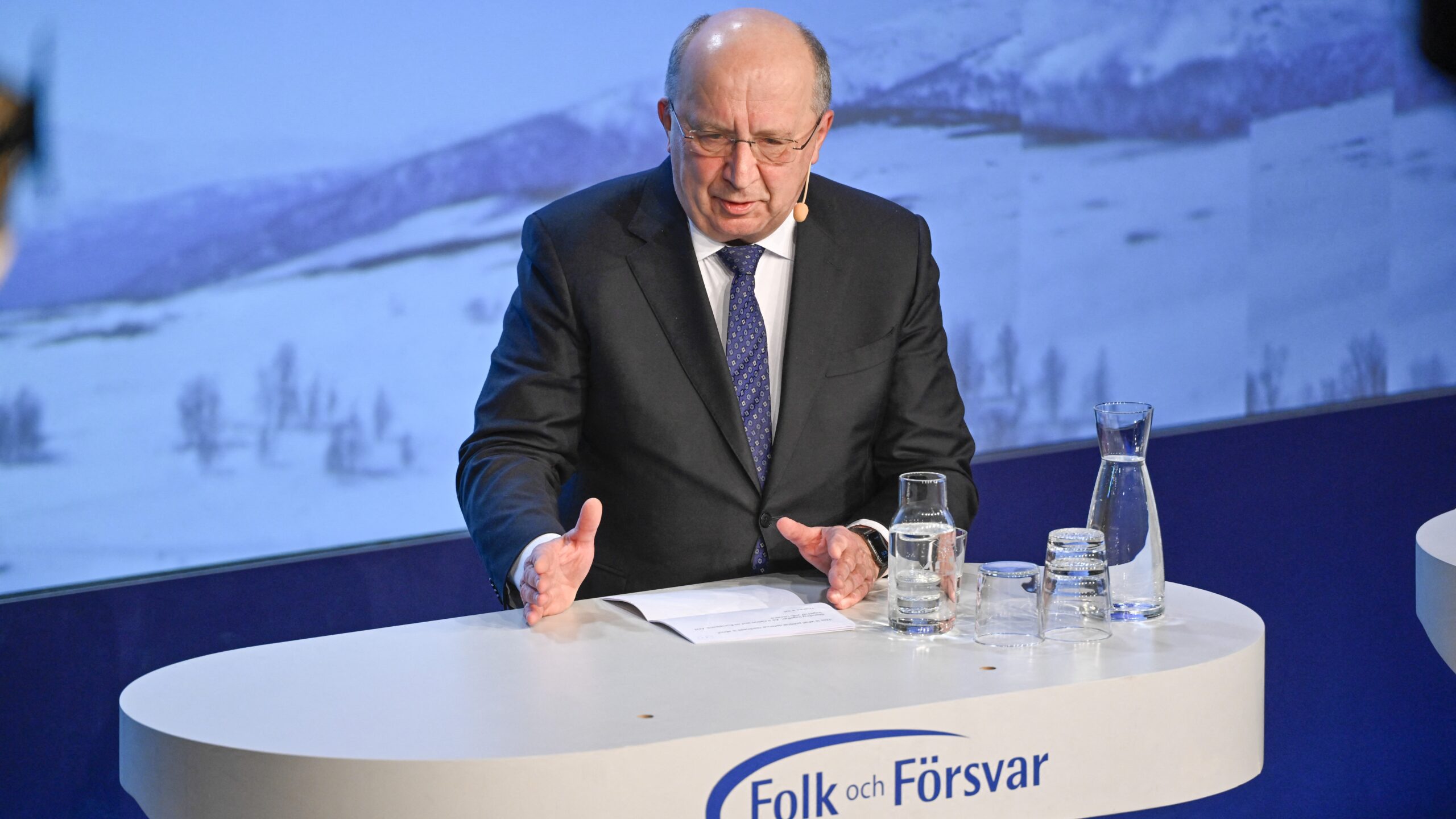
Speaking at the Folk och Försvar – National Conference 2026, Lithuanian Commissioner for Defence and Space Andrius Kubilius spoke about the need to establish a European standing army. In his speech in Sweden, the Commissioner said that Europe needs ‘to go for a “big bang” in defence’, which he defined not only as financial investment in the defence industry but also as Europe’s institutional and political defence readiness.
Quoting former EU High Representative Josep Borrell, Kubilius argued that the EU must be able to ‘fight as Europe, not just as a collection of 27 national “bonsai armies”’. He compared the EU to the United States and asked whether Washington would be stronger with 50 state-level armies or with a single federal army. ‘If our answer is “no”—that the USA would not be stronger—then what are we waiting for?’ Commissioner Kubilius concluded.
In his presentation, Kubilius outlined a detailed vision of a ‘standing “European military force” of 100,000 troops’, while also raising the question of whether Ukraine’s ‘battle-tested’ army should be included. Cooperation with—or rather acting in the interest of—Ukraine played a central role in Kubilius’ line of argument.
‘Cooperation with—or rather acting in the interest of—Ukraine played a central role in Kubilius’ line of argument’
He spoke about establishing a ‘European Security Council with rotating membership’, which ‘could be composed of key permanent members, along with several rotational members…plus the leadership of the EU: the Commission and Council Presidents’. ‘And the first task for such a European Security Council would be—Ukraine.’ In other words, the Commissioner argued not only for the creation of a ‘United European Army’, but also for an overhaul of the political, legal, and institutional processes governing defence in the European Union, with the primary objective of serving—Ukraine.
Kubilius justified the need for a European army by pointing to the possibility of the United States withdrawing—or reducing—the presence of its troops on the European continent, as well as to the intensifying conflicts of today’s world. Echoing similar arguments made over the past year, other politicians have also called for a united European army.
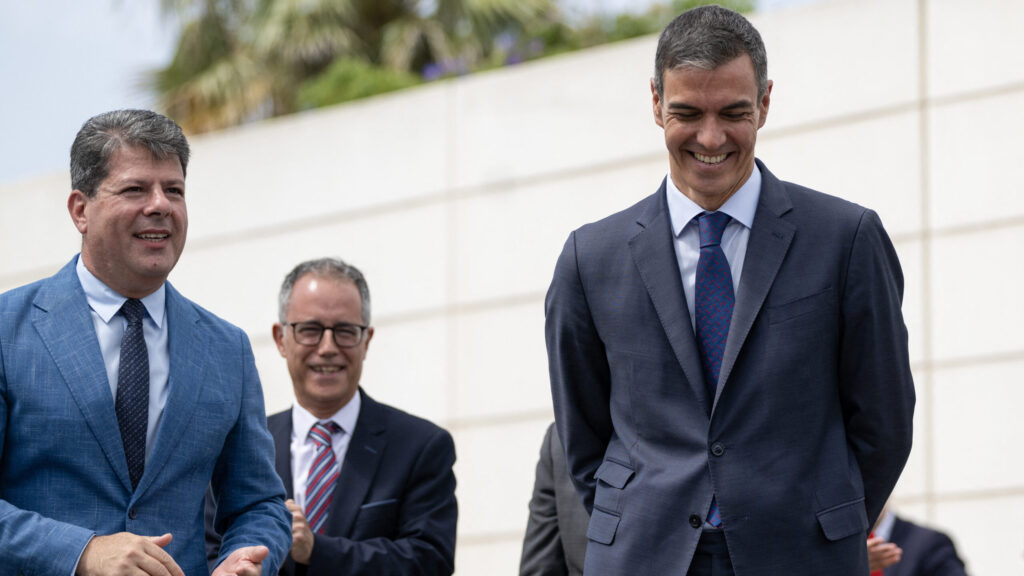
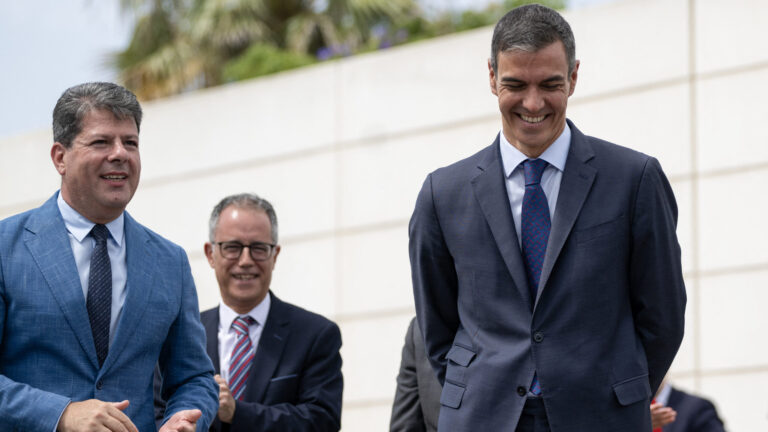
In April 2025, Spanish Prime Minister Pedro Sánchez urged the EU to ‘create a European army, EU armed forces with troops from all 27 member countries, working under a single flag with the same objectives’. Ukrainian President Volodymyr Zelenskyy, heavily invested in pushing the EU to rearm, said a year earlier at the Munich Security Conference that the time had come to create an ‘armed forces of Europe’, adding that the EU cannot cope on its own: ‘Without the Ukrainian army, European armies will not be enough to stop Russia. This is the reality. Only our army in Europe has real, modern warfare experience.’ Speaking around Christmas, European People’s Party leader Manfred Weber said: ‘I would like to see soldiers with the European flag on their uniforms, working alongside our Ukrainian friends to ensure peace.’
Since the European Union was established to foster economic cooperation between the Member States, the Treaties have relatively little to say on defence matters. Article 42(7) TEU is the most explicit provision in this regard, stating: ‘If a Member State is the victim of armed aggression on its territory, the other Member States shall have towards it an obligation of aid and assistance by all the means in their power.’
This provision is often likened to NATO’s Article 5. It is important to note, however, that Article 42(7) refers strictly to the Member States and their responsibilities towards one another and makes no mention of the European Union itself. In other words, the Article clearly leaves defence—even in the case of aggression against an EU country—in the hands and competence of nation states.
Other provisions in the Treaties, such as Article 4(2), are equally explicit: ‘In particular, national security remains the sole responsibility of each Member State.’
‘The European Commission has little legal basis for establishing—or even urging—the creation of a united European army’
The quoted Treaty articles demonstrate that the European Commission has little legal basis for establishing—or even urging—the creation of a united European army. Moreover, since national security is, under the Treaties, an exclusive Member State responsibility, it is highly questionable that an EU Commissioner would argue for the establishment of a ‘European Security Council’ that includes the President of the European Commission as a member.
Commissioner Kubilius’ proposal for ‘rotating’ membership in the envisaged Council amounts to an outright disregard for the Treaties—under such a plan, some countries would commit their armed forces to a ‘United Army of Europe’ while having no say in its command. This idea violates not only the spirit of the EU Treaties but also fundamental democratic principles—in Western democracies, armed forces are subordinate to democratically elected authorities to ensure the legitimacy of the use of force. By contrast, the inclusion of the European Commission in the proposed ‘European Security Council’ would place military command—at least in part—under the authority of an unelected bureaucratic body.
Related articles:
At a time when public debate is increasingly polarized and superficial, Hungarian Conservative remains committed to depth, intellectual honesty, and independent conservative thought.
Producing high-quality journalism requires resources. Your contribution helps us expand our coverage, reach new audiences, and keep our content accessible.

Please consider supporting our mission.