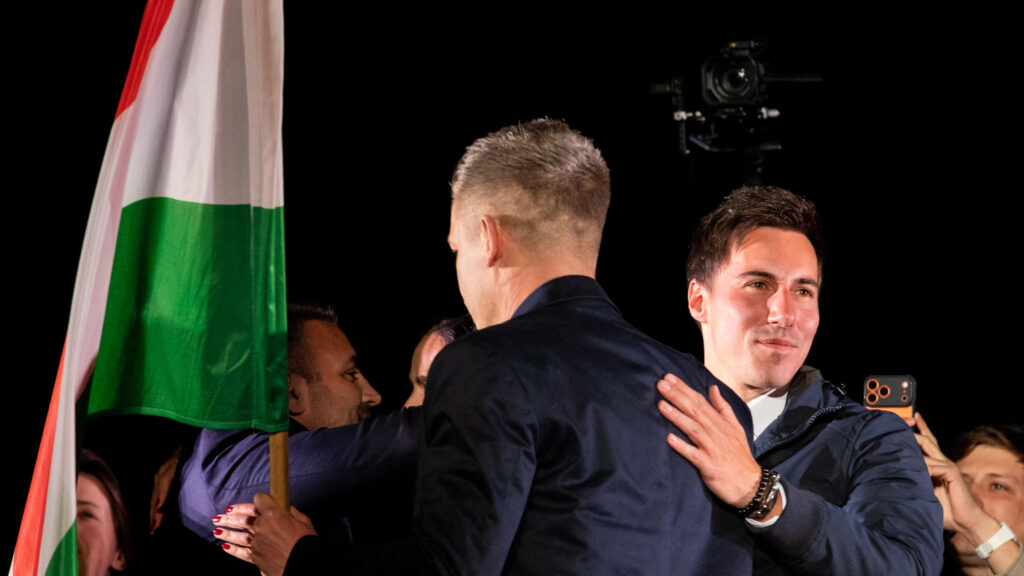
Hungarian Prime Minister Viktor Orbán announced a generational renewal within the governing Fidesz–KDNP alliance at the party’s candidate-nominating congress on 10 January, revealing that the ruling parties will contest the 2026 parliamentary election with 65 returning and 41 new individual candidates.
‘We are starting the election campaign with 65 experienced and 41 new candidates,’ Orbán said, adding that renewal within a political community must be organized and deliberate. He stressed that Fidesz believes institutions must be continuously renewed, arguing that ‘at Fidesz, only Fidesz is better than Fidesz’. The prime minister thanked former MPs who previously won mandates but will not stand again, underlining that the generational transition is taking place in an orderly manner.
According to Orbán, the candidates are ‘calm, confident, and experienced’ figures capable of ensuring Hungary’s peace and security. He argued that internal unity is a prerequisite for national unity, saying that only a political force capable of cohesion within itself can create unity at the national level.
A Decisive Election Ahead
Orbán dismissed the opposition’s ability to govern, stating that fragmented left-wing forces and small parliamentary groups are incapable of building national cohesion. He maintained that unity is the most important value in a nation’s life and claimed that only Fidesz–KDNP can provide this for Hungary.
Continuing his speech, Orbán framed the 2026 election as a decisive moment for the country’s future. He argued that the liberal international order is collapsing and that former global structures have lost their authority. According to the prime minister, Hungary has responded by strengthening pragmatic relations with major global powers, including the United States, China, Russia, and Türkiye, concluding agreements on trade, investment, and defence in order to safeguard the country’s development in what he described as an increasingly volatile world order.
Orbán highlighted recent economic measures, including minimum wage increases and tax exemptions for mothers with multiple children, claiming that no other country has implemented comparable family policies. He reiterated the government’s commitment to a ‘peace economy’, rejecting what he described as Brussels-driven efforts to shift Europe towards a war economy linked to continued financial support for Ukraine.
Orbán warned young voters against supporting opposition parties, particularly the Tisza Party and the Democratic Coalition (DK), claiming that such choices would undermine their own future. He accused these parties of uncritically implementing Brussels’ demands, including policies related to war financing and economic restructuring. Drawing historical parallels, he argued that previous periods of political change had led to economic decline under left-wing governments, asserting that stability and the national interest require continuity in leadership.
Choosing the Hungarian Path
The prime minister reiterated his government’s opposition to the EU’s migration pact, claiming it would force Hungary to accept migrants and establish reception facilities. He argued that parties supporting the pact are effectively endorsing mass migration and its social consequences. Orbán linked migration to rising antisemitism in Western Europe, stating that Hungary remains one of the safest countries for Jewish communities due to the policies of the Fidesz–KDNP government, which he said maintains zero tolerance for antisemitism.
He also criticized what he described as mandatory gender policies associated with the ‘Brussels path’, warning that such measures would fundamentally alter cultural norms and education systems. Orbán stressed that his government intends to prevent these changes from taking root in Hungary.
‘Fidesz–KDNP is prepared to govern with experience and stability in a period of heightened global risk’
The Hungarian prime minister called for ‘calm confidence’ and rejected irresponsible behaviour and misinformation in politics. Without naming individuals directly, he criticized opposition figures for broken promises and inconsistent positions, contrasting this with what he portrayed as Fidesz’s record of direct communication and public consultation on major issues such as migration, child protection, utility prices, and war.
Orbán concluded by stating that he had personally spoken with all 106 candidates and described them as a strong and capable team. He concluded by stating that Fidesz–KDNP is prepared to govern with experience and stability in a period of heightened global risk.
Related articles:
At a time when public debate is increasingly polarized and superficial, Hungarian Conservative remains committed to depth, intellectual honesty, and independent conservative thought.
Producing high-quality journalism requires resources. Your contribution helps us expand our coverage, reach new audiences, and keep our content accessible.

Please consider supporting our mission.