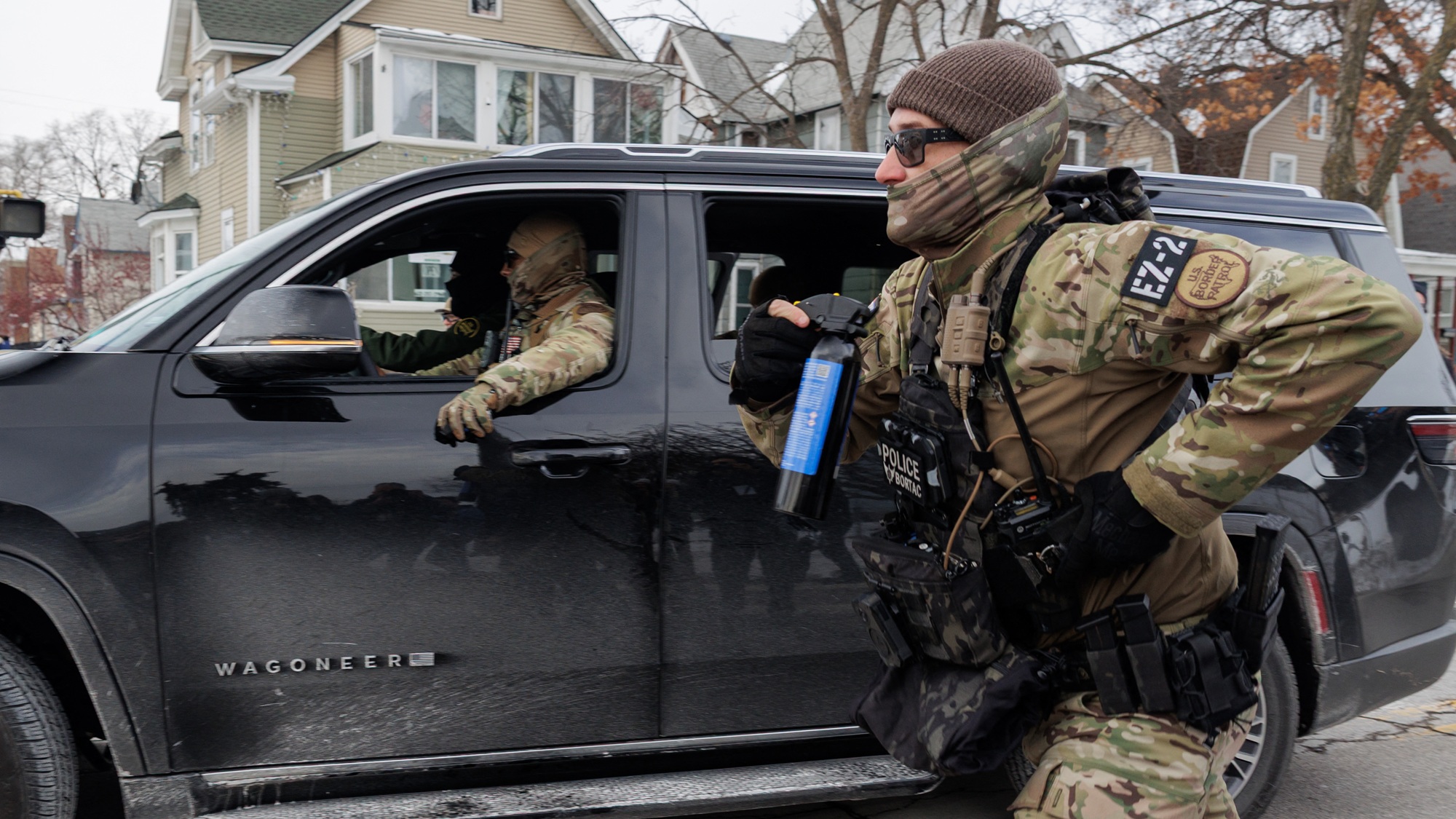
The spirit of 2014–2020 has come back to haunt: the United States has been thrown into a frenzy over an officer-involved shooting again. Hearkening back to cases such as that of Eric Garner, Michael Brown, Tamir Rice, Breonna Taylor, and—most famously or infamously—George Floyd, the nation is now debating whether or not it was justified to use deadly force in the case of Renee Nicole Good in Minneapolis, Minnesota earlier this month.
Politicians on both sides of the aisle have already firmly made up their minds.
For instance, Minneapolis Mayor Jacob Frey of the Democratic Party has no doubt that this was in no way justified self-defence; while Vice President JD Vance of the Republican Party has no doubt that it was. So, on that spectrum, where is the truth?
The first ‘great truth’ of the matter is that the vast majority of people who share very passionate opinions on the issue have not spent any significant amount of time learning about self-defence laws and cases in the United States. If they did, they would clearly see that this shooting is not a clear-cut case that would be easily dismissed or adjudicated with a guilty verdict at trial, removed from the tense political context.
If the shooter was not an ICE agent but a ‘regular’ police officer, and the deceased was not an ICE protester, whether or not the officer would face charges would be solely determined by the sensibilities of the local prosecutor; and whether or not they could get a guilty verdict—if it went to trial and not end in a plea agreement—would depend on the jury.
In other words, in this case, there are facts supporting both a murder or a manslaughter conviction and no prosecution at all on the grounds of justified self-defence.
There is some universality in the legal theory of self-defence across all 50 states in the Union. No matter where you are in the US, you are allowed to use deadly force in self-defence if you are in a reasonable, imminent fear of death or great bodily harm.
Beyond that, the biggest distinction in state laws on the subject is between so-called ‘stand your ground’ and ‘duty to retreat’ states. In the latter jurisdictions, the state also imposes on its citizens a legal duty to retreat from the deadly threat before they can justifiably use deadly force to protect themselves. In the former, there is no such duty, the person can ‘stand their ground’ and choose to stay in the vicinity of the threat, and still claim justified self-defence.
In most cases, this distinction does not even come into play, as the ‘imminency’ requirement most of the time suggests that there was no safe avenue to retreat. However, unfortunately for our officer, this may be one of the few cases where duty to retreat laws do impact the outcome of his potential prosecution. Even more unfortunate for him is that Minnesota is one of the 14 ‘duty to retreat’ states, as opposed to the majority 36 ‘stand your ground’ states.
Minnesota Is a Duty to Retreat State
So, in that case, we need to ask: could the ICE officer have gotten out of the way of that car?
A car, if driven at someone at speed, can be considered a weapon of deadly force, as it has been in many, many criminal cases prior, so he would have no trouble arguing that. However, in turn, a prosecutor could argue that he could have simply stepped out of the way, as the woman was not driving it at a high speed, and avoided shooting his gun.
Here’s something our right-wing audience may not like to read: the officer ‘kind of’ did get out of the way. In the video of the incident, you can see that the driver does steer past him, and only stops a few feet away from him after being shot. Meanwhile, the officer stands unharmed. If prosecuted, he would likely have to argue in court that he was only able to step out of the way because he had fired first, which deterred the driver.
Just like in any criminal or potential criminal case, optics matter in this incident too.
The video footage starts by showing the supposed victim blocking the road, with her vehicle parked perpendicular to the sidewalk. Already, some jurors would wonder why a reasonable person would have their vehicle like that, and would start their deliberation with a bad impression of her. However, the truth of the matter is that the ICE agent who eventually shot his weapon also should not have been where he was standing.
Even rookie officers know that if they stop a vehicle, the proper place to approach the driver is from behind the stopped car’s B pillar, exactly to avoid being shot or run over. The two other ICE officers in the footage seem to have known that, and talked to the driver from behind her B pillar. At this point, the third officer really should not have approached the same vehicle from its front.
‘Even rookie officers know that if they stop a vehicle, the proper place to approach the driver is from behind the stopped car’s B pillar, exactly to avoid being shot or run over’
There are still some facts that work in favour of the officer involved, however.
About months before the shooting, in Bloomington, Minnesota, he was actually struck by a vehicle during a stop, and was even dragged on the road by the fleeing suspect. That information would likely get in front of a jury. Not only would it paint the ICE agent in an empathetic light, but it would also help establish a reasonable fear of great bodily harm—as in, it has happened before, so of course he is in fear of getting struck by a fleeing driver’s car.
Additionally, in the video, you can hear the other officers order the woman out of her vehicle. Instead of complying with a federal officer’s command, she chooses to suddenly drive off, a behaviour usually associated with hardened criminals desperately trying to avoid arrest for crimes that could get them lengthy prison sentences. This could paint the alleged victim in a bad light in some jurors’ minds.
With all that being said, the officer involved in the Minnesota ICE shooting has yet to be charged with any crimes, either federally or on the state level. Debates about the justification of his conduct are confined to the court of public opinion, as opposed to an actual courtroom room—which is a great relief for him.
Related articles:
At a time when public debate is increasingly polarized and superficial, Hungarian Conservative remains committed to depth, intellectual honesty, and independent conservative thought.
Producing high-quality journalism requires resources. Your contribution helps us expand our coverage, reach new audiences, and keep our content accessible.

Please consider supporting our mission.