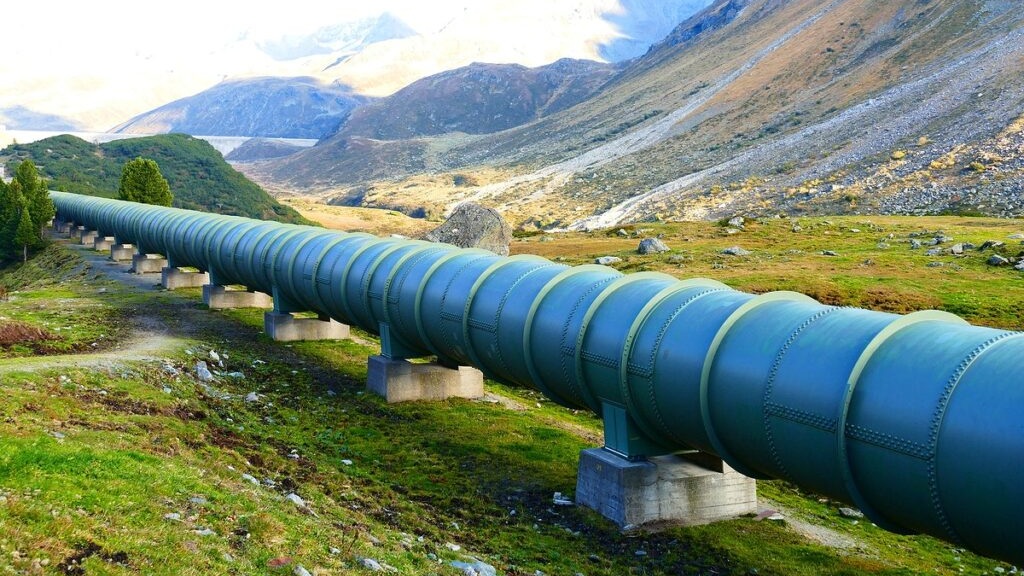
As other countries in the region have lost complete access to Russian gas imports due to Ukraine shutting down the transit route, Hungary remains connected to the Russian gas transit system via the TurkStream pipeline. This gives it a great advantage in the energy market over its neighbours in the Central European region, a recently published analysis by Ceenergynews claims.
According to the energy industry news site, newly approved gas transmission tariffs for 2026 highlight the growing financial strain on countries that were historically dependent on east–west Russian gas flows. Austria’s energy regulator, E-Control, has approved average tariff increases of around 79 per cent for the 2026 calendar year, while Slovakia’s transmission system operator, Eustream, has raised transit fees by roughly 15 per cent. This move was allowed by local regulators so that transit system operators (TSOs) can recover the loss of revenue from the now heavily underused pipelines, which were used to transport Russian gas in the past.
Hungary, on the other hand, faces no such issue.
Russian gas through the TurkStream pipeline has allowed its operator, FGSZ, to avoid the under-utilization affecting neighbouring networks. Provisional figures for 2025 show that total commercial gas flows through Hungary rose by 17 per cent year on year to 17.15 bcm, according to FGSZ CEO Szabolcs I Ferencz. Domestic consumption also increased by 4.7 per cent, reaching approximately 8.8 bcm, as the article on Ceenergynews.com explains.
CEENERGYNEWS on X (formerly Twitter): “While Austria and Slovakia face tariff hikes due to under-utilized #NaturalGas infrastructure, Hungary has significantly increased its gas deliveries. #fgsz #tso https://t.co/jSBDdhOKEV / X”
While Austria and Slovakia face tariff hikes due to under-utilized #NaturalGas infrastructure, Hungary has significantly increased its gas deliveries. #fgsz #tso https://t.co/jSBDdhOKEV
‘The determination of the current TSO tariffs is a highly regulated and complex process…any market change affecting these factors may also influence the level of the tariffs. In addition, before each four-year price control period, a complete cost and asset review is carried out at the TSOs,’ CEO Szabolcs I Ferencz has stated, as quoted by the site.
Related articles: