2025 will be remembered in history books as the year when the global security, political, and economic order that had governed the world since the fall of the Soviet Union came to an end, and humanity began to shift more decisively towards what many have described as a ‘multipolar world order’. The year behind us was marked by a series of era-defining moments, both positive and negative, which future historians will examine in depth for decades to come.
History rarely announces its turning points in advance; however, in this case, it is no exaggeration to say that much of the world anticipated these developments. After Donald Trump won the 2024 US presidential election, it became clear that the United States’ relationship with the world would not remain the same as it had been over the previous three decades.
It is, therefore, unsurprising that many of these turning points are closely linked to the president and to America more broadly. In this article, without claiming to be exhaustive, we have compiled the most significant geopolitical, sociocultural and economic events, processes and developments of 2025 that are likely to shape the world we live in over the coming decade.
President of Peace in the White House
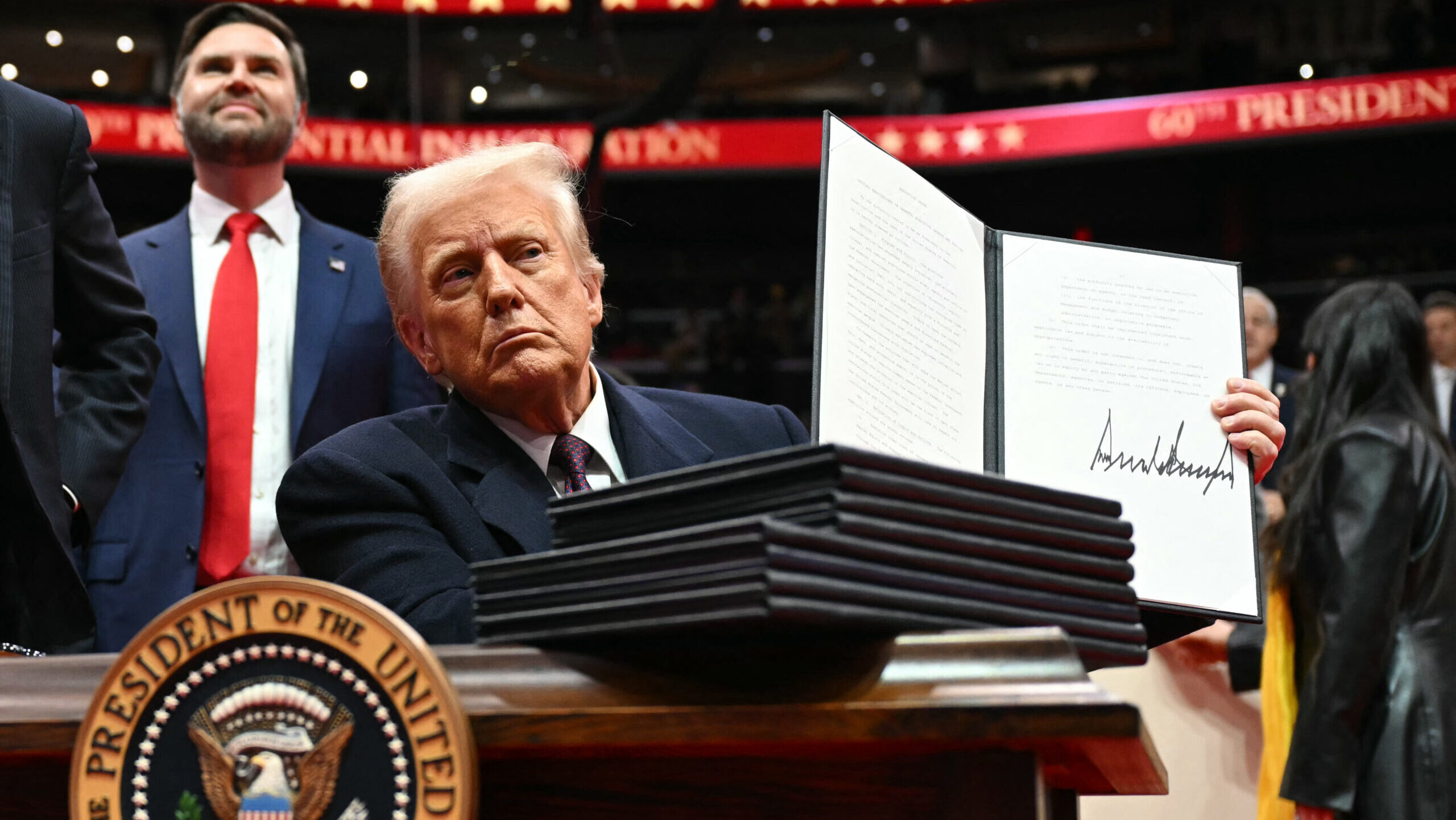
That being said, the first turning point of 2025 was clearly Donald Trump’s return to office for a second term. On 20 January, his inauguration day, Trump immediately broke records by signing as many as 26 executive orders. These ranged from reversing several measures adopted under the Biden administration to ramping up border security, tackling illegal migration, and withdrawing the United States from international institutions of the liberal world order that, in his view, had outlived their usefulness, such as the World Health Organization.
The most era-defining of these executive orders, however, was the one that set the direction of American foreign policy for the years ahead. Issued under the title America First Policy Directive to the Secretary of State, the order formally instructed the Secretary of State to realign the State Department’s policies, programmes, personnel decisions and operations with an ‘America First’ foreign policy that prioritizes US national interests and American citizens above all other considerations. ‘Every dollar we spend, every programme we fund, every policy we pursue must be justified by the answer to one of three questions: Does it make America safer? Does it make America stronger? Or does it make America more prosperous?’ Secretary of State Marco Rubio declared shortly thereafter.
A defining characteristic of the America First foreign policy has been its use of US influence—and Trump’s personal leverage—to negotiate and bring conflicts to an end across the globe. The most frequently cited examples are, of course, the war in Ukraine and the Israel–Hamas conflict in Gaza. However, there are numerous other disputes in which Washington, under Trump, has helped to mediate some form of agreement between opposing sides, including the Thailand–Cambodia border clashes, the Twelve-Day War between Israel and Iran, tensions between Rwanda and the Democratic Republic of Congo, the Iran–Pakistan conflict, and the more than 30-year-old dispute between Azerbaijan and Armenia over Karabakh.
‘Trump’s objective within this system is unmistakable: to ensure that the United States remains the strongest pole of the new world order’
President Trump’s determined push for negotiated settlements has begun to reshape the architecture of the international order in ways that openly erode the frameworks and institutions of the post–Cold War liberal world order. Rather than reinforcing technocratic multilateralism, collective security mechanisms and open-ended institutional commitments, Washington has increasingly privileged direct bargaining, balance-of-interests diplomacy and transactional deal-making as the primary tools of conflict resolution. By prioritizing rapid negotiations—most notably on Ukraine and in the Middle East—and by positioning the United States as a pragmatic broker willing to pressure all sides towards compromise, the Trump administration has signalled that peace and stability are no longer to be pursued through perpetual escalation under abstract, rules-based doctrines, but through realist calculations of power, sovereignty and mutual concessions.
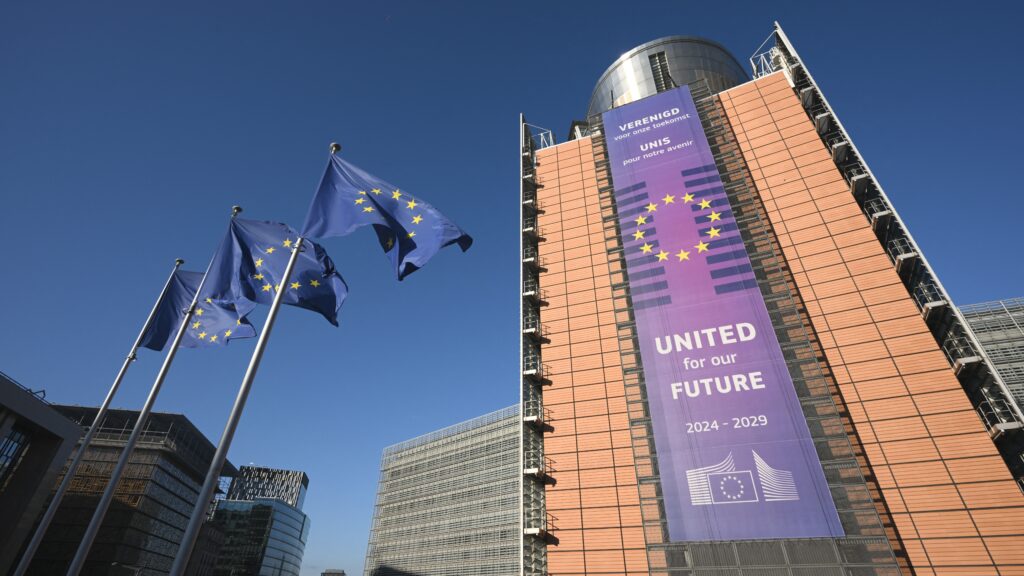
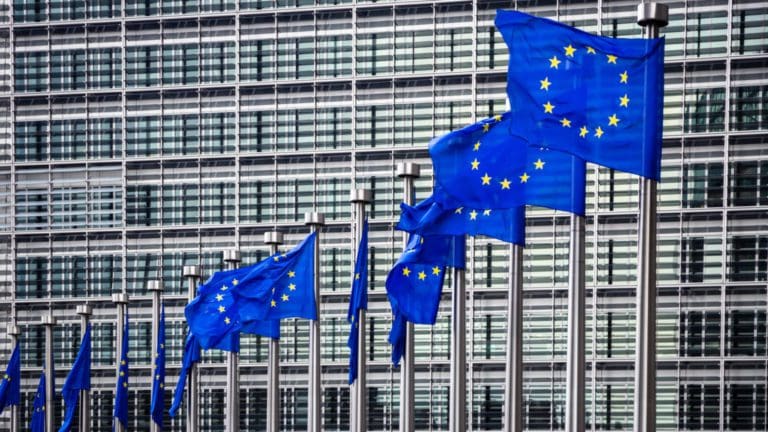
This shift has weakened the authority and relevance of liberal institutions that once claimed normative leadership, from Brussels-based bureaucracies to global multilateral forums, many of which have struggled to adapt to an environment in which enforcement mechanisms are weak and ideological consensus has fractured. At the same time, Trump’s approach has resonated with capitals such as Budapest, which have long argued for negotiated peace over indefinite conflict management, while challenging Europe more broadly to confront the widening gap between its ideological commitments and the practical imperatives of stability.
The emerging order increasingly privileges national sovereignty and pragmatic compromise over universalist norms, accelerating the transition towards a multipolar system defined less by institutions and formal rules and more by power, interests and negotiated outcomes. Trump’s objective within this system is unmistakable: to ensure that the United States remains the strongest pole of the new world order.
Trouble in Heaven — Transatlantic Relations Under Strain
There are several moments that could be considered turning points in US–EU relations under the new Trump administration, but two stand out in particular: Vice President JD Vance’s speech at the Munich Security Conference in February and the publication of the new US National Security Strategy in December. Both delivered a stark warning to Europe’s political elites: Washington believes that Europe has drifted away from shared transatlantic values such as Christianity, national sovereignty, traditional families and free speech. The United States has repeatedly urged Europe to confront illegal migration and defend Western civilization, but these warnings have largely fallen on deaf ears.
Rather than engaging in serious self-reflection, Europe’s elites responded with denial and indignation, accusing Washington of interfering in European affairs. Their long-standing hostility towards Donald Trump has blinded them to the substance of the criticism coming from across the Atlantic. Yet it is clear that the US does not want Europe to fail. On the contrary, Washington needs a stronger Europe as a partner in the emerging international order, capable of reinforcing the Western pole as the leading force among the power centres of an increasingly multipolar world.
The alternative carries serious consequences for both sides of the Atlantic. Europe’s globalist-progressive elites, driven by strategic short-sightedness and a determination to pursue their self-destructive agenda, risk further eroding the continent’s remaining influence and economic strength. This trajectory threatens to worsen Europe’s prospects to the point where recovery may no longer be possible. Without a fundamental change in leadership in Brussels, the once-thriving European civilization could cease to exist by the end of the century. In such a scenario, the US would find itself increasingly isolated, facing a strengthened Global South led by powers such as China, Brazil and Russia.
Against this backdrop, it is unsurprising that the Trump administration has begun to openly endorse Europe’s patriotic forces, urging them to take responsibility for the continent’s future. The European right, which has steadily gained strength in recent years—including Germany’s AfD, Marine Le Pen’s National Rally, and Viktor Orbán and Hungary—largely aligns with Trump on the core challenges Europe faces, from illegal migration and threats to free speech to the defence of traditional values. According to the newly published National Security Strategy, these actors are expected to play an important role in the Trump administration’s foreign policy approach in the years ahead. Such a shift would almost certainly lead to an increasingly tense stand-off between Washington and Europe’s established elites, further straining transatlantic relations.
Liberation Day
Since the introduction of the ‘Liberation Day’ tariffs on 2 April 2025, President Trump’s trade policy has done more than rattle global markets or push up average tariff levels. It has altered the structure of international economic relations, accelerating a shift away from the post-war liberal trade order towards a looser system of pragmatic, interest-based partnerships. By imposing broad baseline import duties, Washington openly challenged the long-standing reliance on multilateral institutions such as the World Trade Organization, effectively compelling trading partners to negotiate directly with the United States if they wished to avoid harsher measures.
In this environment, tariffs evolved into a negotiating tool rather than a blunt instrument. Throughout early 2025, the United States concluded a series of bilateral and plurilateral arrangements with key partners, including the United Kingdom, Japan, South Korea and the European Union. These agreements typically paired adjusted tariff schedules with expanded market access, granted in exchange for exemptions or reductions in US duties. Taken together, they reflected a move towards what the administration described as ‘reciprocal, fair, and balanced’ trade, replacing abstract rule-based frameworks with tailored agreements grounded in leverage and mutual concessions.
Washington also moved beyond its traditional allies. A wide-ranging trade agreement with Pakistan, for instance, combined tariff reductions with closer cooperation in energy and other strategic sectors, signalling a broader US willingness to reshape economic ties across the developing world. At the same time, other major actors sought to hedge against growing uncertainty. India, among others, pursued new free-trade agreements with partners such as Oman and New Zealand, partly to secure alternative market access in an increasingly fragmented global trade environment.
The outcome has been a patchwork of deals and strategic arrangements that has weakened the central role of multilateral institutions and embedded tariff diplomacy at the core of global commerce. As bilateral bargaining and negotiated compromise increasingly take precedence over collective rule-making, both established and emerging economies are being pushed to rethink their trade strategies within a more transactional and openly multipolar economic order.
Woke Is Dead!
Every world order rests on an ideology that strengthens its frameworks and secures public support for its institutions and objectives. In the case of the liberal world order, that ideology was originally liberalism itself. By the 2010s, however, progressive liberalism had mutated into a degenerate variant of its foundational creed—what came to be known as wokeism. Saturated with LGBTQ+ and gender ideology, cancel culture, the indoctrination of children and the dogma of diversity, wokeism launched a comprehensive assault on traditional ways of life, with the clear objective of dismantling traditional societies altogether.
After taking office, the Trump administration launched its war on wokeism through a series of executive orders rescinding federal DEI initiatives and ordering the termination of DEI programmes across the federal government. These measures dismantled offices and positions, cut funding streams associated with such efforts, and removed references to DEI-related concepts from federal communications, grants and institutional outreach.
Among the most consequential actions were Executive Order 14151, which formally ended what the administration labelled ‘radical and wasteful’ DEI programming across the federal government, and Executive Order 14190, which prohibited what it defined as ‘indoctrination’ in K–12 education by banning instruction characterized as gender ideology or critical theory. In parallel, Executive Order 14168 reasserted a binary definition of gender for all federal purposes, effectively withdrawing federal recognition and support for transgender identities—an action that has since triggered significant legal challenges.
The economic and cultural repercussions of this anti-woke campaign have been substantial. Major US brands—including household names such as Cracker Barrel and American Eagle—have been drawn into the culture wars, reassessing or rolling back DEI commitments amid mounting political and consumer pressure. Some corporations scaled back inclusive hiring initiatives or rebranded diversity efforts under more neutral language to avoid federal scrutiny, while a broader anti-DEI movement saw companies capitulate to conservative demands in an effort to limit reputational and regulatory risk.
Even bastions of wokeism such as Hollywood are beginning to feel the shift. Euphoria star Sydney Sweeney has quickly become one of the most admired celebrities among MAGA supporters after her controversial advertising campaign with American Eagle triggered a massive progressive backlash over a slogan that the cancel-culture mob described as white supremacist. Yet the tactic no longer appears to be effective. Three years ago, a similar episode would almost certainly have ended with Sweeney being cancelled and bullied into apologizing for something she never did. There were, of course, attempts to force such an outcome—most notably the infamous GQ interview—but she refused to apologize, repeatedly.
Trump himself praised both American Eagle and Sweeney, calling the advertising campaign the ‘HOTTEST out there’. Instead of cancellation, the hype surrounding the actress has only intensified—she is now undeniably one of the most sought-after actors in the United States and beyond. Meanwhile, American Eagle’s stock price is breaking records the company has never seen in its history.
The latest figure to join the ranks of MAGA-aligned celebrities is US-based rapper Nicki Minaj, who has publicly voiced concerns over the persecution of Nigerian Christians—an issue the Trump administration has stated it is determined to address. Minaj even spoke at the United Nations at the invitation of Trump’s ambassador to the UN, Mike Waltz. If rumours are to be believed, she is far from the only celebrity preparing to come out as MAGA.
Merely speaking out against genocide proved sufficient for progressives to, ironically, call for Minaj’s deportation. with a petition demanding her removal had gathered over 60,000 signatures at the time of writing. The rapper has shown no intention of apologizing. Instead, she recently spent a weekend on X openly mocking California’s Democrat governor Gavin Newsom over his truly incomprehensible and inconceivable vision of a future with more and more trans kids. She also made a recent—at times awkward, but ultimately unifying—appearance at Turning Point USA’s AmericaFest alongside JD Vance.
It is now clear that wokeism is in retreat across the Atlantic. In Western Europe, however, it continues to thrive, even as the Trump administration’s anti-woke campaign has begun to exert influence. US demands that European companies holding US government contracts comply with America’s rollback of DEI initiatives have prompted pushback from French and other EU officials, who have denounced such moves as interference. At the same time, some European firms have quietly adjusted or removed diversity-related language under growing commercial and political pressure.
Assassination of Charlie Kirk
And finally, the event that made ‘turning point’ even a consideration when choosing the title of this article: the assassination of American conservative political activist Charlie Kirk, founder of Turning Point USA. Kirk’s tragic death differs from the other events and processes listed above in that it does not match their significance in civilizational terms. Yet his assassination has nonetheless deeply disturbed and reshaped the balance of power on the American right, with effects extending well beyond the United States.
Kirk’s death, and the aftermath that followed, offer clear and important lessons for the wider conservative movement internationally. First, the reaction of large segments of the political left—both in the US and beyond—once again, and definitively, demonstrated that wokeism does not tolerate counter-opinion and does not value life. There is no moral—or logical—justification for celebrating the public execution of a father of two babies simply because one disagrees with his political, religious, or social views. Yet this celebration continued for weeks. When the initial thrill faded, attention shifted towards attacking his grieving wife. Despite left-wing data and polling claims to the contrary: in 2025, political aggression is almost exclusively a left-wing phenomenon. One of the few ‘positive’ consequences of Kirk’s death is that it contributed to increased support for a crackdown on Antifa and other radical and violent leftist organizations.
Charlie Kirk played a highly significant role in President Trump’s victory in 2024 and in strengthening the American conservative movement both organizationally and communally. He is best known for his live debates on infamously left-wing university campuses, which are widely credited with helping Trump make major gains among younger voters. Beyond this, his deep embeddedness within the MAGA ecosystem endowed him with a moderating role, helping to balance competing factions on the American right. While progressives labelled him a Nazi, he was in reality one of the more moderate conservatives, keeping more radical forces at bay. With his removal, that restraint collapsed. And it did collapse.
The debate over who should inherit Kirk’s platform has exposed long-standing fault lines within the movement. Some mainstream figures have emphasised restraint and unity, while others—notably Tucker Carlson—have elevated discussions with far-right influencers such as Nick Fuentes, whose explicitly racist and antisemitic views are condemned by the majority of the conservative movement.
This dynamic, alongside other disputes, has amplified Fuentes’s profile and that of similar alt-right factions by normalizing their presence in high-visibility discourse at a moment when the broader right is searching for direction after Kirk’s death. As a result, what was once largely confined to the fringe of American conservatism now operates in a more permissive environment, shaping narratives and recruiting adherents. Fuentes has since openly made racist remarks about JD Vance’s wife, calling the vice president a ‘race traitor’ because of his interracial marriage.
Everything that worked in 2024, the appearance of unity even among influencers and political commentators, has vanished with Charlie Kirk’s death. In its place, infighting and self-destructive radicalization have taken hold. While these dynamics could damage Republicans for decades, their consequences may materialize as early as the 2026 midterm elections. If current trends continue, preparations for a blue wave would be prudent.
Related articles: