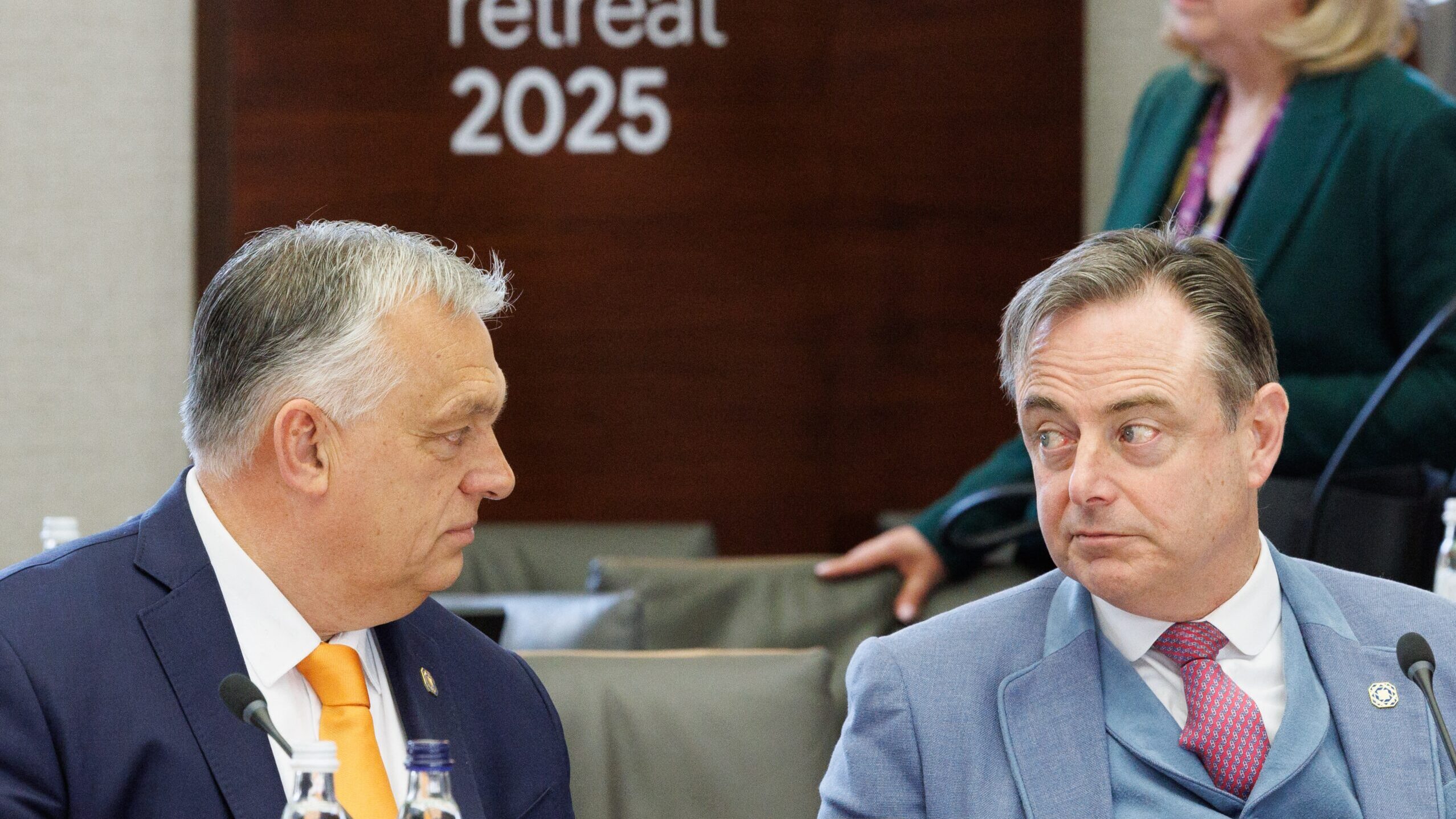
Hungarian Prime Minister Viktor Orbán claimed credit for ‘behind-the-scenes’ diplomacy that resulted in blocking EU plans to use immobilized Russian assets held in Europe as collateral for a €210 billion reparations loan to Kyiv. He also praised Belgian Prime Minister Bart de Wever for what he described as a ‘heroic stand’ in leading the blocking minority, joined by Italy and reportedly backed tacitly by France.
POLITICO Brussels confirmed Orbán’s claim in Monday’s Brussels Playbook, reporting that during the first day of last week’s high-tension European Council summit, the Hungarian prime minister engaged in intensive negotiations with both French President Emmanuel Macron and Bart de Wever. According to the outlet, Macron and Orbán agreed that the latter would refrain from vetoing an alternative option should member states abandon the plan involving Russian assets.
The summit finally concluded with a commitment to a €90 billion joint loan to support Ukraine’s self-defence against Russia and to finance the war-torn country’s budget for the coming year. Hungary, Slovakia and the Czech Republic secured an opt-out from the joint debt. According to Orbán, this decision alone spared Hungarian families approximately HUF 400 billion.
Hungary in the EU on X (formerly Twitter): “.@PM_ViktorOrban: using frozen Russian assets was a dead idea from the start, as it is legally indefensible. This move would have been a declaration of war. We were against the proposal of joint borrowing as well, but managed to find a solution by securing an opt-out. Today was a… pic.twitter.com/GF9jj26huM / X”
@PM_ViktorOrban: using frozen Russian assets was a dead idea from the start, as it is legally indefensible. This move would have been a declaration of war. We were against the proposal of joint borrowing as well, but managed to find a solution by securing an opt-out. Today was a… pic.twitter.com/GF9jj26huM
Speaking to TV2, the prime minister cautioned that seizing Russian assets would inevitably provoke retaliation. He noted that roughly €210 billion in Russian assets have been frozen within the EU, while European companies and states hold even larger amounts of property and capital inside Russia. ‘Whatever we do, the Russians will respond economically,’ Orbán said, warning that the consequences would extend well beyond the current sanctions regime.
Painting a bleak picture of Europe’s trajectory, Orbán pointed to statements by European leaders suggesting that the continent must be prepared for war by 2030. If that is the case, he argued, the next Hungarian election would take place on the eve of war. He described a sharpening political divide both in Europe and at home, claiming that Germany and its allies are moving towards a war footing, with aligned domestic political forces, while the patriots’ camp—led in Hungary by Fidesz–KDNP—stands for peace.
Orbán framed Hungary’s position through historical experience, recalling that the country lost both world wars despite efforts by Hungarian leaders to stay out of them. ‘For a Hungarian mind, war is the most terrible thing,’ he said, invoking István Tisza and Miklós Horthy as examples of leaders who were ultimately drawn into conflict. ‘I will not be pushed into war,’ Orbán declared.
Turning to domestic policy, the prime minister said the government had originally expected that, following Donald Trump’s return to the US presidency, the war in Ukraine would be settled, allowing for the full roll-out of major family and economic support programmes. While those initiatives—ranging from housing subsidies to tax exemptions and small business support—are now under way, Orbán warned that Europe’s broader shift towards a war economy poses serious risks. Hungary, he said, is deliberately moving in the opposite direction.
Orbán also recalled that his government had secured US sanctions exemptions and energy supply guarantees, pledging that Hungary would maintain the lowest household energy costs if the current administration remains in office. Concluding on a forward-looking note, he said Hungary aims to ‘change dimension’ despite the difficult international environment. ‘After a losing twentieth century,’ he said, ‘Hungarians should see themselves as winners. If there is peace, there will be a future.’
Related articles: