Vox has emerged as one of the clear winners of Sunday’s regional elections in Extremadura, doubling its representation and consolidating its position as a decisive political force in a region long dominated by the Spanish left. The result marks a significant setback for Spain’s ruling Socialist Workers’ Party (PSOE), which lost ten of its 28 seats amid mounting national scandals and growing voter disillusionment.
The anti-immigration Vox doubled its support, securing 16.9 per cent of the vote and finishing third behind the PSOE, which came second with 25.7 per cent—down 14.2 percentage points compared to the previous regional elections. The People’s Party (PP) won the vote with 43.2 per cent.
Europe Elects on X (formerly Twitter): “Spain, 99.9% votes counted:Extremadura regional parliament electionPP (EPP): 43.2% (+4.4)PSOE (S&D): 25.7% (-14.2)Vox (PfE): 16.9% (+8.8)UxE (LEFT): 10.3% (+4.3)+/- vs. Last election result➤ https://t.co/NOkUdsZPR9 pic.twitter.com/zyXglrGv8z / X”
Spain, 99.9% votes counted:Extremadura regional parliament electionPP (EPP): 43.2% (+4.4)PSOE (S&D): 25.7% (-14.2)Vox (PfE): 16.9% (+8.8)UxE (LEFT): 10.3% (+4.3)+/- vs. Last election result➤ https://t.co/NOkUdsZPR9 pic.twitter.com/zyXglrGv8z
With turnout low, the PSOE haemorrhaged more than 108,000 votes. Rather than consolidating behind the centre-right PP, a substantial share of these votes shifted towards Vox and the left-wing United for Extremadura (UxE), which is affiliated with Sumar, a junior partner in Prime Minister Pedro Sánchez’s national coalition. Vox increased its seat count from five to 11, while UxE rose from four to seven seats.
Extremadura, traditionally a Socialist stronghold, had already fallen to the PP under María Guardiola in 2023. Her minority government, formed after difficult negotiations with Vox, collapsed earlier this year when Vox refused to back the regional budget, prompting a snap election. Guardiola had hoped to secure an absolute majority but fell four seats short of the 33 required, once again leaving her dependent on a strengthened Vox to form a stable government.
The results also pose a strategic dilemma for the PP, which has sought to distance itself from Vox in an effort to appeal to centrist voters. That approach now appears increasingly difficult to maintain, as Vox’s electoral base continues to expand at the expense of both major parties.
‘PSOE haemorrhaged more than 108,000 votes’
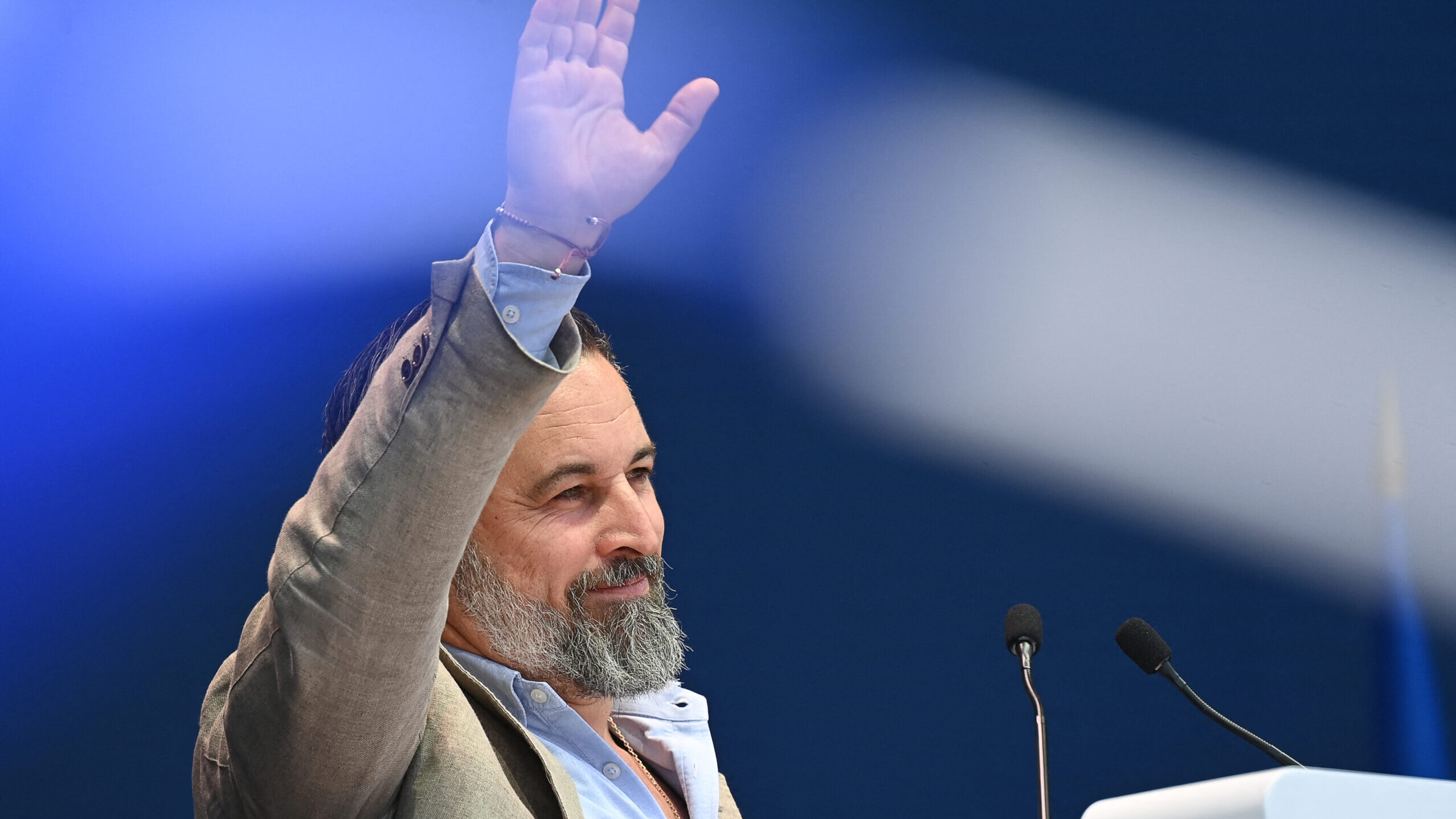
Speaking from Vox’s national headquarters in Madrid, party president Santiago Abascal thanked ‘the more than 90,000 Extremadurans who have trusted Vox in these elections’, describing the party’s regional lead candidate, Óscar Fernández, as ‘the real winner of these elections’ following what he called an ‘excellent campaign throughout Extremadura’. Abascal stressed that Vox ‘is the party that has grown the most in votes, seats and percentage’, while ‘the two faces of the two-party system have seen their support reduced’.
Abascal attributed Vox’s advance to its focus on ‘the real problems of citizens’, citing what he described as the abandonment of Extremadura, the impact of EU-backed green policies, public insecurity, illegal immigration, youth emigration and high taxation. ‘Vox’s votes must count. Vox voters must count,’ he said, warning that his party would demand political respect and influence commensurate with its electoral strength. He concluded with a stark message: ‘Vox is the future of Extremadura and Vox is the future of Spain’.
‘Vox’s electoral base continues to expand at the expense of both major parties’
Vox is one of the key parties within the right-wing Patriots for Europe (PfE) European political party, co-founded by Hungarian Prime Minister Viktor Orbán in the summer of 2024. Since November 2024, Santiago Abascal has served as president of the political party, while National Rally’s Jordan Bardella holds the presidency of the corresponding political group in the European Parliament. Abascal is a close ally of Orbán, having met the Hungarian prime minister on several occasions and publicly praised Hungary’s migration policy as a model Spain should follow.
PfE is currently the third-largest political group in the European Parliament and includes two sitting prime ministers among its ranks: Viktor Orbán and the recently appointed Czech prime minister Andrej Babiš.
Related articles: